
Vinegar in the rinse-aid slot feels like one of those genius money-saving hacks that should have caught on decades ago. A jug costs a couple of dollars and lasts for months. Commercial rinse aid runs $4 to $6 a bottle and empties fast. So why not just swap one for the other? Plenty of home cooks have done exactly that, sometimes for years, without a single spot on a wine glass. But an appliance repairman’s routine gasket check can reveal a very different story hiding behind that door seal, and it’s worth understanding before you reach for the vinegar jug again tonight.
Key takeaways
- A dishwasher repairman discovered what prolonged vinegar use was silently doing to the appliance’s rubber seals
- The damage doesn’t always look like a leak—it starts as brittleness and hairline cracks that go unnoticed for months
- There’s a safer, cheaper alternative that actually works without gambling on your machine
Why the swap seems to work, at least at first
Rinse aid exists for one narrow job: breaking the surface tension of water so it sheets off dishes instead of beading into spots. Rinse aid is a liquid solution designed to improve the drying process in your dishwasher, reducing the surface tension of water and preventing spots caused by minerals in the water. Vinegar happens to share one property with the commercial stuff: it’s acidic, and acid dissolves the mineral deposits that cause cloudy glassware. That overlap is exactly why the trick spread across forums and family group chats in the first place.
The chemistry, though, is where the similarity ends. Household vinegar is a 5 percent acetic acid solution, and although acetic acid is weak as far as acids go, vinegar has a pH of about 2.5, which isn’t much higher than that of sulfuric acid. That’s a startling comparison, but it’s the acidity, not the ingredient list, that drives the wear. Appliance guidance echoes the same caution: vinegar can be used as a temporary fix if you run out of rinse aid, but prolonged use is not recommended, since the acidity can limit the cleaning power of the detergent and lead to premature deterioration of rubber seals and gaskets inside the dishwasher.
What years of exposure actually does to the gasket
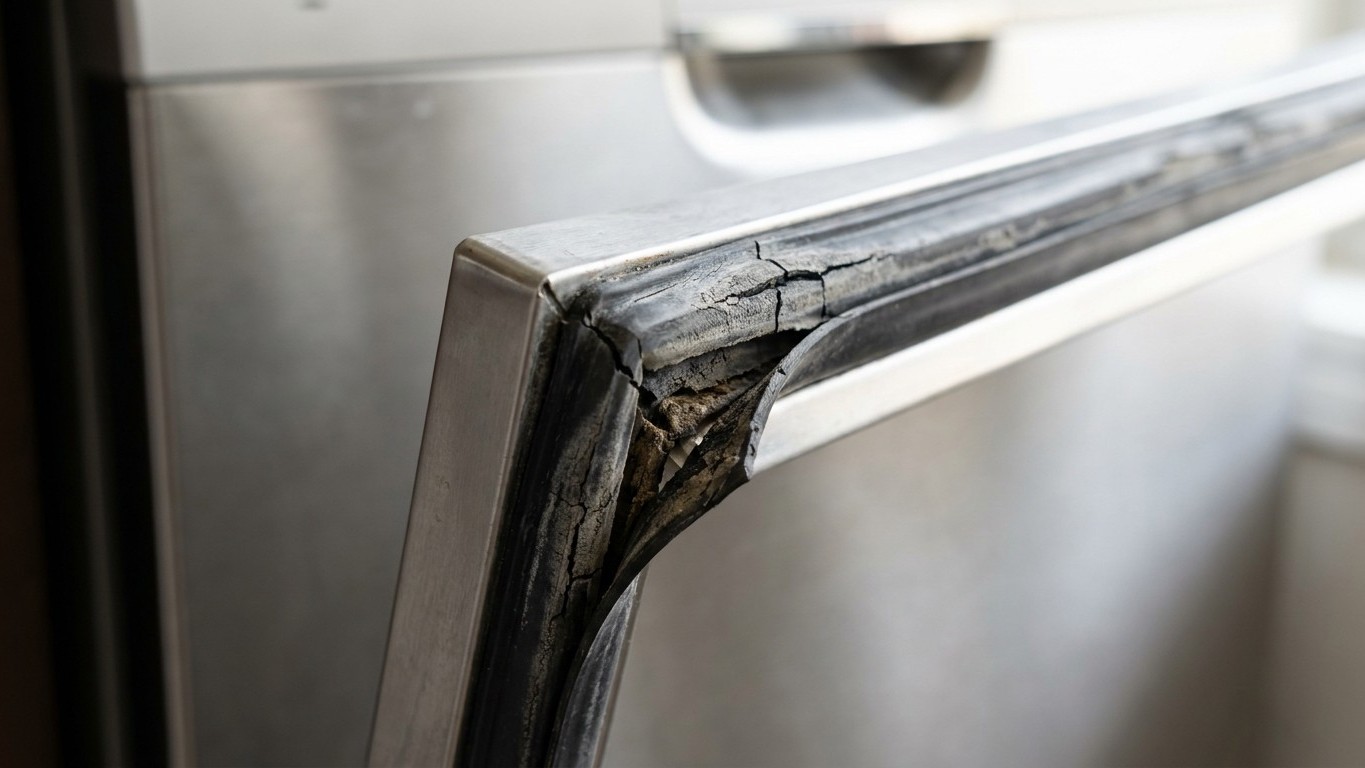
A door gasket isn’t decorative trim. It’s the barrier that keeps hot, soapy water inside the tub during every wash and rinse cycle, and it flexes thousands of times over a machine’s life. Rubber and certain plastics degrade gradually under repeated acid contact, losing elasticity and developing the kind of surface cracking that a technician spots the moment they peel the gasket lip back. Sulfuric acid would corrode the rubber seals inside the dishwasher if you ran it through the dishwasher, and vinegar can do the same thing if you overuse it. The keyword there is overuse. A single glass of vinegar run occasionally on the top rack is a different exposure profile than a reservoir refilled with pure vinegar, cycle after cycle, for years on end.
Repair-trade sources are blunter about where the actual damage originates. One appliance-focused guide flags the risk directly: white vinegar can be used as a rinse aid substitute, but it’s acidic and may degrade rubber seals over time. Cleaning guides aimed at maintaining rinse-aid dispensers go further, warning that repeated, undiluted use is the real culprit: avoid overuse, as repeated cycles can degrade rubber seals in some dishwasher models. A rinse-aid dispenser cap sits directly against a small internal gasket too, and a technician checking for wear will look specifically at that spot: cracks or wear on the cap or cap sealing gasket mean the cap should be replaced, since a loose seal can prevent proper functioning.
What tends to surprise people is that the damage doesn’t always look like a leak. It shows up first as brittleness, hairline cracking, or a gasket that no longer springs back into shape after the door closes. By the time water starts seeping out during a cycle, the seal has usually been compromised for months. That’s a costly failure mode too, since gasket replacement plus any resulting water damage to cabinetry or flooring dwarfs whatever was saved on rinse aid.
Not everyone agrees, and the middle ground matters
To be fair, the case against vinegar isn’t unanimous. Some longtime users report thousands of anecdotes and testimonials from people who have used vinegar in their rinse aid dispenser for years without issue, against a smaller group who claim it ruins rubber seals. Independent test runs over shorter stretches, like a couple of weeks, have observed no negative impact on the dishwasher’s seals or metal parts, with the machine operating smoothly and no indication of wear or damage. The disagreement mostly comes down to duration and concentration. A short trial won’t reveal what years of undiluted acid exposure will.
If the appeal is really about cost and hard water, there’s a middle path that keeps the savings without gambling on the gasket. Citric acid is chemically similar to what many commercial rinse aids already use, and it’s gentler on rubber over time: citric acid can serve as a substitute that’s safer for the appliance and can help with mineral deposits without causing adverse effects on the components. Diluting vinegar rather than using it straight also reduces the risk considerably, since mixing in a 1:1 ratio with water can mitigate corrosion risks. Another option skips the dispenser gasket entirely: if the dishwasher doesn’t have a rinse dispenser, or you’d rather not risk it, put a glass of vinegar on the bottom rack during the rinse cycle instead, stopping the machine to add it.
The gasket itself is cheap to check and often overlooked until it fails. Running a finger along the folded rubber lip at the base of the dishwasher door, feeling for stiffness or tiny surface cracks, takes less time than loading the top rack. If a repair visit is already scheduled for something else, ask the technician to glance at it. Catching a brittle seal early costs nothing. Replacing it after a slow leak has warped the cabinet floor underneath does not.
Sources : cooktopcove.com | quora.com