
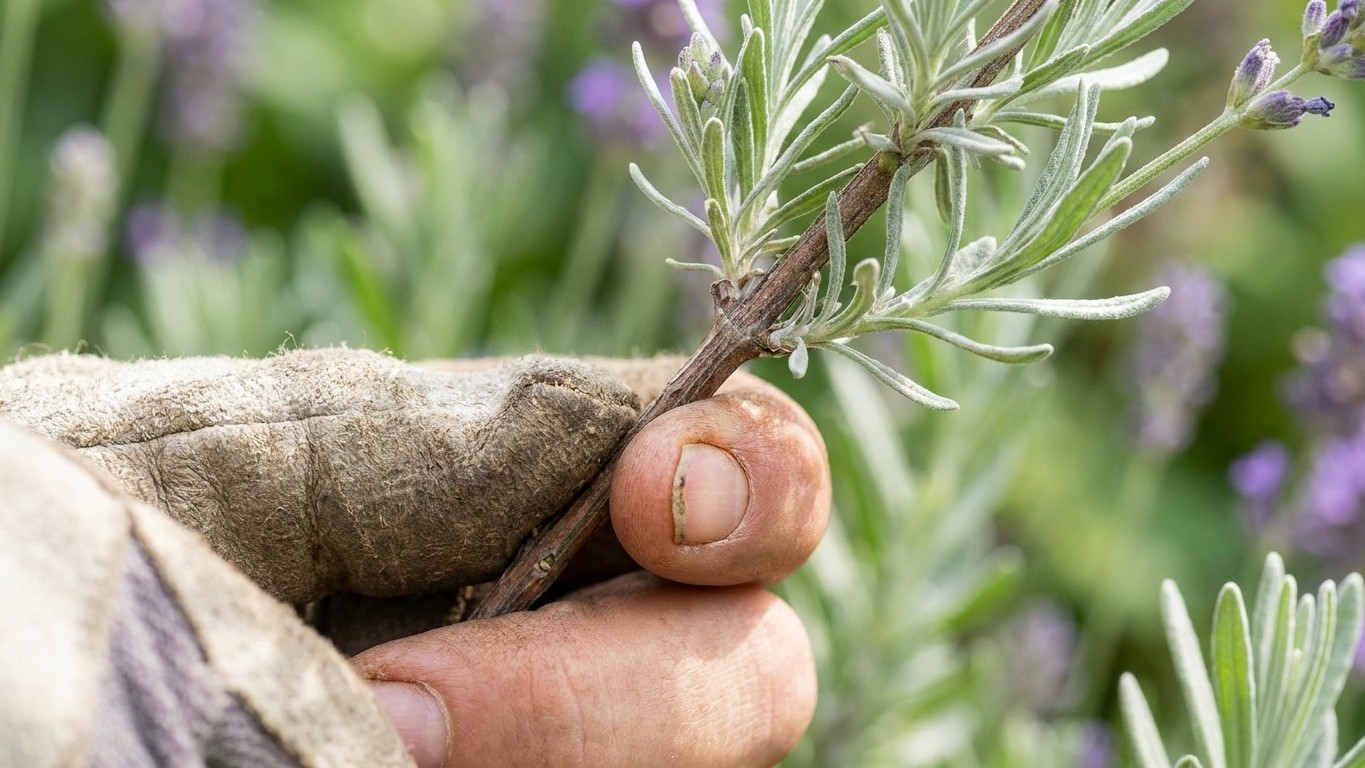
The lavender looked perfect for three years. Then last August, tired of watching it flop open at the middle, the plan seemed simple: treat it like a boxwood or a rose, cut it back hard, let it regrow dense and tidy. Come spring, nothing happened. No green fuzz along the cut stems, no fresh shoots pushing through the bark. Just a ring of gray, brittle stumps where a thriving shrub used to be.
That outcome isn’t bad luck. It’s basic plant biology, and it’s the single most common way home gardeners accidentally kill a lavender that had otherwise been thriving for years.
Key takeaways
- One hard cut into woody lavender stems triggers an irreversible biological response—but most gardeners don’t realize it until spring arrives with nothing but dead stumps
- The plant itself warns you exactly where the danger zone begins, but almost everyone misses the visual signal sitting right in front of them
- Even if your lavender looks beyond saving, there’s a multi-year recovery method that actually works—if you’re willing to be patient
Why Lavender Doesn’t Forgive a Hard Cut
Roses, boxwood, hydrangeas: these shrubs tolerate being chopped to stubs because their old wood still carries dormant buds capable of breaking through the bark. Lavender doesn’t play by those rules. Lavender is not a plant that easily sprouts from old wood, and while other shrubs can take severe pruning and hatracking, pruning lavender too hard can kill it. The reason traces back to how the plant evolved to survive Mediterranean summers.
Lavender stems are highly specialized: to lock water in, they grow watertight bark with few openings to the outside air, which excels at channeling sap between roots and leaves and storing moisture during dry spells, releasing it to the leaves when needed. That drought armor comes at a cost. This drought specialization came at the cost of propagation, and buds on old wood simply cannot sprout through the bark to turn into leaves and new stems. Once a stem crosses that threshold into full, brown, lignified wood, there’s no biological mechanism left to reactivate it, no matter how much water or Fertilizer you throw at it afterward.
A horticultural explainer on lavender pruning puts it in plainer terms: as stems mature and lignify, the axillary buds that form at each leaf node are gradually lost, and meristematic tissue, responsible for cell division and new growth, exists only where green tissue remains. Once a stem has fully lignified and the leaf nodes have disappeared, there is nothing left to push through. Cut below that line, and you haven’t pruned the plant. You’ve amputated its only path to recovery.
The Warning Signs Sitting in Plain Sight
The frustrating part is that the plant usually tells you where the safe zone ends, if you bother to look before cutting. Before grabbing your pruning tools, take a close look at your plants and identify where the woody base ends and new foliage growth begins, always making pruning cuts above new leaf growth rather than into the woody sections, since lavender will not form new growth on old wood. That line between silvery-green stem and hard brown bark isn’t subtle once you’re actually searching for it.
There’s also a quick diagnostic gardeners use on plants that already look overgrown. Gently scratching the surface of a woody stem with a fingernail reveals whether green tissue remains underneath, and if so, that part of the stem is still alive. No green under the scratch test, no reason to expect regrowth from that spot, ever. Skip that five-second check, and you’re pruning blind.
Rejuvenating an Old, Woody Shrub the Right Way
None of this means an overgrown lavender is doomed to replacement. It means the fix has to happen in installments, not one dramatic session with the loppers. Over a typical three or four years, you can reduce the size of your lavender shrub, since pruning all at once would kill the plant and spreading the work over several seasons is what actually makes it succeed. The method involves dividing the shrub’s oldest branches into batches and removing only one batch per year, always leaving enough leafy growth on the rest of the plant to keep sap moving.
Timing matters just as much as restraint. The best window for this kind of renovation work is early spring, just as new green growth begins to emerge from the base, and after all danger of hard frost has passed, since pruning too early can expose fresh cuts to cold and kill any nascent new growth. Gardeners attempting this on a treasured old plant often hedge their bets, too. If you’re attempting a risky hard prune on a beloved plant, taking cuttings from healthy green growth beforehand means that if the mother plant doesn’t survive, you’ll have new plants ready to replace it.
Even done carefully, success isn’t guaranteed on a truly overgrown specimen. Plants that have developed extensive old wood rarely respond well to rejuvenation pruning, because there simply isn’t enough meristematic tissue remaining in the green zones to drive meaningful recovery. Professional growers are candid about the odds: the RHS itself notes that once lavender becomes “straggly, very woody and mis-shapen,” replacement is often the most practical solution.
What This Means If You’ve Already Made the Cut
If the base looks like a stump forest right now and nothing green has appeared by late spring, the honest move is to stop waiting and start propagating. Taking cuttings from any surviving healthy stems and starting new plants before the original becomes unusable is a straightforward way to keep the genetic line going for free. Softwood tips root readily in a simple soil mix, and a single surviving plant can generate a half-dozen replacements by the end of one growing season.
Here’s the detail most people miss until it’s too late: lavender isn’t actually a long-lived shrub by nature. Lavender shrubs bear bright, fragrant blossoms and can live for 20 years or more, though after six or eight years they can begin to look woody, filled with dead wood and bearing fewer of their sweet-smelling flowers. Annual light trims after the summer bloom, not one dramatic haircut a decade in, are what actually stretch that lifespan toward the high end.
Sources : bloomingexpert.com | gardeningknowhow.com