
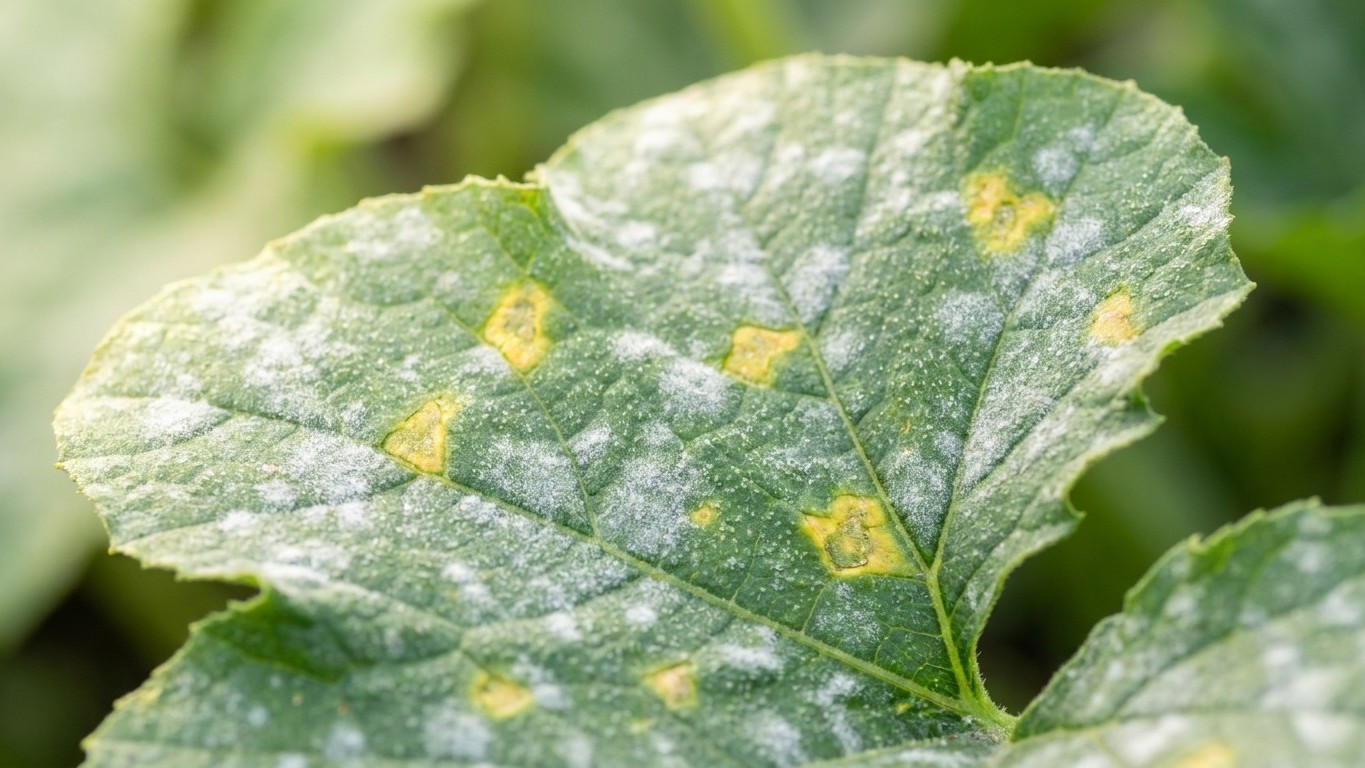
By the second week of August, the zucchini leaves told the whole story. What had looked like a smart way to protect the plants from scorching afternoon sun, a gentle spray over the foliage every evening, had turned into a dusty white coating spreading across almost every leaf, with a few showing yellow, angular patches underneath. The heat wasn’t the problem. The water was.
Watering overhead at dusk feels intuitive. The sun is down, the plants look stressed, and a cool shower seems like relief. But an evening watering session can create exactly the kind of humid microclimate that fungal pathogens are waiting for. The zucchini didn’t get sunburned. They got infected, slowly, over weeks of nights that never quite dried out.
Key takeaways
- A simple dusk watering routine accidentally incubated two different fungal diseases simultaneously on the same plant
- The humid microclimate created by evening moisture lasted long enough—8+ hours—for spores to germinate and penetrate leaves
- Late summer’s combination of dry days and humid, windless nights creates the worst possible conditions for squash crops
Why a “gentle” evening spray does more damage than sun ever could
Here’s the part that surprises most home gardeners: the leaves didn’t even need to stay soaking wet to get sick. Powdery mildew does not actually need free-standing water on the leaf surface to start growing, and unlike many other plant diseases, its spores are happy to germinate in conditions of high relative humidity alone. A light misting at dusk, combined with warm night air that traps moisture against the canopy, is functionally the same as a light rain that never evaporates.
Think about what happens physically once the sun sets. Evenings bring rising humidity and falling temperatures, which means leaves that got wet in the evening might still be damp the next morning, unlike midday watering, where sunlight and warmth help foliage dry within minutes. That stretch of darkness is exactly what a fungus needs. A leaf that stays wet for eight or more hours overnight gives spores time to germinate, penetrate the leaf surface, and begin spreading. Multiply that by every night from late June through early August, and you get a plant whose entire canopy has essentially been incubating disease under a nightly greenhouse dome.
The comparison that stuck with me after digging into this: the squash canopy behaves like a tent on a humid night. Once moisture gets in and the air stops moving, Everything inside stays wet. Dense zucchini leaves, already famous for overlapping and blocking airflow, make that tent even tighter.
Two different fungi, two different signatures on the same plant
Mid-August is prime season for exactly this kind of damage, and it’s rarely just one disease. Dry weather that is cool at night and warm during the day favors the development of powdery mildew, which shows up as that talcum-powder dusting, usually starting on older, lower leaves before working upward. Symptoms typically start in mid-summer on older leaves, and the disease can spread rapidly, causing whole plants to turn yellow and die.
The yellow blotches underneath tell a different story. That’s downy mildew, a water mold spread by airborne spores rather than a true fungus, which doesn’t give leaves a dusty coating but shows as yellow and angular blemishes that grow between the veins on the upper sides of leaves. Flip a spotted leaf over during a humid morning and you might catch brown areas and a dark-purple-to-gray fuzz forming on the underside. Unlike powdery mildew, this one actually needs moisture to travel: it’s caused by an oomycete, closely related to algae, and these organisms need water to spread. Every dusk watering session was essentially handing it a ride.
What’s almost counterintuitive is that the driest stretches of summer can be the riskiest window for powdery mildew specifically. Once established, the fungi actually thrive in dry, warm daytime conditions, when they produce and disperse the most spores, and a stretch of dry summer days with humid evenings accelerates spread faster than a rainy week would. This is why late summer, not the rainy season, is often the worst time for squash powdery mildew. August heat waves paired with humid, breezeless evenings are close to the worst-case combination this crop can face.
What actually protects the leaves going forward
The fix isn’t complicated, but it does mean breaking the evening-hose habit. Powdery mildew can be prevented with cultural practices that ensure airflow and circulation, and the number one preventative method is watering from the base rather than overhead. A soaker hose or drip line laid at soil level does the same hydrating job without ever touching a leaf.
Timing matters just as much as method. Morning irrigation allows excess moisture to dry from the ground and leaves, lowering evening humidity levels. If mornings aren’t realistic, try at least shifting to midday rather than after sunset, giving the sun a few hours to pull the moisture back out before dark.
Spacing is the other half of the equation, since crowding is what turns ordinary humidity into a trap. Adequate spacing between plants matters, and if a garden is particularly susceptible to fungal attacks, using a wider spacing of 18-24 inches between zucchini plants keeps plenty of air flow between them. For plants already showing the white dusting, don’t panic and don’t compost the clippings. Composting infected material spreads the disease, since the fungal spores survive typical home composting temperatures, so always throw powdery mildew-infected leaves in the trash.
One detail worth keeping in mind before switching everything to strict morning-only watering: geography changes the math. Hot summer nights significantly reduce disease risk because the combination of high temperatures and low humidity suppresses fungal growth, and in warmer zones during July or August, the risk from evening watering drops considerably, especially if you water at the root zone and don’t wet the foliage. The real culprit in most backyard cases isn’t the clock. It’s the leaf getting wet at all.
Sources : positivebloom.com | positivebloom.com