
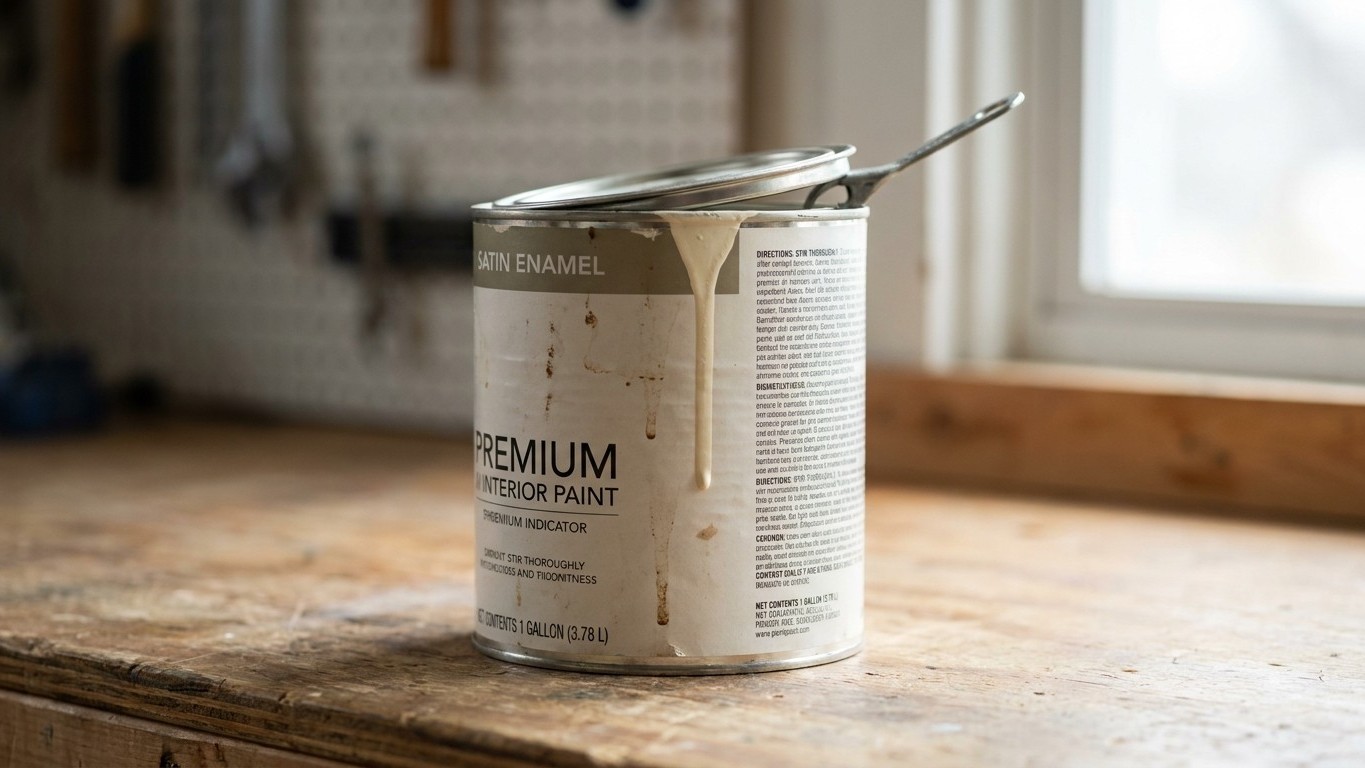
Paint peeling off in gray patches the moment a sponge touches it isn’t a color problem. It’s a label problem. Somewhere on that tin, in small print you probably skipped, there should have been the word “washable” (or its cousin, “scrubbable”). If it wasn’t there, or if you grabbed a flat matte finish without checking, that’s exactly why every sticky handprint and stray flake ends up baked permanently into your hallway walls.
Key takeaways
- Flat matte paint absorbs stains and crumbles under wet cleaning—but one overlooked word on the label changes everything
- The ASTM scrub rating reveals a shocking gap: premium washable paint can be 20 times tougher than standard emulsion
- Satin and eggshell finishes outperform flat in hallways, but only if you read the fine print before the brush touches the wall
Why standard matte paint fails in a hallway
Hallways take a beating that living rooms rarely see: shoulders brushing the wall, backpacks scraping past, kids trailing fingers along the plaster. Every parent knows the dread of a handprint sliding down a freshly painted hallway, and kitchen grease splatters, muddy dog tail wags, and crayon masterpieces are the real test of any interior wall coating, since standard flat paint absorbs these marks like a sponge, locking them in permanently. That’s the mechanism behind the flaking you’ve noticed. You’re not removing a stain when you scrub, you’re removing the paint film itself, because a basic flat finish was never built to survive contact with a wet sponge.
The science comes down to a ratio most shoppers never think about. Sheen is the single most important visual predictor of scrubbability: a flat or matte finish has high pigment volume, meaning more particles at the surface that can be abraded away, while semi-gloss and eggshell finishes have higher resin-to-pigment ratios, creating a slick, dense film that withstands repeated wet wiping. In plain terms, glossier paints have more “glue” holding the pigment down. Flat paint is mostly loose color particles sitting on the surface, which is why it looks so soft and elegant, and why it disintegrates under a scrub brush.
The word that actually matters: “washable”
Manufacturers know this, which is why premium lines now advertise washability directly on the can. But here’s the catch nobody tells you at the hardware store: not all “washable” claims are equal. Look for ASTM scrub ratings or language like “washable” or “scrubbable” on the product label rather than assuming any paint marked “easy clean” will perform the same way. The paint industry actually grades this scientifically through ASTM D2486, a lab test that drags a wet abrasive pad across a painted panel a set number of times to see when the film wears through to bare drywall. A paint rated for a few hundred cycles is a different product than one engineered to survive over a thousand.
A genuinely washable formula can be around 20 times tougher than a standard matt emulsion, meaning you can scrub sticky fingerprints or mud stains without pulling the color off with the grime. That gap between “tough enough to survive a sponge” and “will strip like wet chalk” is entirely hidden inside that one word on the label. If you bought your last gallon based on color chip alone, there’s a real chance you skipped right past it.
Picking the right sheen for a corridor
Sheen and washability travel together, which is why paint counters keep steering hallway shoppers toward satin or eggshell instead of flat. Satin is often the top choice because it balances durability with a soft, elegant look, standing up well to cleaning without creating too much shine. It’s the finish that survives a Tuesday-night wipe-down without turning your corridor into a mirror.
Eggshell sits just below satin on the shine scale but still earns its keep. Acrylic eggshell stands as one of the most practical hallway finishes, balancing durability with an elegant appearance, since the acrylic resin forms a tough, washable surface that resists scuffs and stains. If your hallway is narrow and dim, eggshell has the added bonus of bouncing a little more light around without the glare that semi-gloss throws off.
For households with kids, pets, or a revolving door of guests, some painters push further up the sheen ladder. For families with children or pets, semi-gloss provides maximum durability and scrubbability. The tradeoff is cosmetic: semi-gloss photographs every dent, patch, and roller mark in the wall beneath it, so it rewards careful prep work far more than a forgiving satin does.
Prep and habits that protect the investment
Buying the right can is half the job. The other half happens before the roller ever touches the wall. Even the best durable paint won’t last if it’s applied without proper preparation, so cleaning, patching, and priming surfaces matters as much as the product itself. Skip that step and you’re painting a washable topcoat over an unstable substrate, which just delays the same flaking problem by a few months instead of solving it.
Once it’s on the wall, timing your cleanup Matters More Than the cleaning product you reach for. Wiping marks early works because fresh stains remove easily, using mild detergent and warm water while avoiding harsh chemicals. Letting a coffee splash or a crayon streak sit for a week gives it time to bond with the paint film, forcing you into the kind of aggressive scrubbing that damages even a genuinely washable finish.
If you’re repainting this season, treat the label the way you’d treat nutrition facts on food packaging: don’t just glance at the color swatch. Check for an explicit washable or scrubbable claim, note the sheen, and if you can find the ASTM scrub cycle count on the manufacturer’s technical sheet, compare it against what you’re currently using. That single detail, easy to miss on a busy store shelf, is usually the entire difference between a hallway that wipes clean for a decade and one you’ll be repainting again by next spring.
Sources : dgfloors.com | randalls.ca