
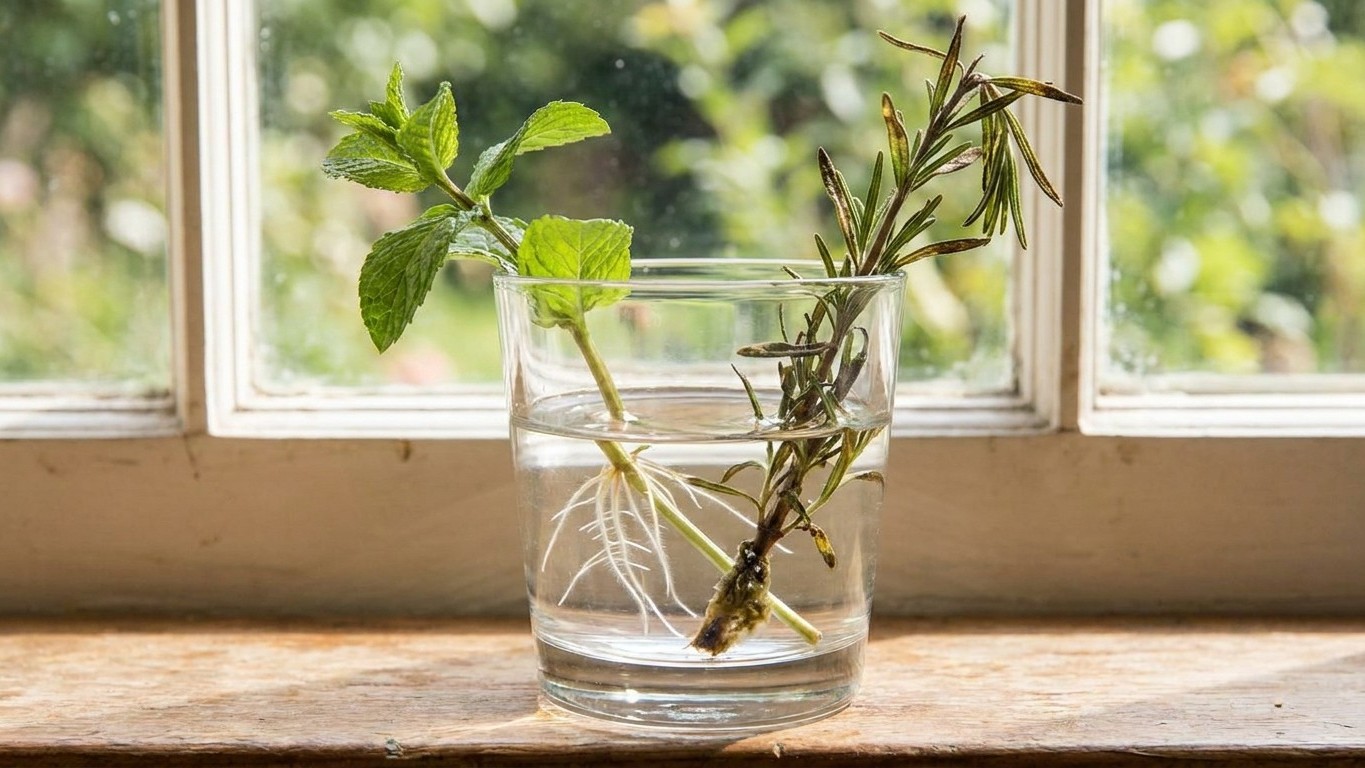
Ten days. That’s all it took for one glass of water to turn into a small botany lesson. Two stems went in together on a scorching August afternoon, basil on one side, mint on the other, sharing the same tap water and the same sunny windowsill. When I finally lifted them out to check for roots, the difference wasn’t subtle. The mint had grown a tangle of pale, healthy roots. The basil stem was mushy at the base, slightly slimy, and smelled faintly off. One plant had thrived. The other had been fighting a losing battle from day one.
Key takeaways
- Two herbs, one glass of water, completely different outcomes after ten days
- Mint’s aggressive rhizome system gives it an unfair advantage over delicate basil stems
- One overlooked detail about leaf placement accelerated the basil’s decay faster than heat alone
What Ten Days in the Same Glass Actually Revealed
The setup seemed harmless enough: same jar, same water, same light, same room temperature that regularly crept past 80°F during a heat wave. But basil and mint don’t experience “the same conditions” the way we assume they do, even when they’re sitting three inches apart in identical water. Browning or slimy stems indicate rot, usually caused by stagnant water, low temperatures, or microbial growth. In August, it’s rarely the cold causing trouble. It’s heat combined with water that sits too long without being refreshed.
The mint side of the jar told a completely different story. Thanks to its vigorous growing habit, mint is easy to propagate, even for beginners, and roots should develop within one to two weeks. By day ten, those roots were already visible through the glass, white and branching, exactly on schedule. The basil, meanwhile, should have been showing similar progress. After a week, the first signs of fresh new roots usually appear, and after two to three weeks, the roots are long enough to think about replanting the cutting into soil. Instead, mine had stalled out and started decomposing from the cut end upward.
Why One Herb Sailed Through and the Other Never Stood a Chance
Basil and mint are cousins, both members of the same plant family, but that shared ancestry hides very different survival strategies. While both basil and mint belong to the same family (Lamiaceae), their growth habits differ. Mint spreads through aggressive underground rhizomes, making it invasive in gardens, while basil grows upright and bushy and doesn’t spread invasively like mint. That rhizome habit isn’t just about garden takeover. It means mint’s tissue is wired for constant, opportunistic root production wherever moisture is available, which is exactly why a stem in a glass of water roots so readily and so fast.
Basil doesn’t carry that same built-in advantage, and its stems are noticeably more delicate under water. Browning or slimy stems indicate rot, usually caused by stagnant water, low temperatures, or microbial growth, so changing water every 2–3 days, using clean containers, and avoiding cold drafts all matter. In August specifically, warm stagnant water becomes a breeding ground for bacteria far faster than it would in spring or fall. Swapping the water every 2–3 days can reduce rot risk by over 60% and maintain high oxygen levels for growing basil from cuttings. I hadn’t changed the water at all in ten days. The mint didn’t seem to mind. The basil couldn’t recover.
There’s also a mechanical issue that made things worse in a shared glass. Leaves touching the water or the container encourage rot, and leaves that stay in contact with moisture will turn brown and rot. With two stems crowded into one narrow jar, a few lower basil leaves had dipped below the surface without me noticing. That single detail, invisible at a glance, accelerated the decay far more than the heat alone would have.
How to Actually Get Basil to Root Successfully
None of this means basil is a bad candidate for water Propagation. It’s actually one of the easiest herbs to clone, but it demands more attention than mint does, especially in summer. Water propagation is the easiest way to propagate basil from stem cuttings, and it starts with cutting a healthy 4- to 6-inch piece of stem that hasn’t flowered, cutting at an angle just below a leaf node. From there, the details matter more than people expect.
Stripping the stem properly before it goes in water makes a real difference. Removing the leaves from the bottom third to half of the stem, leaving two or three sets of leaves at the top, prevents lower leaves from sitting in water or soil, which can cause rot, and directs the cutting’s energy toward rooting instead of maintaining extra foliage. Light placement matters too, though not in the way most people assume. Bright, indirect light gives the cuttings plenty of light and warmth for best results, but direct sunlight should be avoided or the stems might end up cooking. That’s a real risk on an August windowsill, where a jar in full afternoon sun can heat up like a miniature greenhouse.
Water changes are the single biggest lever you control. Changing the water in the glass every other day is necessary because rooting stems need clean, fresh water in order to thrive, and if you leave the same water in the glass for too long, the stems are prone to rot. If you’re propagating multiple cuttings, it’s worth reconsidering the shared-jar approach entirely. Ideally, give each cutting its own glass of water, though you can propagate several cuttings at once by putting them in the same water glass to save space on a windowsill. Convenient, yes. But convenience is exactly what cost my basil its roots.
Mint’s Head Start Doesn’t Mean It’s Foolproof
Don’t mistake mint’s resilience for total indestructibility. It roots faster and tolerates more neglect, but it still benefits from basic care. Putting the cutting in a glass jar filled with clean water while being careful not to let leaves touch the water, then setting the jar in a sunny window and changing the water every few days, allows roots to develop within one to two weeks. The real lesson from that August jar wasn’t that mint is magic and basil is fragile. It’s that identical conditions on paper rarely mean identical conditions in practice, right down to which leaf happened to dip below the waterline. Next time, separate glasses, fresh water every other day, and a spot that gets bright light without the midday blast. Small habits, but they’re the difference between a windowsill full of new plants and a jar of regret.
Sources : savvygardening.com | amazingherbgarden.com