
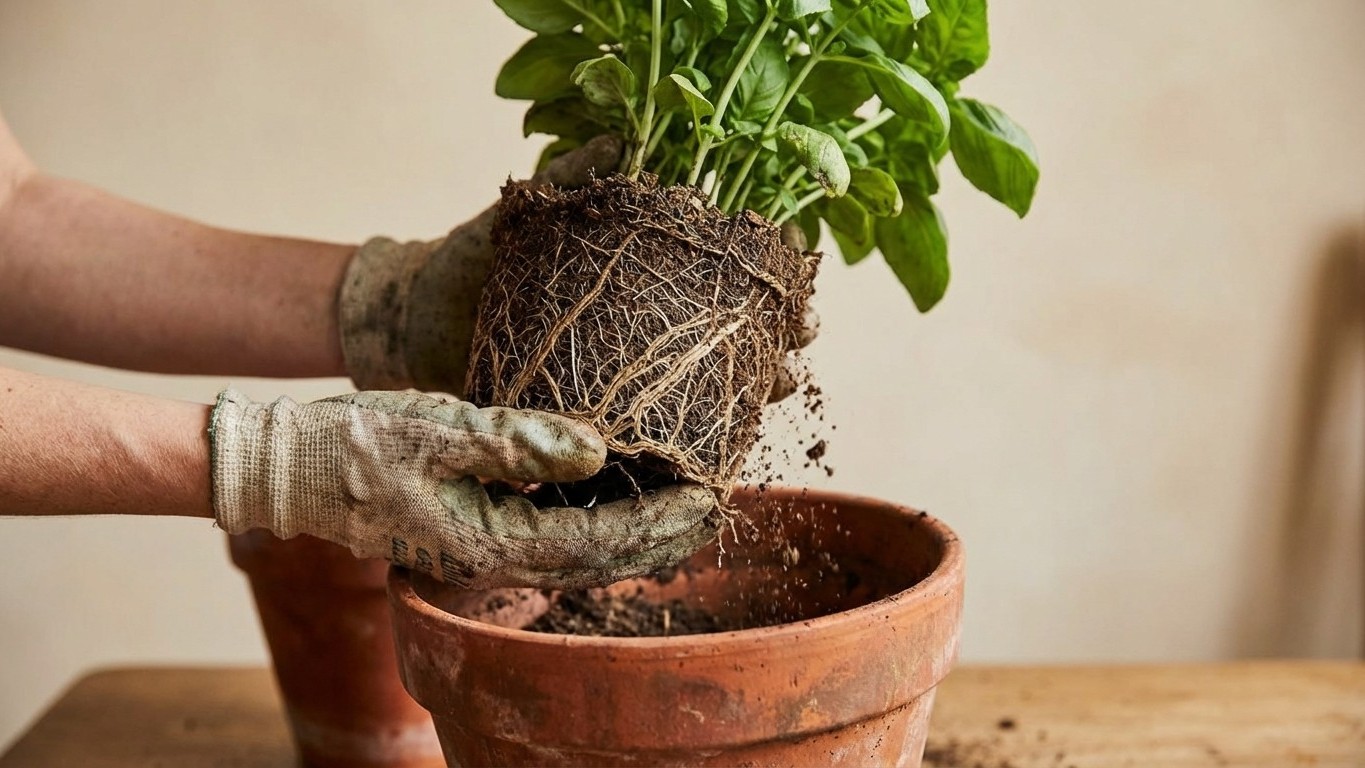
Root rot kills more houseplants than neglect, pests, and underwatering combined. And the cruel irony? Most of it happens right at the moment you’re trying to do something good for your plant, repotting. There’s one specific Mistake that shows up again and again, in virtually every home, and it’s not what most people expect.
It’s not using the wrong soil mix. It’s not picking a pot that’s too big. The single most damaging error is repotting into soil that’s already wet, then watering again immediately after. That sequence, wet medium plus fresh watering plus disturbed roots, creates the exact anaerobic, waterlogged conditions that Pythium, Phytophthora, and Fusarium fungi need to take hold. Within days, what looked like a healthy transplant starts yellowing. Leaves droop. The stem gets soft at the base. By the time you notice, the root system is already half-gone.
Key takeaways
- The #1 repotting error isn’t soil mix or pot size—it’s something almost everyone does that triggers instant root rot
- Why waiting 3-5 days after repotting (before watering) is the secret most plant guides get completely backwards
- How to spot early root rot before it’s too late and actually save your plant from decline
Why fresh repotting and water are a dangerous combination
When you remove a plant from its old pot, you inevitably damage some of the fine root hairs, the tiny, hair-thin structures responsible for water and nutrient absorption. These micro-wounds are essentially open doors for pathogens. Under normal circumstances, those wounds would heal within 48 to 72 hours in a moderately dry environment. But introduce excess moisture right away, and the healing process stalls. The roots sit in dampness, unable to callous over, while opportunistic fungi multiply in the surrounding medium.
Think of it like this: you wouldn’t soak a fresh cut on your hand in a warm puddle. The same principle applies underground. Repotting already stressed a plant, the last thing its vulnerable roots need is to swim in saturated substrate while they’re trying to recover.
A lot of well-meaning plant guides tell you to water thoroughly right after repotting “to help the plant settle in.” That advice sounds logical. It’s also, in most cases, exactly backwards. What settles the plant in is contact between roots and soil, and that happens through gentle firming of the medium, not through flooding it.
The right way to repot without triggering rot
Start with dry or barely moist potting mix. Not bone dry, a mix that’s completely desiccated can Actually repel water later and cause its own problems — but certainly not pre-wetted or fresh from a bag that’s been sitting in rain. Squeeze a handful: it should barely hold its shape and crumble easily. That’s your target moisture level.
After placing your plant in the new pot and filling in around the roots, press the soil down lightly with your fingers to eliminate large air pockets. Air pockets are another underrated cause of root death, roots that grow into empty space desiccate and die back, creating more entry points for rot. But pressing doesn’t mean compacting. You want structure, not a brick.
Then wait. Hold off on watering for at least 3 to 5 days for most tropical houseplants. For succulents and cacti, wait 7 to 10 days. During this window, the plant’s damaged root tips seal over, the medium settles naturally, and the roots begin reaching outward in search of moisture, which is exactly the exploratory behavior that drives healthy root development. When you do finally water, do it thoroughly, then let the pot drain completely before returning it to its spot.
One addition that genuinely helps: a light dusting of powdered cinnamon on exposed roots before repotting. Cinnamon contains cinnamaldehyde, a natural antifungal compound that creates a mild protective barrier on cut root surfaces. It won’t save a plant that’s already infected, but as a preventive measure during repotting, it’s cheap, harmless, and surprisingly effective.
Pot choice matters more than most people realize
Even perfect repotting technique gets undone by the wrong container. Glazed ceramic and plastic pots hold moisture far longer than terracotta, sometimes two to three times as long, depending on the room’s humidity. That’s fine for water-loving plants like ferns or peace lilies. For anything with fleshy roots (pothos, monsteras, snake plants, most succulents), it dramatically increases rot risk, especially right after repotting when the roots aren’t actively drinking yet.
Terracotta’s porousness lets excess moisture escape through the pot walls, essentially giving the soil a secondary drainage path. It also allows oxygen to reach root zones, which suppresses anaerobic pathogens. A newly repotted monstera in a terracotta pot with drainage holes is a dramatically safer setup than the same plant in a decorative cachepot with no drainage, even if both are watered identically.
Pot size is its own conversation, but the short version: go only one pot size up (roughly 1 to 2 inches in diameter) when repotting. A plant moving from a 4-inch pot directly into a 10-inch pot is surrounded by a huge volume of soil it can’t access yet. That excess soil stays wet indefinitely, and wet unused soil is where rot starts.
How to recognize early root rot before it’s too late
The symptoms above ground are deceptive. Yellowing lower leaves and wilting are also signs of underwatering, so a lot of people respond by watering more, which accelerates the rot. The distinguishing factor is the stem base and the smell. Healthy roots smell earthy, almost like a forest floor. Rotting roots smell sour or sulfurous, sometimes faintly of fermentation. If you gently tug the plant and it lifts without resistance (because the roots have already died and no longer anchor it), that’s a near-certain confirmation.
Caught early, root rot is survivable. Unpot the plant, cut away all black or brown mushy roots with sterile scissors, dust the cuts with cinnamon or sulfur powder, and repot into fresh dry medium following the protocol above. Success rate drops sharply with delay, which is why recognizing the pattern early matters so much.
The deeper question worth sitting with: how many plants have you lost to “mysterious decline” that was actually slow-moving root rot started at the moment of repotting? Given that most houseplant owners repot at least once a year per plant, the math suggests this mistake is far more widespread than any of us want to admit.