
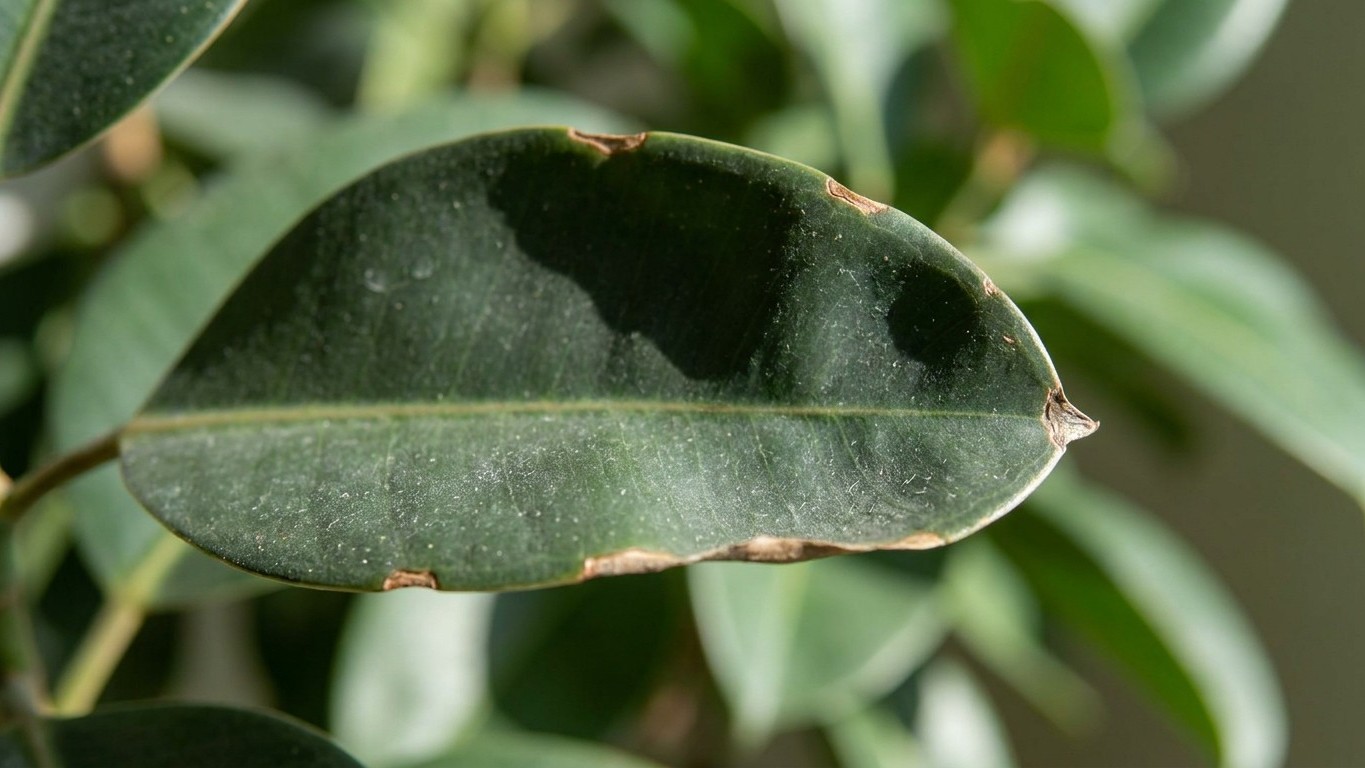
Leaf shine sprays are sold as a simple upgrade for glossy-leaved houseplants, and for years, rubber plants (Ficus elastica) seemed like the obvious candidates. Big, waxy leaves. A naturally lacquered look. The logic felt airtight. Then, this past May, a close look at my rubber plant’s new growth told a different story, and the more I dug into the science, the more I Understood why the problem had been building for three springs in a row.
Key takeaways
- A widely recommended ‘care’ product is actually blocking your rubber plant’s ability to transpire and absorb nutrients
- The damage appears first on fresh spring growth, but symptoms are subtle enough to blame on humidity or watering
- The solution is simpler and cheaper than the product causing the problem
What leaf shine actually does to your rubber plant
Most commercial leaf shine products work by depositing a thin film of silicone, mineral oil, or wax over the leaf surface. The effect is immediately appealing: leaves reflect light, look hydrated, and the plant appears to thrive. The problem is that rubber plants breathe through tiny pores called stomata, and on Ficus elastica, these pores are concentrated on the underside of the leaf. A light coating on the top surface shouldn’t, in theory, block them directly. But that’s not the full picture.
When you spray regularly over multiple seasons, residue accumulates on both surfaces, including along the edges where aerosols drift. That buildup doesn’t just sit there cosmetically. It traps moisture against the leaf surface, interferes with gas exchange, and, critically, blocks the plant’s ability to transpire properly. Transpiration isn’t just how plants “breathe”; it’s the engine that drives nutrient uptake from the roots upward. Slow the transpiration, and you slow the entire plant.
The May timing made the damage visible for a clear reason. Spring is when rubber plants push new leaves, often unfurling one every two to three weeks under good light. New growth is physiologically active at a rate that mature leaves are not. When those young, freshly opened leaves emerged into an environment already coated with residue from previous applications, the stress showed up fast. Within a week of my annual spray, two new leaves developed small brown margins and a dull, almost matte finish where they should have been glossy. A third leaf came out slightly distorted along one edge. These aren’t dramatic symptoms. That’s exactly why they’re easy to attribute to humidity, overwatering, or a dozen other causes instead of the actual culprit sitting in a can on the shelf.
The signs your rubber plant is telling you to stop
Rubber plants are not subtle communicators, but their signals are easy to misread. The first warning is a paradox: leaves treated with shine products often look less glossy after a few days, not more. The residue attracts dust, which settles into the film and creates a grayish haze. Many people respond by spraying again. This cycle compounds the problem with each application.
Beyond the aesthetic cues, watch for leaves that feel slightly tacky to the touch, even days after application. Healthy Ficus elastica leaves have a firm, smooth, almost ceramic quality. Tackiness signals that the surface film is trapping particulates and preventing the leaf from self-regulating temperature through evaporation. In a warm spring environment where light intensity is increasing, a plant that can’t cool itself properly is under real stress.
Brown leaf tips are the symptom most people notice, but they tend to appear last, not first. The earlier signal is a slight curling inward along the leaf margins, the plant’s mechanical response to water stress at the cellular level, even when soil moisture is perfectly adequate. This particular symptom threw me off for two seasons. The soil wasn’t dry. The roots were healthy. The issue was at the leaf surface, not the root zone, and I kept looking in the wrong direction.
How to actually clean rubber plant leaves (without suffocating them)
The horticultural consensus on cleaning large-leaved tropicals has shifted in recent years. Most extension services and plant pathologists now recommend plain lukewarm water applied with a soft, damp cloth, nothing else. A diluted solution of neem oil (roughly one teaspoon per liter of water with a drop of dish soap as an emulsifier) is acceptable for pest prevention, but it should be wiped off rather than left as a sitting film, and it should never be applied to new growth.
For the gloss itself, the trick is mechanical, not chemical. Rubber plant leaves produce their own surface wax. Wiping them gently with a damp microfiber cloth removes dust and allows that natural wax to show through cleanly. The result is a genuine shine, not a synthetic substitute. The difference becomes obvious within days: natural leaf gloss has depth and variation, while silicone-based products create a uniform sheen that, ironically, looks artificial on a living plant.
After removing the shine product buildup from my own plant this May, a patient process involving three rounds of damp cloth cleaning over ten days — the recovery was visible within two weeks. The distorted leaf straightened as it continued to expand. The brown margins stopped progressing. New leaves that emerged after the cleanup came out clean, flat, and appropriately glossy without any intervention.
The broader issue with “care” products marketed for houseplants
The leaf shine industry isn’t regulated the way agricultural products are. Formulations vary widely, ingredient lists are often incomplete, and marketing copy routinely describes products as “natural” when they contain mineral oils derived from petroleum processing. A 2019 review published by the Royal Horticultural Society flagged that repeated oil-based foliar applications on tropical foliage plants can increase susceptibility to fungal issues by creating the warm, humid microclimates that pathogens favor, a risk that’s amplified in spring when temperatures rise and ventilation is often still limited.
Rubber plants are resilient enough to survive years of this treatment. But survival and health are different states. A plant that’s been mildly suffocated for three consecutive springs will never perform the way an uncoated specimen does, and by the time the damage is obvious, the habit is already entrenched. The can of leaf shine on the shelf looks like maintenance. It’s worth recognizing it as a risk.