The yellowing leaves caught my attention first. Then came the stunted growth, followed by that telltale musty smell whenever I watered. For months, I blamed everything except my repotting technique, bad soil, insufficient light, even spider mites that weren’t there.
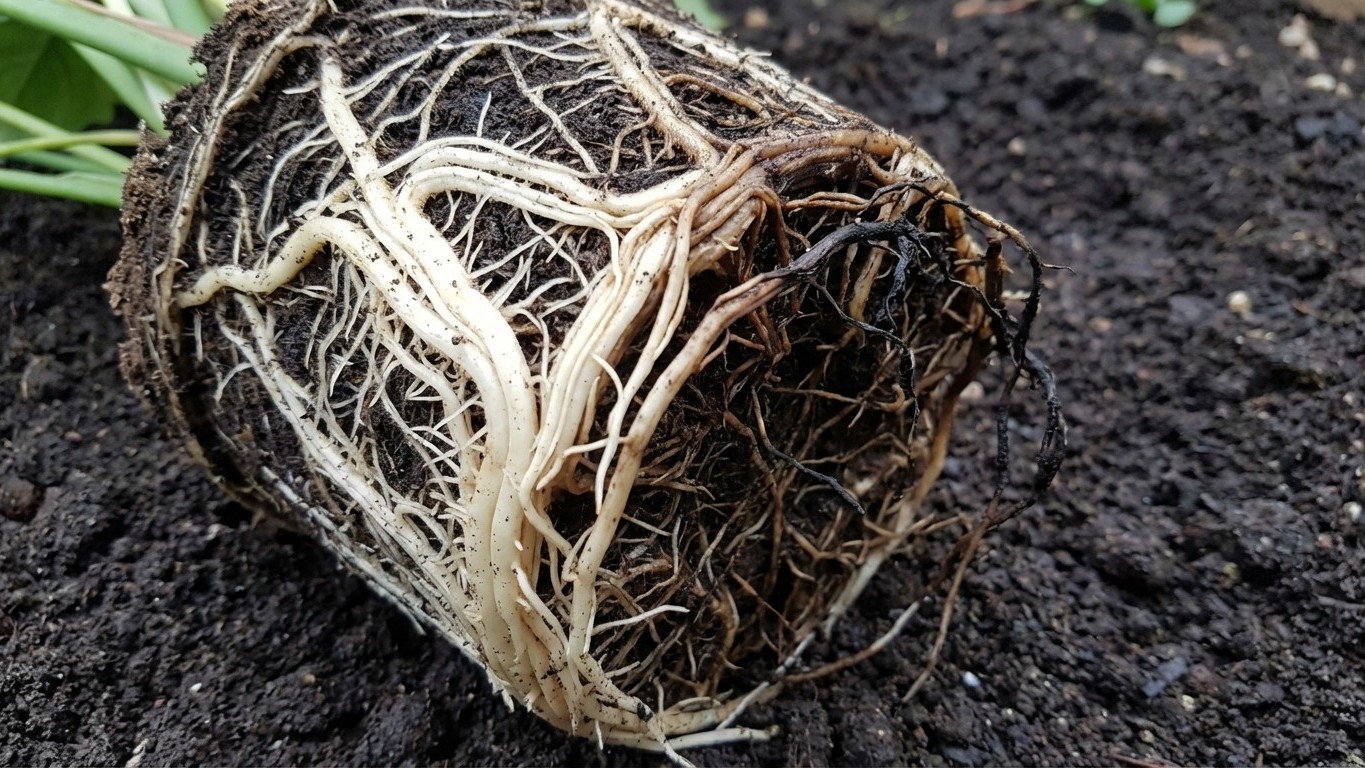
One afternoon, while wrestling a stubborn peace lily from its pot, I finally saw it. Dark, circling roots wrapped around the bottom like a twisted nest. But here’s what changed everything: these weren’t the white, healthy roots I expected from a supposedly root-bound plant. They were brown, mushy, and broke apart at the slightest touch.
That’s when I realized I’d been reading the signs all wrong.
Key takeaways
- What looks like a root-bound plant might actually be drowning in root rot
- Healthy root-bound plants show white, firm roots—not brown, mushy ones
- The real danger happens when circling roots start changing color, signaling suffocation from compacted, waterlogged soil
The Root Color Revelation
Most plant parents know to check for roots growing through drainage holes or circling the soil surface. These obvious signs scream “repot me now!” But healthy root-bound plants show white or cream-colored roots, firm, flexible, and very much alive.
The overlooked sign? Root color degradation. When those circling roots turn brown or black, you’re not dealing with a simple case of outgrowing the pot. You’re looking at the early stages of root rot, often triggered by the very conditions that come with being severely pot-bound.
Think about it this way: a plant that’s been cramped for months develops compacted soil that drains poorly. Water sits longer than it should. Roots, already stressed from overcrowding, start suffocating in waterlogged conditions. What begins as a need for more space Becomes a race against root death.
I learned this lesson the hard way with a fiddle leaf fig that had been “thriving” for two years in the same pot. The surface roots looked textbook perfect, white and abundant. But six inches down, the story was different. Dark, deteriorating roots had been slowly dying while I waited for more visible signs of distress.
Reading Your Plant’s Underground Story
Healthy roots should feel like al dente pasta, firm with just a slight give. Rotten roots feel like overcooked noodles, mushy and falling apart. The smell tells another story entirely. Fresh roots have an earthy, almost sweet scent. Rotting roots? That’s the musty, swamp-like odor that makes you wrinkle your nose.
But you don’t need to unpot every plant to check. Several above-ground signals point to below-ground problems. Leaves that yellow from the bottom up, despite proper watering and light. Growth that slows dramatically during the growing season. Soil that takes forever to dry out, even in spring and summer.
Here’s a simple test I now use: gently tip the pot and look at the drainage holes. If water drains slowly or not at all, even when the soil surface appears dry, you might be dealing with root rot rather than just a tight fit.
The timing matters too. A plant that suddenly shows distress after months of stability often has root issues developing. Gradual decline isn’t always about needing bigger accommodations, sometimes it’s about saving what’s left of the root system.
The Repotting Strategy That Actually Works
Once I started Checking root color before assuming pot size was the issue, my repotting success rate improved dramatically. The process became less about upgrading real estate and more about root system rehabilitation.
For plants with darkened roots, I now trim away all the brown, mushy sections before even considering pot size. Sometimes this means removing 30-40% of the root system, a scary prospect that actually gives the plant a fresh start. Healthy white roots left behind have room to spread and establish themselves properly.
The soil change Becomes crucial at this point. Even if the old pot seems adequate after root trimming, fresh, well-draining soil prevents the conditions that created the problem initially. I’ve learned to view repotting as root system surgery, not just a housing upgrade.
Watering after this type of repotting requires patience too. Those trimmed roots need time to develop before they can handle the plant’s full water requirements. I water less frequently for the first month, allowing the soil to dry out more between waterings than I normally would.
Prevention Worth Mastering
The best repotting happens before root color changes. I now check my plants’ roots annually, not just when they show distress. A quick peek at the bottom of the pot during regular maintenance reveals more than waiting for crisis signals.
Spring root checks have become routine in my plant care schedule. I gently slide plants from their pots to assess root health and spacing. White, firm roots that circle the bottom get repotted immediately. Brown or black roots get the full treatment, trimming, fresh soil, and careful monitoring.
This proactive approach means my plants rarely reach the crisis point where root rot threatens their survival. They get upgraded housing while their root systems are still robust enough to handle the transition smoothly.
The irony isn’t lost on me. I spent years focusing on the most obvious repotting signals while missing the one that mattered most for plant health. Now I wonder, what other “obvious” plant care wisdom might be hiding more nuanced truths beneath the surface?