
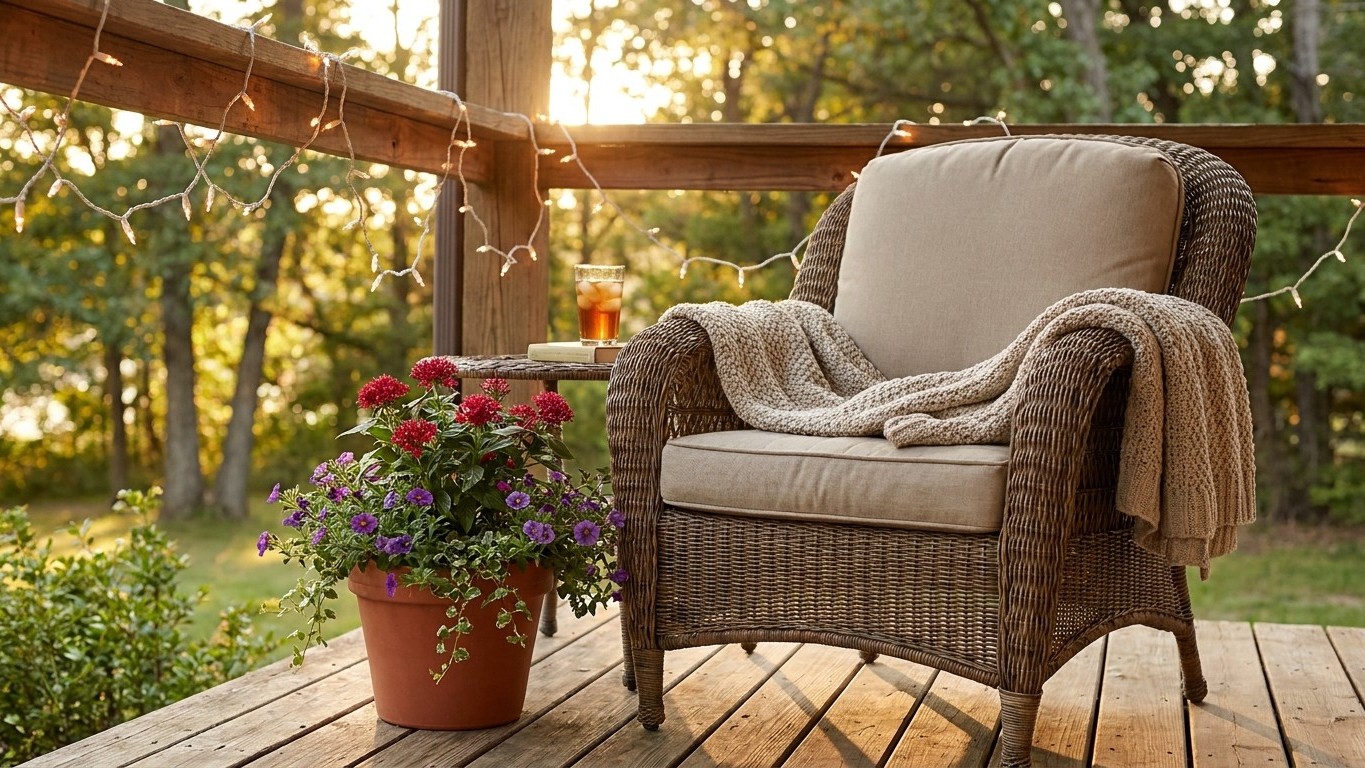
Summer porch decorating isn’t about buying everything new, it’s about choosing the right materials the first time. The difference between a porch that looks great in June and still holds up in August comes down to three decisions: what you put on the floor and furniture, what you plant in your containers, and how you light the space after dark. Get those three right, and you’re set for the season without chasing repairs every other weekend.
Key takeaways
- The material science behind outdoor textiles has transformed completely—but one detail separates fabrics that fade in weeks from those that stay vibrant for years
- Container gardening looks effortless on Instagram, but one small setup tweak can cut your watering chores in half and keep plants thriving through heat waves
- Most string light failures have nothing to do with the bulbs—and everything to do with a single $20 upgrade that extends the lifespan from one season to four
Weatherproof Textiles That Actually Survive the Summer
Outdoor fabric has come a long way from the stiff, color-fading vinyl of the 1990s. Solution-dyed acrylic, the kind developed for the marine and awning industries, is now widely available in standard porch cushion sizes and genuinely handles UV exposure without ghosting out. The key word here is “solution-dyed”: the color is baked into the fiber during manufacturing, not applied on top. Regular polyester outdoor fabric might look similar in a store, but after six weeks of direct sun, the difference is visible.
Mildew resistance matters just as much as UV stability. Humid summer afternoons leave moisture trapped between cushions and chair frames, and standard foam fills will grow mold inside even if the cover looks clean. Look for cushions filled with open-cell polyester fiber or quick-dry foam, both allow water to pass through rather than pool. Some manufacturers now specify drainage holes in the seat base, which adds another layer of protection on covered porches where rain still blows in at an angle.
Rugs are the item most people under-invest in. A polypropylene flatweave rug handles rain, foot traffic, and direct sun better than almost any other material, and it dries within an hour of a downpour. The flat construction (no pile to trap moisture) is what makes the difference. Jute and sisal look appealing but start breaking down within one season when exposed to repeated wetting, save those for interior rooms where the aesthetic works without the weather penalty.
Plants That Thrive on a Summer Porch
Container selection shapes plant health before you even choose your varieties. Terra cotta looks classic but wicks moisture so aggressively in summer heat that plants in small pots need watering twice a day. Glazed ceramic or double-walled resin containers hold moisture far better and don’t crack when temperatures swing between a hot afternoon and a cool night, a real issue for unglazed clay in northern states.
For the plants themselves, the reliable performers depend on your porch’s sun exposure. A south-facing porch with full afternoon sun suits portulaca, pentas, and zinnias, all of them genuinely drought-tolerant once established. A shaded or east-facing porch is where impatiens and caladiums earn their reputation; caladiums in particular deliver bold foliage color (chartreuse, red, white variegated) without requiring a single bloom. Mixing thriller plants (tall and architectural, like canna lily or ornamental grass) with filler plants (mounding, like sweet potato vine) and spiller plants (trailing, like bacopa or calibrachoa) gives containers a finished look that holds through the whole season.
One underused option for summer porches: edible containers. A large pot with cherry tomatoes, basil, and a compact pepper plant pulls double duty, visual interest and a functional harvest. Tomatoes trained up a simple bamboo stake read as vertical interest from the street. The combination works especially well near a kitchen door, where you’re walking past it daily anyway.
Watering frequency drops significantly with a self-watering insert or a layer of horticultural water-retention gel mixed into the potting soil. These aren’t gimmicks, the gel absorbs up to 400 times its weight in water and releases it gradually as soil dries. During a week-long heat wave, that difference can mean the gap between thriving plants and replacing them.
Lighting That Lasts From June Through Labor Day
String lights are the default porch lighting choice, and most sets sold at hardware chains are adequate for a single season. But if you’ve replaced a set two summers in a row, the problem is usually the socket material, not the bulbs. Look for commercial-grade sockets with rubber gaskets around each bulb connection. Water infiltrates the socket housing on cheaper models, corrodes the connection, and produces the classic “half the string is out” failure. Spending an extra $20-30 on a commercial-grade set typically buys three to four seasons instead of one.
Solar lanterns have improved enough since 2023 that they’re now a credible option for ambient porch lighting. The best performers use lithium-ion batteries (not nickel-metal hydride) and operate on a dusk-to-dawn sensor. A panel that receives four hours of direct sun will power a lantern for six to eight hours of output, enough to carry through the evening in most of the U.S. during summer months when sunset isn’t until 8 or 9 PM.
Placement matters more than wattage. A single overhead string isn’t as effective as layering: string lights at ceiling height, a lantern or two at table level, and optional pathway lighting along porch steps. The layered approach creates depth and makes the space feel intentional rather than just illuminated. Warm white (2700-3000K) reads as inviting and is far easier on the eyes than cool white (5000K+), which tends to flatten shadows and make the space feel clinical rather than comfortable.
One practical note worth factoring into your setup: UV stabilizers in plastic socket housings and string light wire coatings have a defined lifespan, typically rated in hours of exposure rather than calendar years. Running lights every night from May through September adds up to roughly 600-700 hours, which explains why some sets fail right at the two-season mark regardless of how carefully you store them in the off-season.