
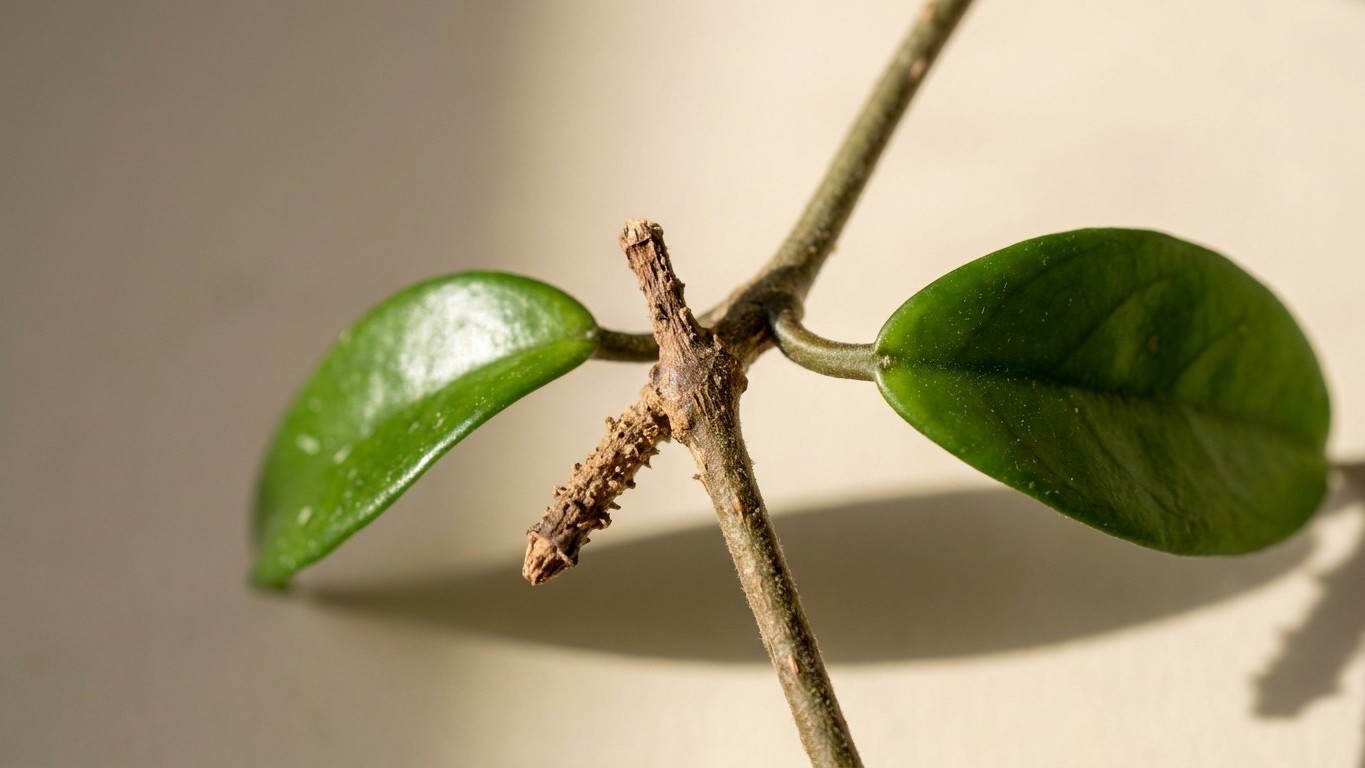
The cutting came wrapped in a damp paper towel, three nodes of Hoya carnosa with a pair of waxy leaves already catching the light. My neighbor pressed it into my hands with the kind of casual generosity that plant people have, then stopped herself mid-turn and added: “Never touch the stubs. Whatever you do.” She walked away before I could ask what she meant.
That single instruction, cryptic, urgent, completely unexplained, turned out to be the most useful piece of plant advice I’ve received in years. And understanding why requires a short detour into how Hoyas actually grow.
Key takeaways
- Your neighbor’s mysterious warning about ‘stubs’ might be the most useful plant advice you’ll ever receive
- Those brown, desiccated-looking bits aren’t dead—they’re your Hoya’s secret weapon for reblooming season after season
- Most Hoya owners accidentally sabotage their own plants by removing what they think is dead wood
What stubs are, and why Hoyas make them on purpose
Hoya vines don’t just throw out growth randomly. Once a peduncle forms, that’s the woody little spur that holds a cluster of flowers, the plant has every intention of reusing it. After the flowers drop, the peduncle stays attached to the stem, looking for all the world like a dead twig you should snip off. This is the stub. It isn’t dead. The plant is simply waiting for the next bloom cycle, often for the following season, sometimes longer.
Cut it off and you’ve reset the clock entirely. The plant must generate a brand-new peduncle from scratch, which takes energy and time that a mature Hoya would rather spend on developing a second, third, or fourth flush from the exact same spur. Some collectors have peduncles that have bloomed a dozen times over several years, the stub getting incrementally longer with each cycle. One well-documented Hoya kerrii peduncle in a Singapore grower’s collection had been in active use for over eight years before the vine was repotted.
The frustrating part is that fresh stubs look indistinguishable from dead plant material to anyone who hasn’t been warned. They’re often brown, slightly desiccated, and positioned in a spot where you’d naturally tidy up during a pruning session. New gardeners remove them by the dozens, then wonder why their Hoya never reblooms despite perfect light and careful watering.
The right way to propagate without losing your peduncles
Here’s where the cutting my neighbor gave me becomes instructive. She had trimmed the vine, yes, but she had been extremely deliberate about where each cut landed. The segment she handed me included nodes (where future roots and leaves emerge) but no peduncles. She had preserved every flowering spur on the parent plant, cutting only from sections of vine that hadn’t yet developed them.
Propagating Hoyas successfully comes down to understanding this anatomy. A healthy cutting needs at minimum two nodes to root reliably, and placing one node below the water line or soil surface gives the cutting a strong anchor. Aerial roots, those small brown nubs already visible along the stem, will become proper roots within two to four weeks in water or a moist medium like perlite. The cutting doesn’t need rooting hormone, Hoyas are forgiving propagators, but it does need indirect light and stable humidity. A clear plastic bag loosely draped over the cutting for the first week or two creates a microclimate that significantly reduces wilting stress.
Water propagation works well for visual learners because you can monitor root development without disturbing the cutting. Once roots reach two to three centimeters, transferring to a well-draining mix (a 50/50 blend of Potting Soil and perlite is a reliable standard) gives the new plant its best start. The transition from water to soil stresses the plant briefly; don’t be alarmed if one leaf yellows and drops.
What Hoyas actually need to bloom
Even with every peduncle intact, a Hoya won’t bloom without the right conditions, and many growers get the light equation wrong first. Hoyas are sun-hungry for tropical plants. A north-facing windowsill that keeps a pothos thriving will leave a Hoya alive but stubbornly flowerless. They want bright indirect light for most of the day, with some direct morning sun if available. East-facing windows are close to ideal in most U.S. homes.
Root crowding, counterintuitively, encourages blooming. A Hoya that’s slightly pot-bound redirects energy from root expansion toward reproduction, which means flowers. Repotting into a much larger container when the plant looks healthy and established can actually delay blooming by a full growing season. The standard advice is to go up only one pot size at a time, and only when roots are clearly circling the drainage holes.
Temperature consistency matters more than most guides admit. Hoyas tolerate a range of household temperatures, but fluctuations, a cold draft from a window in January, a heat vent blowing directly on foliage — interrupt the plant’s internal rhythms. Some growers deliberately expose their Hoyas to slightly cooler nights (around 60°F) in fall, mimicking the seasonal shift that triggers bloom initiation in the wild. It works, though it requires keeping the plant away from heating sources that cycle on and off through the night.
A few things worth knowing before you inherit someone’s cutting
Hoyas are slow. A rooted cutting from a Hoya carnosa typically takes two to three years before producing its first peduncle. From a Hoya pubicalyx, you might wait slightly less if conditions are ideal. Patience isn’t optional here, it’s the price of admission for one of the most rewarding houseplants in the hobby.
The waxy star-shaped flower clusters, called umbels, produce nectar actively while open. Placing a blooming Hoya on a light-colored surface can let you see the nectar drops forming overnight, which is either delightful or mildly alarming depending on your disposition. The scent, strongest in the evening, ranges from mild vanilla in H. carnosa to something closer to chocolate in H. obovata. There are over 500 described Hoya species, and collectors who start with one cutting often find themselves, two years later, running out of windowsill space for the ones they’ve acquired since.