
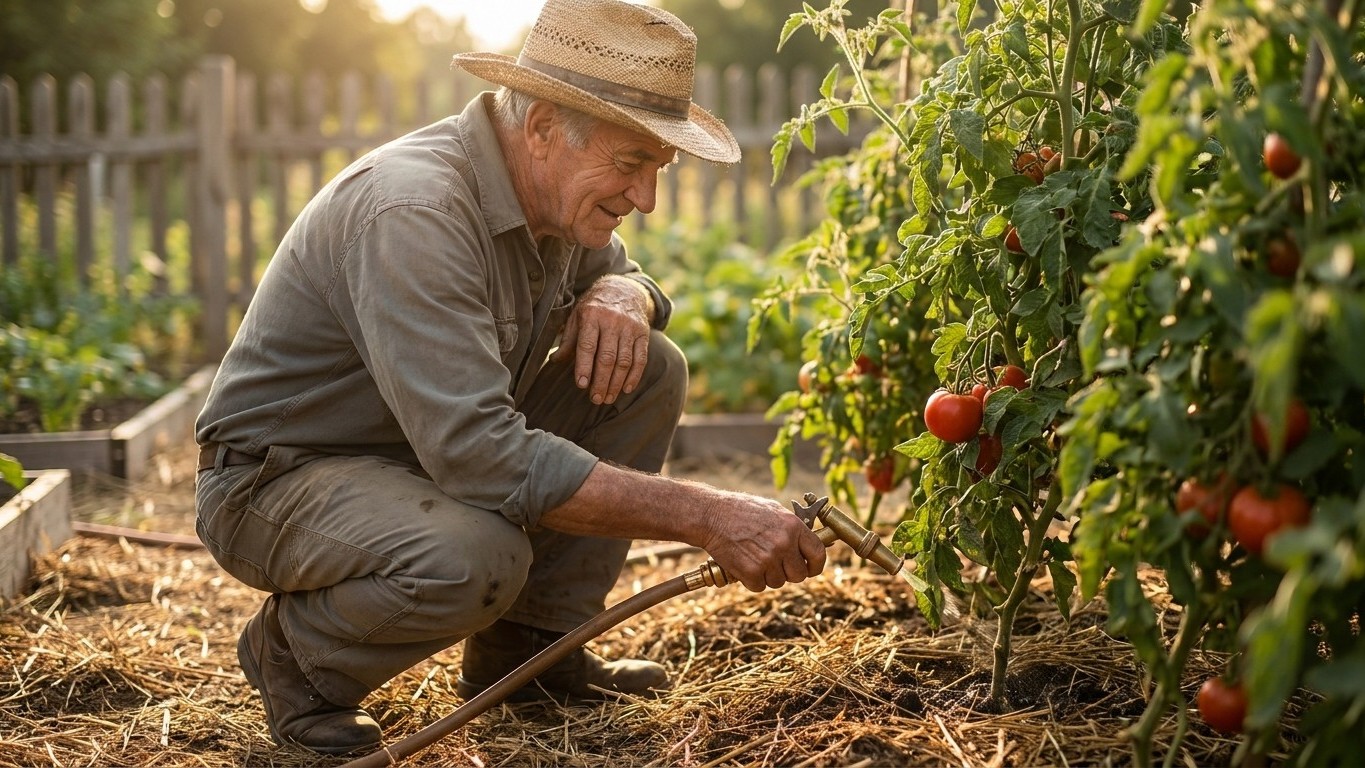
Every summer evening around 8pm, my father would grab the hose and head to the tomato patch while the rest of the neighborhood watered at dawn. I used to tease him about it: “The sun’s already down, Dad, you missed your window.” He’d just shrug and keep filling the watering can. It took me years of my own failed tomato plants, blighted leaves and all, to realize he’d been running a smarter operation than I gave him credit for.
The gardening world has a near-unanimous rule: water tomatoes in the morning. Watering tomato plants in the morning is best because it gives the moisture a chance to penetrate the soil before being evaporated by the sun’s peak hours of the day. Most extension guides repeat the same warning about evening watering, and for good reason: if an overhead sprinkler is used to water the tomatoes, watering the plants in the morning reduces foliar disease problems. On paper, my father was breaking the golden rule every single night.
Key takeaways
- The real enemy isn’t evening watering—it’s wet leaves sitting in darkness for hours
- One irrigation method matters far more than timing, and it’s not what most gardeners use
- A 95-degree afternoon soak can scald tomato plants just as badly as neglect
The Real Culprit Isn’t the Clock, It’s Wet Leaves
Here’s the nuance nobody mentioned at family barbecues: the disease risk everyone associates with “night watering” doesn’t actually come from the hour on the clock. It comes from moisture sitting on foliage for hours on end. Wet leaves overnight cause fungal disease, not night watering itself. Tomatoes are magnets for trouble here, since tomatoes are particularly prone to early blight and septoria leaf spot, both of which thrive with extended wet foliage. The timing matters less than what actually gets wet.
My father, without ever reading a single extension bulletin, had already solved this. He never once used a sprinkler. He crouched at the base of each plant with the hose nozzle nearly touching the soil, filling the little moat he’d built around each stem, and never sprayed a single leaf. That habit alone put him miles ahead of the neighbors blasting their whole tomato row with an overhead sprinkler at sunset. Experts today essentially confirm his instinct: if you must water tomatoes in the evening, use drip lines or a soaker hose at the base and avoid any contact with the foliage, since morning is strongly preferred for any overhead watering.
Why 8pm Specifically, and Not High Noon
There’s also a practical reason evening watering made sense on his particular patch of dirt, which baked in full sun until late afternoon. Water applied during the hottest stretch of the day barely reaches the roots before evaporating. The best times to water are early morning or early evening, since watering in the heat of the day leads to evaporation and less water reaching the roots. By 8pm, the soil had cooled slightly but hadn’t lost its stored daytime warmth, so water soaked in rather than steaming off the surface. Waiting also sidestepped a subtler danger: watering plants once the day has gotten too warm means the water can be heated up by the sun and actually burn the plant. A midday soak on a 95-degree afternoon can scald foliage almost as badly as neglect.
He also wasn’t watering lightly and often. It was one deep soak, roughly every three or four days, never a quick daily splash. That single habit Matters More Than the hour you choose. The best time to water tomatoes is first thing in the morning before the sun is too strong, which reduces evaporation and allows the soil to dry thoroughly during the day. But when mornings weren’t an option, because he worked a job an hour from the house and left before sunrise, a deep evening soak aimed strictly at the roots became the next-best substitute rather than a mistake.
What the Science Says About the Wetness Window
Plant pathologists actually put a number on this. Research published in PLOS ONE found that bacterial leaf spot on stone fruits required as little as 5 hours of continuous leaf wetness at temperatures between 77°F and 95°F to reach high disease severity. That’s the real danger zone: warm, wet leaves sitting in the dark for hours. Since my father’s tomatoes never had wet leaves to begin with, that clock never started ticking against him. Fungal problems on his plants, when they showed up at all, traced back to a rainy week, not to his watering can.
Soil-based disease is the other piece extension offices flag for evening watering, and it’s worth taking seriously if your yard drains poorly. If you water in the evening, you’re more likely to encounter soil-borne fungal and bacterial diseases that thrive in cool, damp environments, and freshly watered tomato plants after dark become prime real estate for them. That’s a legitimate risk, and it’s why mulch and good drainage did as much work in his garden as the timing of the hose. A layer of straw mulch around the base kept splashback and lingering dampness to a minimum, which mattered more than whether the watering happened at 6am or 8pm.
The Verdict, Decades Later
My father wasn’t defying the rulebook. He was following the part of it that actually mattered, watering deeply, at the base, avoiding the foliage, and dodging the worst heat of the day, while ignoring the clock-watching detail that gets repeated the most but changes the least. If your garden gets brutal afternoon sun and mornings aren’t realistic for your schedule, a careful 8pm soak with a soaker hose aimed at the soil, not the leaves, will serve your tomatoes just fine. Just leave the sprinkler in the shed. That’s the one habit that actually separates a healthy August harvest from a blighted one, regardless of what time your alarm goes off.
Sources : rasnetwork.org | gardeningchannel.com