
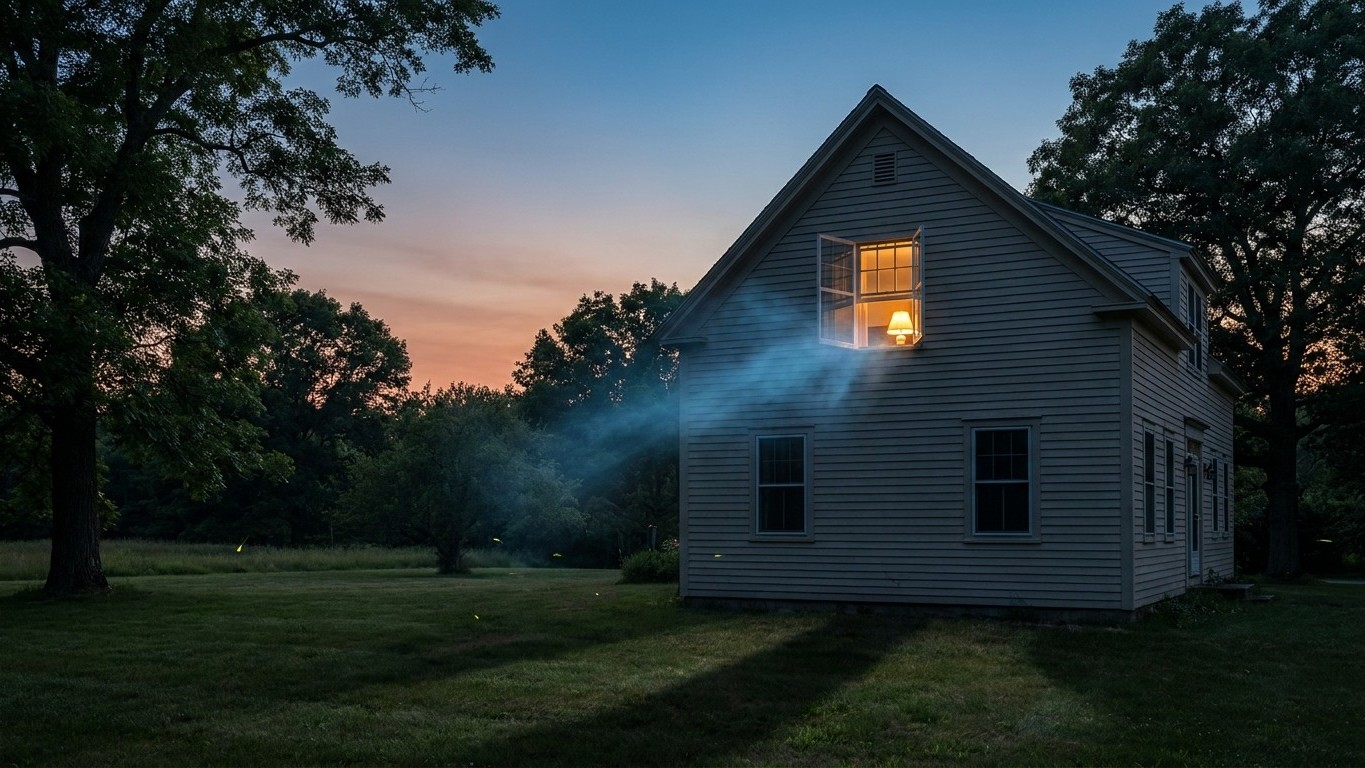
Ten p.m. That’s roughly when the thermal math finally tips in your favor during a heat wave, according to building physics specialists tracking why so many homes stay stifling all summer. Before that hour, opening your windows doesn’t cool anything down. It just invites more heat inside.
The habit feels harmless: crack a few windows at lunchtime, let a breeze move through the house, assume you’re helping. But when the thermometer climbs above 35°C, throwing open the windows seems to be the first impulse, hoping for a saving breeze, and that is exactly what building professionals and health agencies say you should not do. The reasoning isn’t complicated once you see it laid out.
Key takeaways
- Midday window-opening during heat waves invites hotter air inside instead of cooling your home
- The thermal flip happens around 10 PM when outside air finally cools below indoor temperatures
- Proper timing and positioning of windows can create a 5-10 degree temperature difference overnight
Why Opening Windows at Noon Backfires
Heat follows one rule, and it doesn’t care about your comfort. Heat always moves from warmer to cooler areas until equilibrium is reached, following the Zeroth Law of Thermodynamics. During the hottest hours, the air sitting outside your house is almost always hotter than the air trapped inside, even in a home that’s already uncomfortably warm. Crack a window then, and you’re not inviting relief. You’re inviting more heat.
The math is straightforward. The most reliable rule of thumb is not to open your windows when the outside air is hotter than the inside air; if your home is at 25°C but it’s 29°C outside, opening the windows lets in heat instead of cooling the house. Your walls, floors, and furniture have spent the whole day absorbing solar energy like a battery charging up. The building materials have absorbed calories all day long, and night represents the only genuine window for thermal clearing.
There’s a visual most of us never think about, but it explains a lot. An unprotected window acts like a magnifying glass, concentrating solar radiation that then gets absorbed by Everything it touches and re-released as heat for hours afterward. That’s why a bedroom that felt fine at 8 a.m. can be an oven by 4 p.m., long after the sun has moved past the window itself.
The Real Window: Why 10 p.m. Changes Everything
Once night falls, the equation flips. The most favorable time to create a refreshing air flow is at night or very early in the morning, when outside air has shed most of its heat, and many specialists point to the window of time between 10:00 p.m. and sunrise as the genuine opportunity. This isn’t a minor tweak, either. Careful management of openings during that stretch can produce five to ten degrees of difference, simply by managing when to open and close windows.
The logic runs in reverse from midday. During the day, opening windows mainly admits hot air, but at night, outside air often drops a few degrees, and that is the right moment to create cross-ventilation and expel the heat that has accumulated in walls, floors, and furniture. Think of it as flushing the house, literally pushing the day’s stored heat back out into the cooler night air before it has a chance to radiate into your living space the next afternoon.
French housing data backs up just how widespread the problem is. According to the Qualitel 2025 Barometer, 74% of French people have already faced a heat wave, and 66% say they have experienced heat inside their home, suffering when a simple gesture like closing windows before noon could make all the difference. A French energy agency reinforces the urgency of timing this correctly: ADEME insists you shouldn’t wait too long to close the windows because heat can rise very quickly by mid-morning, and windows should only be open when it’s coolest, namely during the night and early morning.
American guidance lands on a similar, if slightly earlier, cutoff. One home performance source recommends opening windows at night and early in the morning, ideally before 9 a.m., when outdoor air is cooler than the air inside, since that’s when natural ventilation works in your favor. The exact hour shifts depending on your climate and how quickly the sun heats your street, but the principle holds everywhere: outdoor temperature has to drop below indoor temperature before opening anything makes sense.
How to Actually Flush the Heat Out
Cross-ventilation only works if air has somewhere to go. Opening one window lets in a trickle. Opening two, on opposite sides of the house, creates an actual current. Open windows on multiple sides of the house to create cross ventilation, letting cooler air flow through and push warm air out. Position matters as much as timing: position openings so air flows from a cooler, shadier part of the house through to a warmer side to maximize the effect.
Fans speed up the process considerably, but only if you use them correctly. Window fans are a cost-effective tool, and the key is using two rather than one: position one fan to draw cool air in from the shaded or cooler side of the house, and a second fan to push warm air out from the sunny or upper side. For a multi-story home, the logic scales up: place inward-blowing fans at the lower level to pull cool air in and outward-blowing fans at the upper level to exhaust rising warm air.
Once morning arrives, the discipline matters just as much as the nighttime opening. Sleep in and forget to shut things up, and you’ll lose everything you gained overnight. Once outside temperatures start climbing past indoor temperatures, close everything back up. Pair that with exterior shading rather than interior curtains for maximum effect, since exterior shading is more effective than interior window treatments because it blocks solar heat before it reaches the glass rather than after.
The Humidity Catch Nobody Mentions
None of this works if the night air is soupy. Humidity changes the entire calculation, and it’s the detail most heat-wave advice skips. Turn off the air conditioners and open your windows in the summer when nighttime temperatures are below 70 degrees and humidity levels are below 50%-60%; if outdoor humidity levels pass that threshold, you should keep the windows closed. Muggy night air doesn’t just feel unpleasant, it actively works against the flushing strategy by loading your house with moisture that lingers well past sunrise, making the following afternoon feel hotter even at the same temperature.
There’s one legitimate exception to the whole “wait for cooler air” rule, and it’s worth knowing before you swelter needlessly. If your indoor temperature has already climbed to match the outdoor reading, timing no longer matters. In that scenario, if indoor temperature has risen to match or exceed outdoor temperature, there is no cool air left to protect, and opening the windows to create any air movement is better than leaving them closed in a stagnant, airless room. At that point, any breeze beats none, whatever the clock says.
Sources : greensavers.com | quora.com