
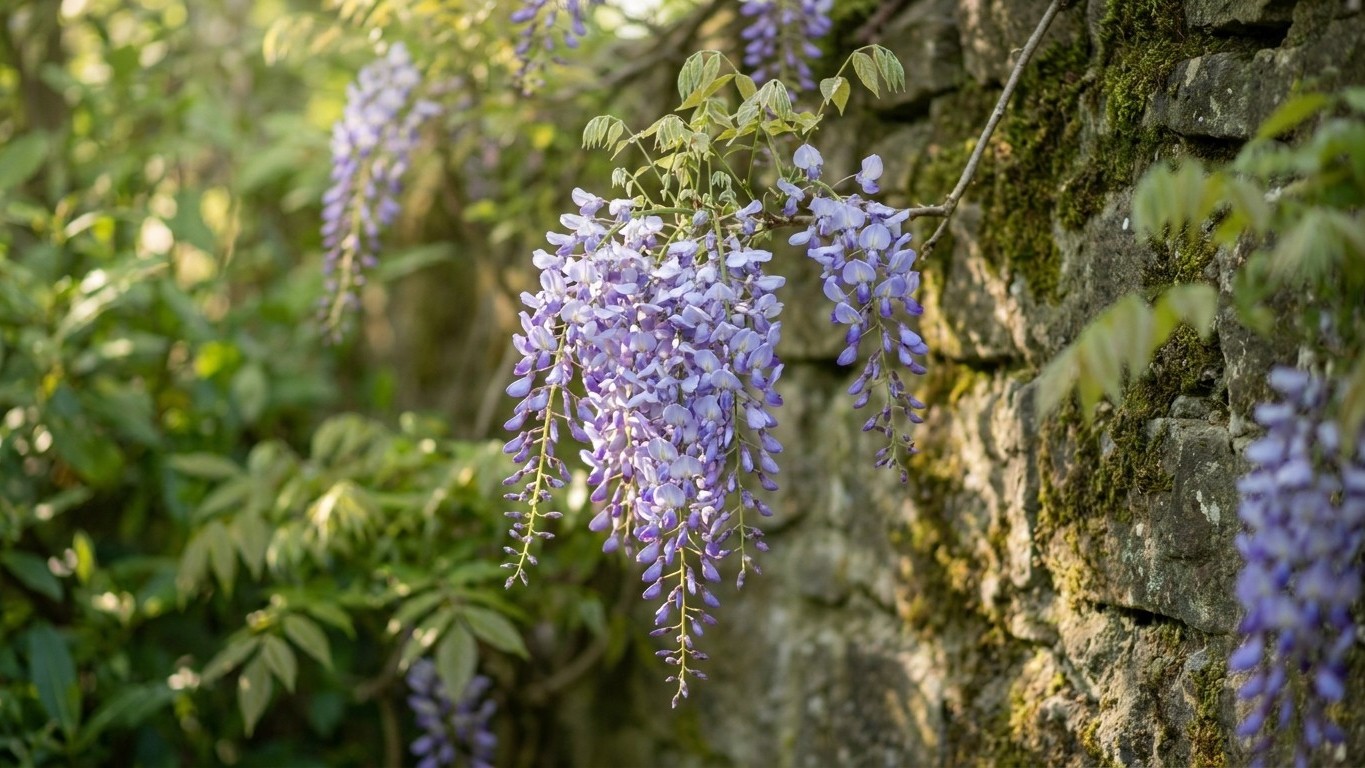
Cutting back wisteria’s long, floppy summer growth in July has nothing to do with keeping the garden looking neat. It’s a targeted move that forces the plant to swap leafy sprawl for flower buds, and by next spring those stubby cut-back shoots are exactly where the cascading blooms show up.
Wisteria is famous for two things: jaw-dropping spring flower displays and an almost aggressive appetite for growth. Wisteria grows 10 feet or more in a single season, making it one of the most vigorous woody climbers you can plant. Left alone, all that vigor goes into green shoots, not flowers. That’s the whole reason generations of gardeners reach for the secateurs in July rather than waiting for the traditional winter pruning window.
Key takeaways
- A July cut that seems harsh actually triggers the plant’s transition from leaf-making to flower-bud formation
- The science behind the old-timers’ method: sunlight ripening wood at the cellular level changes everything
- RHS research reveals twice-pruned wisteria produces 60-70% more flowers than once-pruned plants
The mechanism behind the July chop
Right after flowering finishes, wisteria throws out what growers call whippy shoots: soft, fast-growing green stems that can stretch several feet in just a few weeks. The summer cut removes long, leafy whippy shoots the plant produced while flowering and immediately after, shoots that contribute almost nothing to flower production. Left in place, they don’t just look messy. They shade younger wood below and divert the plant’s energy into more vegetative growth.
Shortening them does something surprisingly specific at a cellular level. Cutting them back to 5-6 leaves opens the canopy, improves air circulation, and allows sunlight to reach the base of the young shoots. That sunlight ripens the wood and triggers the process that differentiates flower buds rather than more leaves. In plain terms: sun-baked wood tells the plant to make flowers, shaded wood tells it to keep growing leaves. The old-timers weren’t tidying, they were manipulating light exposure without knowing the biochemistry behind it.
The numbers back up the folklore. Research by the RHS confirms that twice-pruned wisteria produces significantly more flower racemes than plants pruned once or not at all, and gardeners who only prune once, typically in winter, see 60-70% fewer flowers. That’s not a marginal improvement. That’s the difference between a wall smothered in purple racemes and a handful of scattered blooms hiding behind foliage.
Getting the timing and the cut right
Timing matters more than most people assume. After flowering, in July or August, cut back the whippy green shoots of the current year’s growth to five or six leaves. This controls the size of the wisteria, preventing it from growing into guttering and windows, and encourages it to form flower buds rather than green growth. Prune too early, while the plant is still surging with growth, and you’ll just trigger a fresh flush of the same whippy stems. Pruning too soon after blooming often triggers even more vigorous regrowth because the vine is still in its strongest growth phase, so waiting until mid-to-late summer allows growth to slow naturally, making the prune more effective.
There’s a hard deadline on the other end of the calendar too, and it’s easy to miss. The summer pruning window opens after flowering finishes and closes at the end of August; once September arrives, wisteria begins forming next spring’s flower buds on the current season’s ripening wood, and pruning in late September removes those buds, losing a full season. Miss the window and there’s no fixing it until next year. That’s a costly mistake for a plant that only blooms once a year.
The actual cut is refreshingly simple, no ladder acrobatics or complicated angles required. Reduce the new, green, whippy shoots back to just five or six leaves. This is an important prune to keep your wisteria at a manageable size and to encourage a better display of flowers. Don’t stress over exact counts. It’s not critical to precisely count five buds or leaf stalks, that’s an optimum number to aim for. While you’re at it, deal with the leftovers from spring’s show. If your vine also has bare stems hanging downwards, snip those off too, since these are what’s left of this year’s flowers and they’ll soon turn yellow and look unsightly.
Winter finishes what July started
The July cut is only half the job, and skipping the second half undoes most of the benefit. In February, further shorten these shoots to two to three buds, about 10cm (4in), to tidy the plant before the growing season starts. This is the point where those swollen, near-spherical flower buds become visible against the bare wood, distinct from the narrower, pointed leaf buds nearby.
Skip the winter follow-up and you’re left with long stubs that shade the very spurs you’re trying to build. A well-pruned wisteria builds up a spur system over 3-5 years that reliably delivers cascading blooms every spring, but that system only forms with both cuts done, year after year. It’s a slow investment. There’s no shortcut to a mature spur network, but once it’s established, the plant more or less runs on autopilot, rewarding a few minutes of snipping twice a year with weeks of flowers.
One detail worth remembering
Feeding schedules matter here too, and it’s counterintuitive for anyone used to reaching for fertilizer whenever a plant looks like it needs a boost. Too much nitrogen can encourage an abundance of leaves and vigorous shoots while reducing flower production the following spring, so if the plant is growing in poor soil, a fertilizer lower in nitrogen and richer in potassium supports flower bud development rather than leafy growth. Pair that light-touch feeding with the July chop and the winter tidy-up, and there’s no mystery left in why the neighbor’s wisteria blooms like a postcard while another one, planted the same year, just makes leaves.
Sources : homesandgardens.com | bloomingexpert.com