
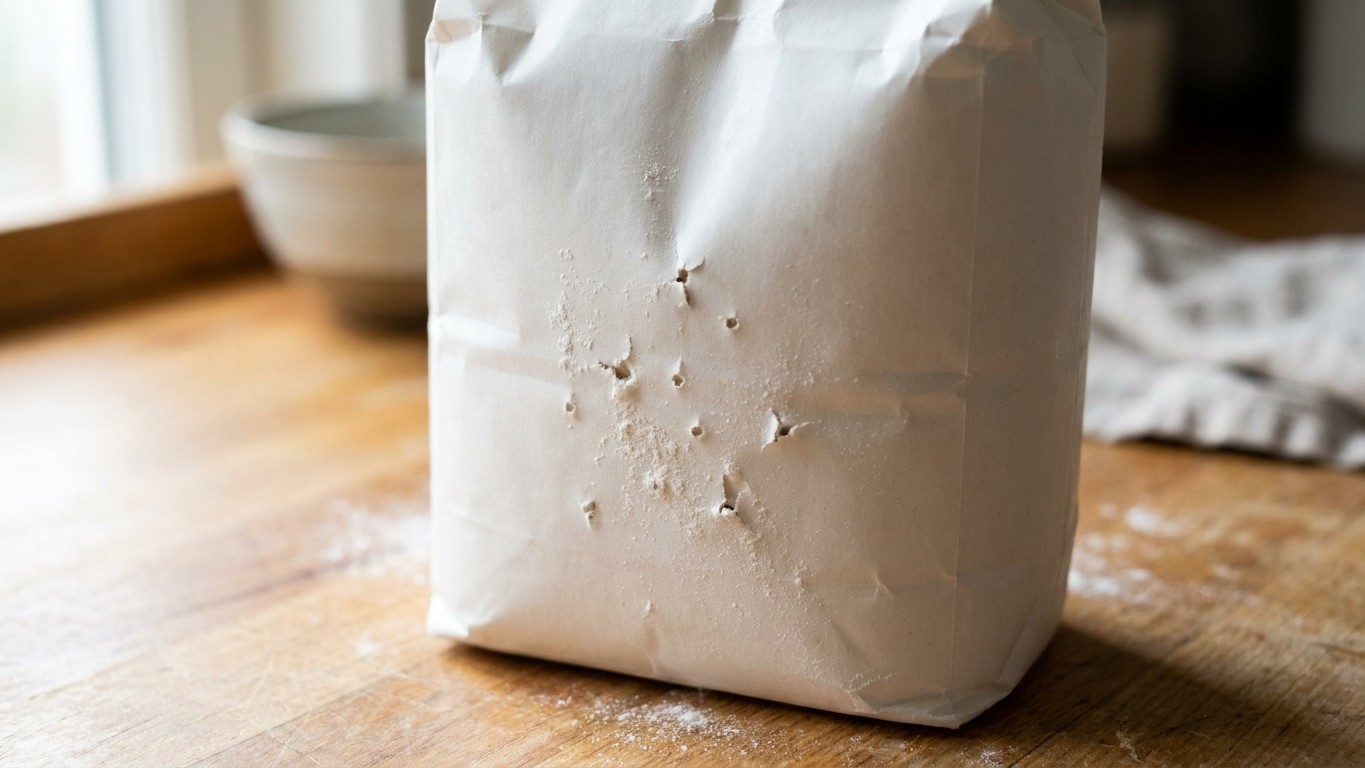
Small holes, no bigger than a pinprick, scattered across the plastic seal of a flour bag. That’s the moment it clicks: those pests didn’t come from a dirty shelf or a forgotten crumb. They chewed their way through the packaging itself, and no amount of scrubbing was ever going to stop them.
The bugs responsible go by several names, but the usual suspects in an American kitchen are Indian meal moths and grain weevils. Both are small enough to slip past notice until the damage is done. The adult pantry moth is small, measuring only ¼ to 3/8 inch in length with a wingspan of ½ to ¾ inch. Weevils are even more discreet: typically only a few millimeters long or about 1/8 inch. Neither one needs much of a gap to get where it’s going, and neither one is stopped by a folded-over bag or a twist tie.
Key takeaways
- Tiny holes in flour packaging mean larvae actively chewed through—and standard plastic bags can’t stop them
- The infestation probably started at a food facility or bulk bin, not in your pantry, so blame your housekeeping all you want
- Aggressive cleaning is useless; the only real solution is switching to airtight glass or rigid plastic containers
Why plastic packaging isn’t a real barrier
Here’s the uncomfortable truth: standard flour packaging was never designed to be insect-proof. Pantry pests are most likely to infest products that have been opened but they also can get into unopened paper, thin cardboard, and plastic, foil or cellophane-wrapped packages. They may chew their way into packages or crawl in through folds and seams. That’s not a manufacturing defect. It’s simply that the plastic film used in most consumer flour bags is thin enough for larvae with strong mandibles to bite through.
Weevils are particularly persistent. They have the ability to chew through these materials or find their way in through small openings, folds, or seams. Weevils might also be present in a package from the moment it is sealed if eggs or adult weevils were already inside. One entomology blog even described a case where a bag of organic wheat berries had weevils chew right through multiple layers of plastic bags, proving that doubling up on flimsy bags doesn’t solve much.
And this is the part that surprises most people: the infestation often didn’t start in your pantry at all. Although you may need to do some serious cupboard cleaning, don’t lay the blame for the infestation on your poor housekeeping. Meal moths probably laid those eggs at a food-packaging facility or in the bulk bins at the natural food store. The eggs can sit dormant through the entire supply chain, from mill to warehouse to your kitchen counter, waiting for warmth and humidity to trigger hatching.
What the holes actually mean
Once you spot those tiny perforations, the science is pretty clear about what’s happening inside. Pinholes in plastic or cardboard food packages mean pantry moth larvae have chewed their way in or out, showing an active infestation and contaminated food. Tiny holes appear when larvae bite through packaging to reach food like grains, flour, nuts, or cereal. the hole isn’t incidental damage. It’s an exit or entry wound left by a creature that already ate its way through your flour.
The telltale signs go beyond the holes themselves. Look for clumping, a faint webbing texture, or tiny cast skins mixed into the powder. Larvae spin a web as they move and leave behind silken threads; signs of webbing or clumped grains or flour may be a sign insects are present. If you’ve ever scooped flour and felt it stick together in odd little lumps, that’s not humidity. That’s a colony at work.
Once larvae mature, they don’t necessarily stay put. As larvae mature, they may leave food packages and travel across walls or ceilings searching for protected areas where they can form cocoons. This crawling behavior is one of the most noticeable signs of a developing infestation. That explains why you might spot a stray moth fluttering near the ceiling long after you thought you’d dealt with the flour problem.
The fix isn’t more cleaning, it’s better containers
This is where most people get it wrong, scrubbing shelves obsessively while leaving the real vulnerability, the packaging, untouched. The actual solution is structural, not chemical. Switch to airtight containers: glass jars with rubber-sealed lids, thick plastic containers with locking lids, or metal canisters. Make sure lids seal completely. Weevils and flour beetles cannot chew through glass or thick, rigid plastic. That last point is the one worth remembering: rigid material beats sheer thickness of soft plastic every time.
Some experienced provisioners take it further, especially those managing food storage in tight or remote spaces. One approach is buying rice or flour in smaller bags, then double-bagging those in heavyweight freezer ziplocs before putting them in a locker, since weevils can chew through soft plastic packaging, but more layers mean farther to go before infesting other stores. It’s not foolproof, but it buys time and containment if something does hatch.
If you’re worried about what’s already hiding inside a bag you just brought home, freezing is the cheapest insurance policy available. Freezing questionable items at 0°F for at least four days kills eggs, larvae, and adults; place items in freezer-safe bags, freeze, then transfer to airtight containers after thawing. The same principle applies to flour sacks at an industrial level: when insect infestation is noted, one method of stopping further growth is to freeze the sacks of flour for several days. A few days in the cold does more than a month of wiping down shelves.
Once you’ve cleared the current infestation, don’t just toss the bag in the kitchen trash and forget about it. Every source on pest control agrees on one detail that’s easy to skip: dispose of infested packages outside the house immediately, in a sealed bag, so nothing crawls back out before garbage day. It’s a small step, but it’s the difference between solving the problem and just relocating it to under the sink.
Sources : growingfruit.org | aptivepestcontrol.com