
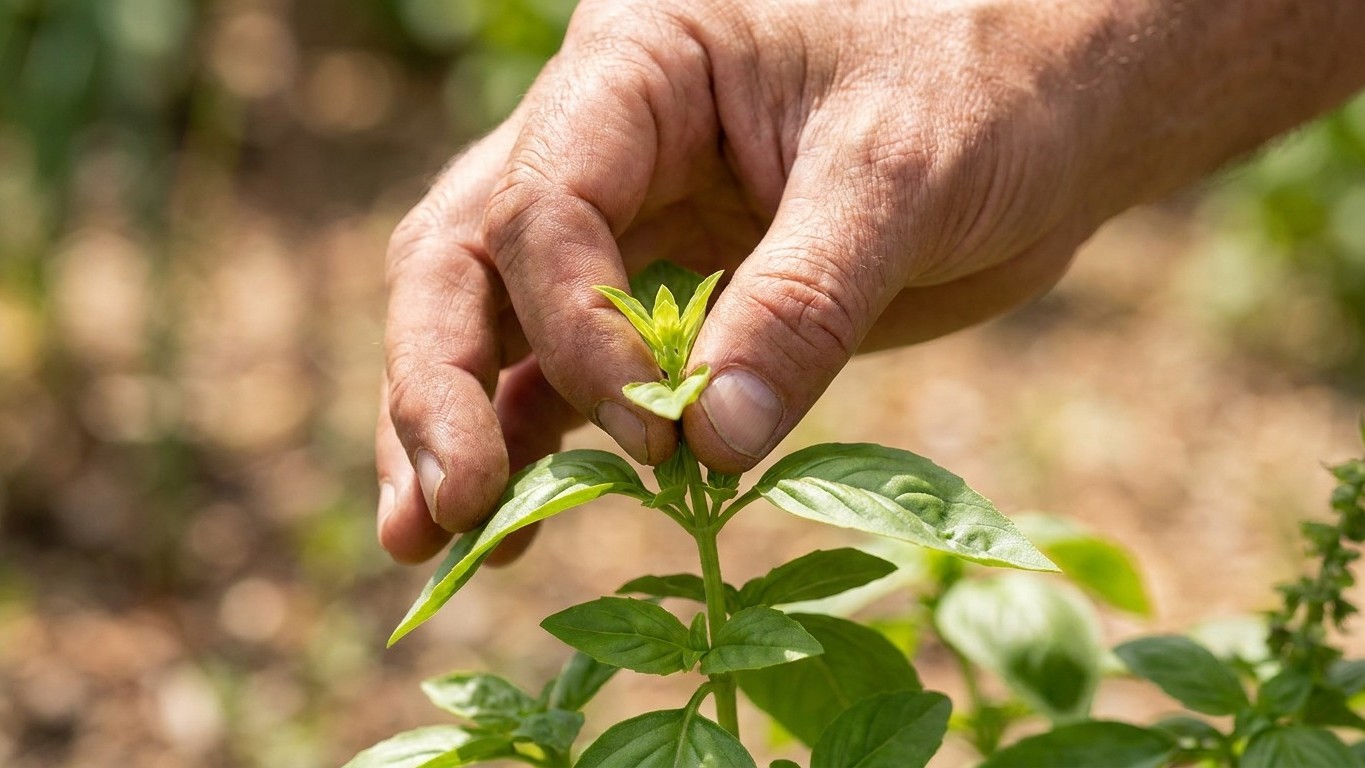
Snip one leaf, then another, then another. That’s how most home cooks harvest basil, working leaf by leaf down the stem until one day the plant sends up a cluster of small white or purple buds. By then it’s often too late. The leaves have already started turning tough and sharp, and the pesto you were hoping to make tastes closer to lawn clippings than the sweet, anise-scented herb you planted in May.
The fix takes less time than reading this sentence. The key to basil’s success is pinching, and even at a young age, gardeners pinch off the top, with no scissors or clippers required since the growing tip is easily removed with just your fingernails. That single motion, thumb and forefinger closing around the topmost growth, is the difference between a plant that gives you handfuls of fragrant leaves for months and one that quits on you by midsummer.
Key takeaways
- The leaf-by-leaf harvesting method most home cooks use is actually training their basil to do the one thing that ruins it
- A plant’s shift into flowering mode changes its chemistry in ways that even tiny invisible buds can trigger—sometimes before you see a single flower
- One strategic pinch above a leaf node activates hormones that transform a leggy plant into a dense, productive machine
Why a flowering basil plant turns bitter
Basil is an annual. Its entire biological agenda is to grow, flower, set seed, and die, all within a single season. Basil flowers in response to maturity, heat, and stress, and once flowers appear, the plant’s chemistry changes, reducing essential oil production in the leaves and altering the flavor. Those essential oils, mainly compounds like eugenol and linalool, are exactly what give basil its signature sweetness. Once the plant shifts into reproduction mode, it stops investing in them.
A master gardener interviewed on the subject put it plainly: if left to bloom, the plant will redirect its energy toward producing seeds rather than growing new leaves, which can cause the plant to slow or stop leaf production, making the existing leaves tough and bitter. The plant isn’t malfunctioning. It’s doing exactly what an annual is designed to do, just not what you want on your kitchen counter.
Here’s the part that surprises most gardeners: you don’t need full-blown flowers to lose flavor. Bitter basil most often occurs when a plant is allowed to flower, and even the tiniest flower buds at the end of a branch can affect flavor in nearby leaves. By the time you spot an open blossom, the damage to that stem’s flavor profile has usually already started.
The two-second pinch, done right
Forget waiting until the plant is tall and woody. Once young basil plants are about six weeks old in the ground, they should be pinched above the clusters of top leaves, which encourages the formation of more leaves, resulting in a denser plant rather than leggy, tall stems with fewer leaves. This isn’t just cosmetic. Removing plant material from the tips stimulates the production of cytokinins, hormones that contribute to a denser plant structure. Every pinch essentially tells the plant to branch sideways instead of racing upward toward a flower spike.
Technique matters more than most people assume. Locate a node, the spot where two leaves sprout opposite each other on the stem, and pinch just above it. Some growers get more aggressive: pruning can be fairly aggressive, down to just above the lowest two sets of leaves, snipping at the node just above a pair of leaves. That kind of hard cutback looks brutal, but the plant rewards it with a flush of new, tender growth within a week or two, especially if there’s already an established root system to draw on.
Once buds do sneak through, and in a hot summer they will, don’t just pinch off the flower itself. If you notice small buds forming at the top of a stem, act immediately and pinch off the entire stem below the flower buds, cutting back to the nearest healthy leaf node. Half measures leave hormonal signals in the stem that push the plant right back toward blooming within days.
Keeping the harvest going all season
Pinching once isn’t a cure. It’s a habit. Basil should be pruned when it reaches around 8 inches tall, and at the height of summer it needs pruning every 2-3 weeks to keep it from flowering and to stimulate leaf growth. Heat speeds everything up. Heat accelerates flowering, so during summer basil may require more frequent pinching. A plant sitting in a scorching south-facing window or a patio pot in July can throw up buds in under two weeks if you’re not paying attention.
Feeding the plant helps too, and it’s a step people skip. Giving actively growing basil supplemental feeding with a high-nitrogen fertilizer like fish emulsion every few weeks promotes vegetative growth, helping to grow abundant large, flavorful leaves while inhibiting flowering. Nitrogen essentially competes with the plant’s urge to flower by keeping it focused on leaf and stem production instead.
If you’re harvesting for cooking rather than letting the plant simply sit and look pretty, frequency is your friend. Consistent harvesting of the leaves will minimize the formation of flowers almost as a side effect. Every stem you cut for dinner is one less stem racing toward a flower spike.
One nuance worth knowing before you blame every disappointing batch of pesto on missed flower buds: age matters as much as blooming. Many gardeners believe leaves become bitter only after flowering, but in reality, older leaves produce a slightly bitter taste whether or not there are flowers, while tender leaves remain sweeter. So even a perfectly pinched, bud-free plant will give you sharper-tasting leaves at the bottom of an aging stem than at a fresh new tip. The lesson isn’t just to stop the flowers. It’s to keep the whole plant young, one small pinch at a time.
Sources : aol.com | plantbio.org