
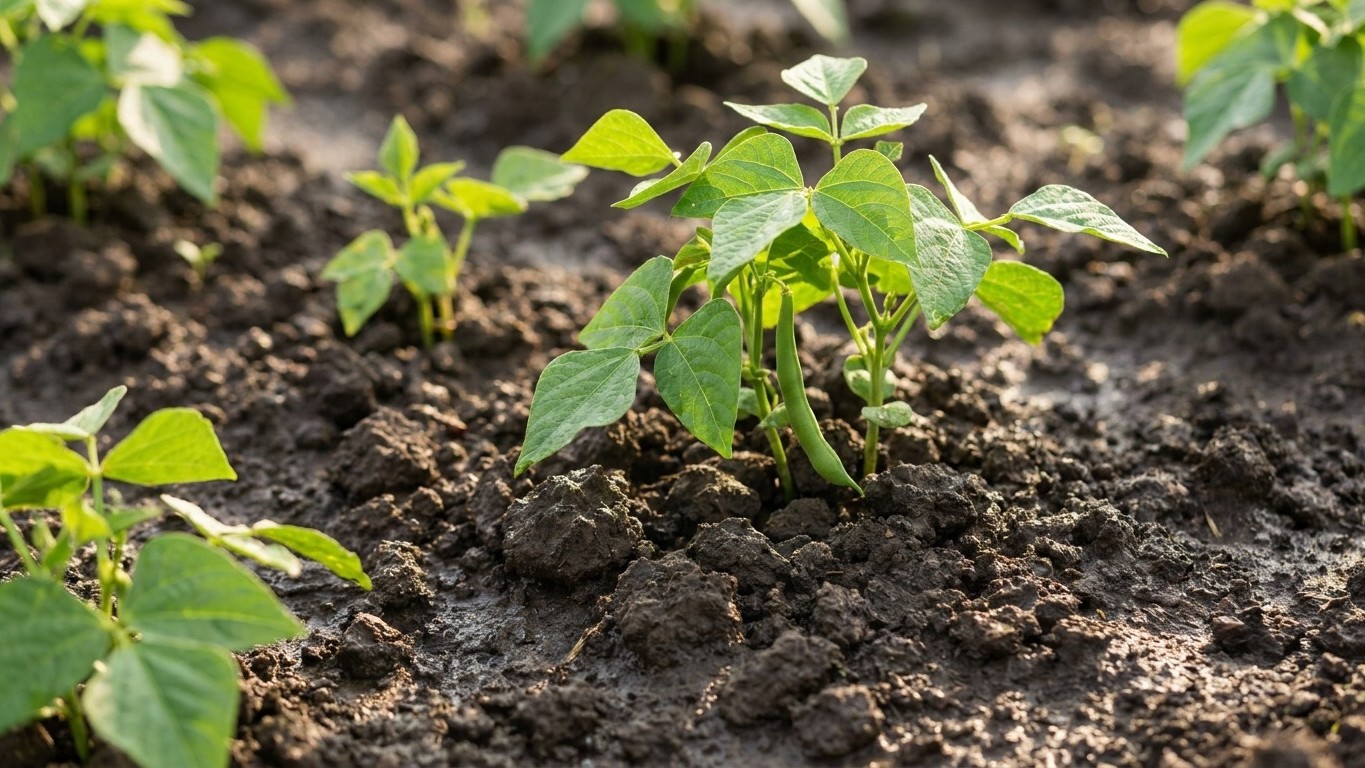
Bare soil left behind after a garlic harvest doesn’t stay soft for long. A few hard summer rains, one stretch of blazing sun, and the surface bakes into a crust you could almost skate on. That’s exactly the problem one gardener solved by accident: instead of leaving the emptied garlic bed fallow, they tossed in a quick round of dwarf (bush) beans just to smother weeds. The soil stopped hardening. The harvest kept coming well into September.
Key takeaways
- Garlic beds turn into impenetrable crusts after harvest, but one simple trick stops it dead
- Bush beans produce for months when planted in succession, but there’s a timing window most gardeners miss
- One controversial claim about garlic and legumes might matter—or might not, depending on your soil
Why a garlic bed turns into a brick so fast
Garlic spends nine or ten months in the ground, and by the time it comes out in early summer, the surrounding soil has already been walked on, watered, and weeded repeatedly. Once the bulbs are pulled, nothing is left to soften the impact of rain or irrigation. Mulches and coverings basically prevent crusting by breaking the fall of water droplets so that they don’t hammer and pulverize the soil structure, and they also slow the flow of water across the bed, giving it time to sink in. Without that buffer, every downpour compacts the top layer a little more.
The clay content of your soil makes this worse. Crusting is an issue in clay-heavy soil: when it rains, the soil is damp and muddy, and then when it dries out, it turns into a hard, cracked crust. That crust doesn’t just look bad. It blocks oxygen from reaching roots and makes it harder for water to soak in rather than run off, which is precisely the setup that lets weed seeds germinate in the cracks while your intended crops struggle underneath.
Why dwarf beans work as an emergency cover
Bush beans are the classic answer to an empty summer bed for a reason: they’re fast, undemanding, and they fill space almost immediately. Bush beans are a favorite follow-up crop because they are quick, easy, and useful, they don’t need a ton of fuss, they germinate well in warm soil, and they can produce a solid harvest in a short window. After garlic, bush beans make so much sense because they fill the space fast. That speed Matters More Than it sounds. A bed left open for even two or three weeks in July gives weeds and crusting a head start; beans close that window almost as soon as they sprout.
Timing backs this up. Green beans typically mature within 50-60 days, and by planting new seeds every two to three weeks, you can enjoy a steady supply of beans throughout the growing season. Cooperative extension guidance points in the same direction for anyone harvesting garlic in early summer: continue planting bush beans from seed every 2 weeks through the end of July for a bountiful harvest. Sow in late June or early July, right after pulling garlic, and you’re realistically picking beans from mid-August through September, especially if you stagger two or three small sowings instead of one big one.
The canopy itself is doing double duty. Once the trifoliate leaves spread and touch, they shade the soil surface the same way a straw mulch would, cutting down on both moisture loss and the raw impact of rain. It’s a living version of what gardeners usually get from bark chips or compost, minus the trip to the garden center.
The one caveat nobody mentions loudly enough
Here’s where it gets a little murky. Not every source agrees that beans should follow garlic at all. One long-running gardening Q&A puts it bluntly: the garlic roots left in the soil contain certain compounds that inhibit the bacteria beans rely on to fix nitrogen, and the recommendation is to grow beans somewhere else if you can. Other growers who’ve actually tried it tell a different story. Garlic can interfere with the growth of legumes, making it a poor companion for peas and beans, though one gardener has planted beans after garlic without running into any issue.
My read on this: the effect, if it’s real, seems to be modest and soil-dependent rather than a hard rule. If you’re worried about it, work in a shovelful of finished compost before sowing to feed the soil biology directly rather than leaning entirely on the beans’ own nitrogen-fixing nodules. That’s also just good practice generally, since amending the soil generously is worth doing since garlic can affect the growth of legume family members. Think of it as insurance rather than a fix for a proven problem.
Getting the September harvest right
The real trick to picking beans into September isn’t luck, it’s succession. A single sowing right after garlic comes out will typically finish by late August in most temperate climates, leaving you with another bare patch and the same crusting problem all over again. Staggering plantings every two to three weeks through July keeps a rotating supply of pods coming rather than one overwhelming flush followed by nothing.
Before that last sowing, though, check your local first-frost date and count backward. Bush beans need roughly two months from seed to first pick, and a late-July sowing pushed into a September harvest only works if frost stays away until early-to-mid October. Gardeners in cooler regions may need to shift the whole schedule two or three weeks earlier, while those in milder zones can keep tucking in short rows well into August. Either way, the payoff is the same: a bed that never bakes hard, weeds that never get a foothold, and a harvest basket that’s still filling up long after the garlic braids are already hanging in the kitchen.
Sources : gardeningknowhow.com | ncbi.nlm.nih.gov