
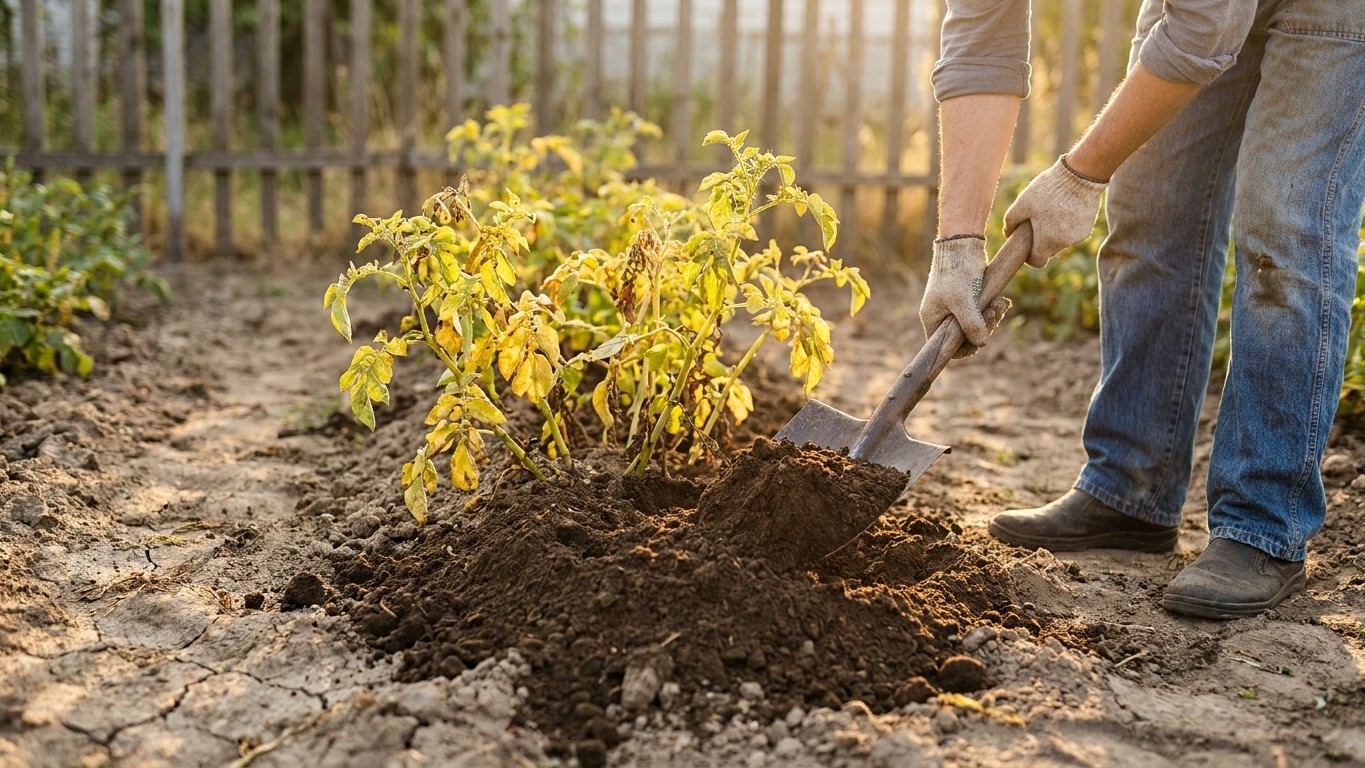
Mid-August, and the neighbor is out there again, shovel in hand, dragging soil up around potato stems that already look tired and yellowing. It looks like he’s babying the plants. He isn’t. By this point in the season, the tubers underneath have mostly finished sizing up, and piling on more dirt won’t make a single one grow bigger. What he’s actually doing is defense: shielding the crop from sunlight damage and from a hungry little moth That Thrives on exactly the kind of exposed, cracking soil that a neglected potato bed produces in late summer.
Key takeaways
- Rain and settling soil erode protective mounds by late summer, exposing tubers to sunlight and toxins
- A grain-of-rice-sized moth can lay 200 eggs in four days once soil cracks open—larvae tunnel through potatoes in storage
- Two inches of soil is the only defense; late-season hilling is the final line before harvest
It’s About Blocking Light, Not Boosting Growth
Potatoes don’t grow Underground because they enjoy the dark. They grow there because light triggers a chemical response that ruins them. It is important to keep the tubers covered during the growing season so that maturing potatoes are not exposed to sunlight, since the potato skin turns green or bluish-green when exposed to light. That green isn’t just cosmetic. Light exposure causes the formation of a substance called solanine, a glycoalkaloid that can be toxic in large amounts.
Here’s the part most people miss: a potato hill isn’t a permanent fortress. The height of a hill often is reduced throughout the season by rain and irrigation, which is the reason why hills often are made so high in the first place. By August, weeks of thunderstorms and watering have washed plenty of that protective mound flat. Tubers that were safely buried in June can be sitting an inch from daylight by late summer, especially the fast-growing types. Some potato varieties have longer stolons, or underground stems, making the tubers grow further away from the plant, and in these cases a larger hill is important to keep them covered. Your neighbor’s August dirt run is basically patching a leak before it floods the basement.
The Real Enemy: A Moth You’ve Probably Never Seen
This is the part that surprises most home gardeners. The bigger risk in late summer isn’t the sun at all. It’s an insect roughly the size of a grain of rice. As potato foliage starts dying back and the soil dries out in August heat, cracks open up around the base of the plants, right where the biggest tubers are sitting closest to the surface. Those cracks are an open invitation to the potato tuber moth, also called the potato tuberworm.
When foliage is not available, potato tuberworm moths can crawl short distances through cracks in loose soil to find a tuber to use as an egg-laying site, and in four days a single female can deposit 60 to 200 eggs. Once those eggs hatch, the damage moves fast. The larvae mine young leaves and tunnel into the tubers, leaving frass from tunneling at the entrance, and when they leave the tunnels, fungi, bacteria and mites take over so the tubers rot and develop an unpleasant smell. A crop that looked perfect in the ground can turn into a stinking mess in storage a month later.
Timing makes this especially dangerous in August specifically. Attack on the tubers begins when the plants are starting to die back and the tubers are maturing, since as they grow larger they come nearer the soil surface, and at this time the soil cracks and the larvae move in. That’s precisely the stage most backyard potato patches are at right now, which is exactly why extra hilling in mid-to-late summer isn’t optional busywork, it’s the last real line of defense before harvest.
Extension researchers have quantified how thin that margin of safety is. Any effort to reduce the exposure of tubers to egg-laying females or to larvae will reduce crop damage, and since these insects will not burrow through more than two inches of soil to reach a tuber, extra hilling to increase soil coverage is encouraged. Two inches. That’s the entire buffer between a clean harvest and a tunneled one, and it’s the exact gap that rain and settling soil quietly erase over a growing season.
Irrigation Habits Matter Just As Much As the Shovel
Soil cracking doesn’t happen randomly. It’s largely a watering problem, and it’s one your neighbor is probably also managing without you noticing. Regular irrigation reduces the number of soil cracks available for potato tuberworm entrance, and sprinkler irrigation seals the soil and reduces cracking better than furrow irrigation. If you’ve ever let a potato bed dry out completely between waterings, then hit it with a heavy soak, you’ve probably created the exact crack pattern that lets moths in.
There’s a genuine tension here for home growers, though. Standard advice for improving storage quality actually pushes in the opposite direction from constant watering. One common tip is to toughen up potatoes for storage before harvest by not watering them much after mid-August. The compromise most experienced growers land on is simple: ease off watering to firm up the skins for storage, but compensate with a thorough final hilling so any cracks that do form aren’t sitting directly over exposed tubers.
What This Means for Your Own Patch
If your potato plants are flowering or already flopping over by mid-August, don’t assume the hilling work is done. Extension guidance generally treats the final mound as something to build before bloom, but real gardens don’t always follow the textbook schedule, and a late-season top-up is common practice among growers who’ve been burned by tuberworm damage before. Prompt harvesting after vine kill, and ensuring tubers remain covered by at least two inches of soil via selection of deep-setting varieties, hilling, and preventing soil cracking are all recommended.
The unglamorous truth is that a potato harvest is won or lost in these unremarkable last few weeks, not in the planting or the flowering. So next time you see a neighbor mounding fresh soil onto plants that already look half-finished, resist the urge to think he’s overdoing it. He’s likely just read the calendar better than the rest of us, and he’s protecting an underground crop from a threat that’s completely invisible until you dig it up and find the tunnels.
Sources : greenygardener.com | greenupside.com