
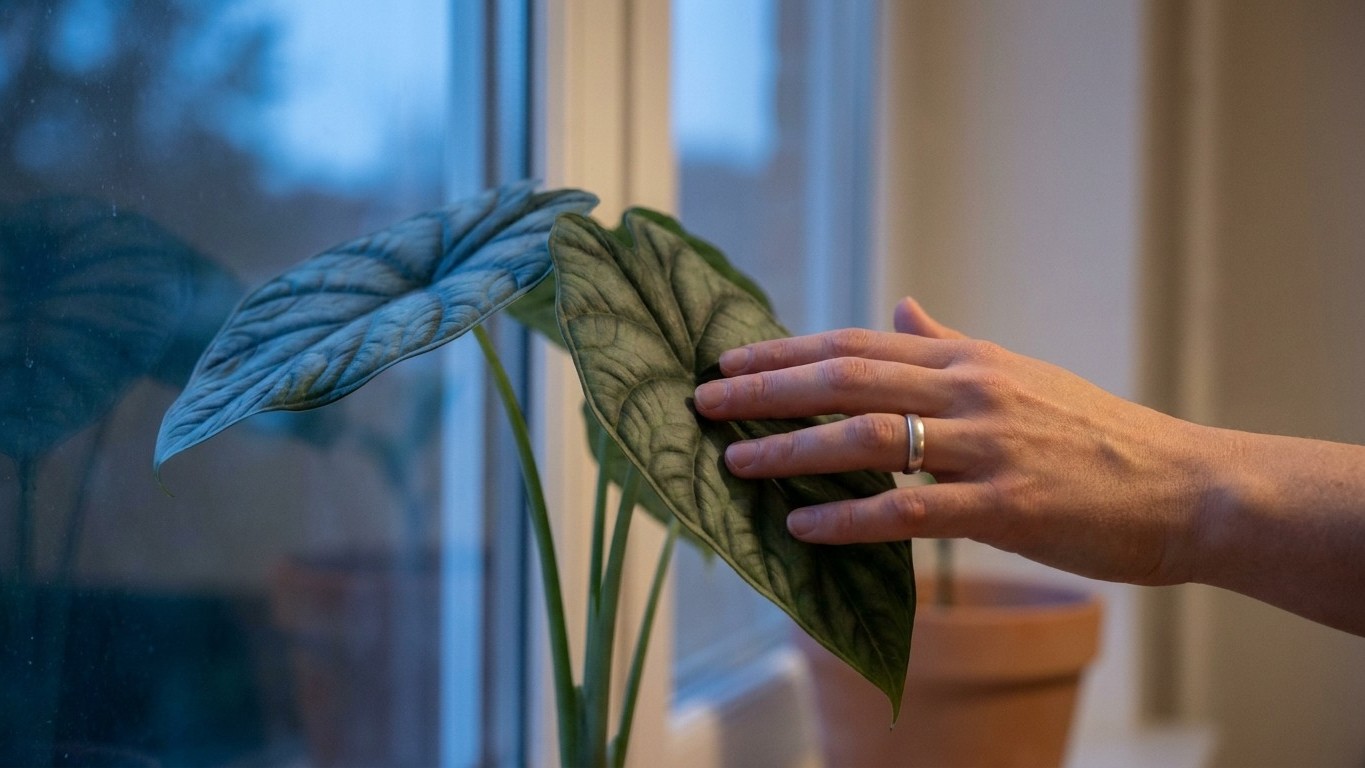
Cold glass drops the temperature of everything within a few inches of it, sometimes by 15 or 20 degrees compared to the rest of the room. That’s the whole logic behind the hand test: slide your palm into the gap between an alocasia’s leaves and the windowpane after sunset, hold it there for thirty seconds, and if your skin registers a noticeable chill, so does the plant. Growers rely on this simple check before they start second-guessing their watering schedule, their fertilizer, or their light setup, because a cold pocket behind the curtain can mimic almost every other houseplant problem in the book.
Key takeaways
- A single-pane window can create a cold pocket 10–20 degrees colder than your room temperature after dark
- Cold damage looks identical to overwatering, underwatering, and humidity problems—until you know what to look for
- One quick test with your hand can save weeks of guessing and prevent irreversible cellular collapse in tropical plants
Why alocasias take drafts so personally
Alocasia plants flourish when consistently kept within their preferred temperature range, with the ideal environment for these tropical perennials sitting between 65°F and 85°F. That’s not a suggestion, it’s closer to a survival requirement. The RHS advises keeping alocasias above 50°F at all times, and at least 60°F during the active growing season. Drop below that threshold for any length of time and the plant doesn’t just sulk, it starts shutting down at the cellular level.
The window glass matters more than people assume. Even when the thermostat reads a comfortable 70°F across the room, the air trapped between a leaf and a single-pane window can sit ten degrees colder once the sun goes down, especially in winter. Temperature stress can make plant problems worse, especially from cold window glass, AC drafts, or sudden cool nights. The plant isn’t reacting to the room. It’s reacting to that narrow sliver of space it actually occupies, and if nobody checks that specific spot, the real cause stays invisible for weeks.
Genetics play a role too. Unlike true dormancy-prone plants like caladiums or colocasias, most cultivated alocasias lack deep cold acclimation capacity. They didn’t evolve a backup plan for chilly nights. A caladium can shrug off a cold snap by retreating into its tuber. An alocasia mostly just suffers.
What cold damage actually looks like (and why it fools people)
Here’s the frustrating part: cold stress produces almost the same symptoms as overwatering, underwatering, and low humidity. Your alocasia will usually tell you if it’s unhappy with the temperature through drooping leaves, which can be a sign of both cold and heat stress, so you need to check the soil moisture and overall environment to determine the cause. Yellowing shows up first, usually on older growth, because the plant becomes unable to absorb nutrients efficiently in cold conditions.
Left unaddressed, things escalate quickly. Leaves may appear droopy or wilted, and in severe cases, black spots or a mushy texture on stems can develop. That mushy texture is the detail that separates a simple chill from a genuine emergency. Exposure to cold drafts under 55°F can trigger sudden leaf yellowing, blackened petiole bases, and mushy, foul-smelling stems, signs of irreversible cellular collapse. Once the base of the stem turns soft and starts smelling off, no amount of relocating the pot will bring that particular leaf back.
There’s a real difference between a plant going dormant on its own schedule and one getting cold-shocked, and it’s worth learning to spot it. Alocasias entering natural dormancy drop leaves gradually, retain firm, plump rhizomes, and show no discoloration at the base. A cold-shocked plant, by contrast, tends to collapse fast and unevenly, sometimes losing a healthy-looking leaf overnight while its neighbor stays untouched. That asymmetry is often the tell.
Fixing the problem without overcorrecting
The instinct after a scare like this is to drown the plant in attention. Resist it. Cold-damaged plants require urgent repotting into fresh, well-draining mix after trimming all blackened tissue, but you should never water until new growth emerges or rhizome integrity is confirmed. Watering a stressed, cold root system just invites rot on top of the damage that’s already there.
Patience matters more than speed here, too. Don’t prune immediately after cold exposure. Wait 48 hours, since some marginal leaf damage reverses if the rhizome remains viable. Cutting too soon removes tissue that might have recovered on its own, and it also stresses a plant that’s already running on fumes.
Prevention is far less dramatic than recovery, which is exactly why it gets skipped. Avoid placing the plant near drafty windows, doors, or air conditioning vents, and if a windowsill is the only bright spot in the house, add a layer of insulation between the pot and the glass, whether that’s a folded towel, a plant stand, or simply pulling the pot two or three inches back from the pane. Grouping plants together can create a microclimate with slightly higher humidity and more stable temperatures, which softens the blow of any stray cold pocket that slips past your defenses.
One thing rarely mentioned in care guides: the risk isn’t just winter nights. Air conditioning creates the same cold-glass effect in summer, especially in rooms where a unit blows directly across a windowsill display. The hand test works exactly the same way in July as it does in January, and running it once a season, whenever the HVAC schedule changes, catches a problem long before the leaves start telling on you.
Sources : blackwaterplants.com | planthouseandgarden.com