
Nighttime temperatures dropping below 50°F mean it’s time to move outdoor plants back inside, and the plants that survive winter best are the ones that get a thorough leaf-cleaning and pest inspection before they cross the threshold. Skip this step and you risk turning your living room into a launch pad for spider mites, aphids, and fungus gnats that spent the summer multiplying undisturbed on your patio.
Most houseplant casualties in October and November aren’t caused by cold shock. They’re caused by hitchhikers. A single mealybug colony tucked into a leaf axil can spread to every plant on a windowsill within three weeks, and by the time you notice the sticky residue on your furniture, the infestation is already established. The fix isn’t complicated, but it does require more than a quick glance at the foliage.
Key takeaways
- One hidden mealybug colony can infest every plant on your windowsill in just three weeks
- Indoor heat and dry air create perfect breeding conditions for pests that barely survived outdoors
- The soil itself is a pest nursery—fungus gnat larvae are already there waiting to hatch indoors
Why outdoor time makes plants pest magnets
Plants that spend summer outside are exposed to an entirely different ecosystem than the one inside your house. Soil harbors ants and gnat larvae, leaf undersides collect mite webbing, and stems become highways for aphids looking for tender new growth. According to the University of Minnesota Extension, insects like spider mites and mealybugs often go unnoticed outdoors because natural predators, wind, and rain keep populations in check. Bring that same plant indoors and those natural controls disappear overnight.
Heat and dry indoor air actually accelerate certain pest problems rather than solving them. Spider mites, in particular, thrive in the low-humidity conditions typical of heated homes in fall and winter. A plant that looked perfectly healthy on the porch can show stippled, yellowing leaves within two weeks of coming inside, simply because the mite population that was barely surviving outdoors suddenly has ideal breeding conditions.
Soil is the other blind spot. Fungus gnats lay eggs in moist potting mix, and those eggs don’t care whether the pot is sitting on a deck or a bookshelf. The adult gnats you’ll see hovering near a plant a few weeks after bringing it in didn’t come from nowhere. They came from larvae that were already there.
The inspection routine that actually works
Start with the leaves, both sides. Spider mites and their eggs cluster on the undersides of foliage, often invisible until you tilt the leaf toward light or run a finger along the surface and feel a fine grit. Aphids tend to gather near new growth and flower buds, where they’re easier to spot because of their size and the sticky honeydew they leave behind.
Check the stems next, especially where leaves meet the main stalk. That junction is a favorite hiding spot for scale insects, which look like small brown or tan bumps and can be mistaken for a natural part of the plant if you’re not looking closely. Mealybugs prefer the same real estate but announce themselves with a cottony white residue that’s hard to miss once you know what you’re looking for.
The soil deserves its own pass. If you see small black flies buzzing around when you water, or notice the soil surface looks unusually active with tiny white specks, fungus gnat larvae are likely present. One reliable trick: let the top inch of soil dry out completely before bringing the plant inside, since gnat larvae need consistent moisture to survive.
Cleaning leaves isn’t just cosmetic
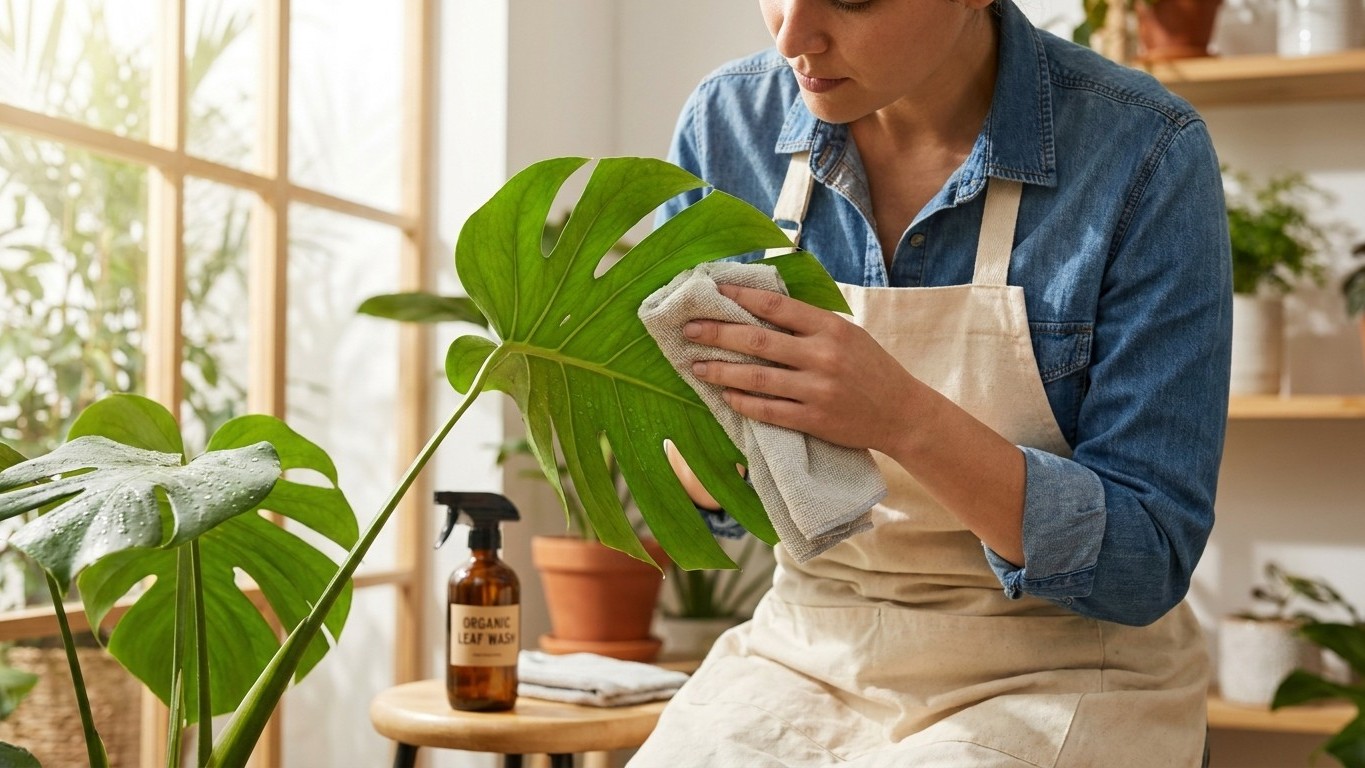
A gentle shower under lukewarm water knocks loose dust, pollen, and many soft-bodied pests before they ever make it indoors. For plants too large to move to a sink or tub, wiping each leaf individually with a damp cloth accomplishes the same goal, though it takes considerably longer for anything with more than a dozen leaves.
Dust buildup matters more than most people realize. A thick layer on the leaf surface blocks light absorption and interferes with photosynthesis, which is already reduced indoors during shorter fall days. Clean leaves photosynthesize more efficiently, and a plant working with full capacity is better equipped to handle the stress of transitioning environments.
For plants with a confirmed pest presence, insecticidal soap is the standard first response recommended by extension services, including Clemson Cooperative Extension. It works by breaking down the outer coating of soft-bodied insects like aphids and spider mites, and it’s effective without leaving the kind of residue that harsher chemical treatments do. Neem oil serves a similar function and has the added benefit of disrupting pest reproduction cycles, though it should be applied in the evening to avoid leaf burn from sun exposure.
Isolation matters just as much as treatment. Any plant that showed signs of pests, even after cleaning, should spend two to three weeks separated from the rest of your indoor collection. This quarantine window gives you time to catch a resurgence before it spreads, since some pest eggs take that long to hatch even after the visible adults have been eliminated.
Repotting: sometimes the better solution
If a plant’s soil shows heavy pest activity, insecticidal soap alone won’t solve the problem living in the root zone. Repotting into fresh, sterile potting mix removes the issue entirely rather than managing it. This is worth doing for any plant that spent the summer directly in garden soil rather than a container, since garden soil carries a much higher pest and pathogen load than commercial potting mix.
Trim away any damaged or heavily infested foliage during this process. It feels aggressive, cutting back a plant that otherwise looks fine, but removing the compromised material eliminates hiding spots and redirects the plant’s energy toward healthy growth rather than damaged tissue it can’t repair anyway.
Not every plant needs a new pot, and over-potting (moving into a container that’s too large) can actually stress roots by holding excess moisture they can’t use. Reserve repotting for plants with clear soil issues, root-bound conditions, or confirmed pest activity in the growing medium rather than doing it as a blanket fall ritual.
One detail gardeners often overlook: the pot itself can harbor pest eggs and fungal spores in its drainage holes and rim, even when the soil inside looks clean. A quick wipe-down with diluted white vinegar before the plant comes indoors, especially for terracotta pots with porous surfaces, closes off one more entry point for whatever spent the summer setting up shop outside your door.