
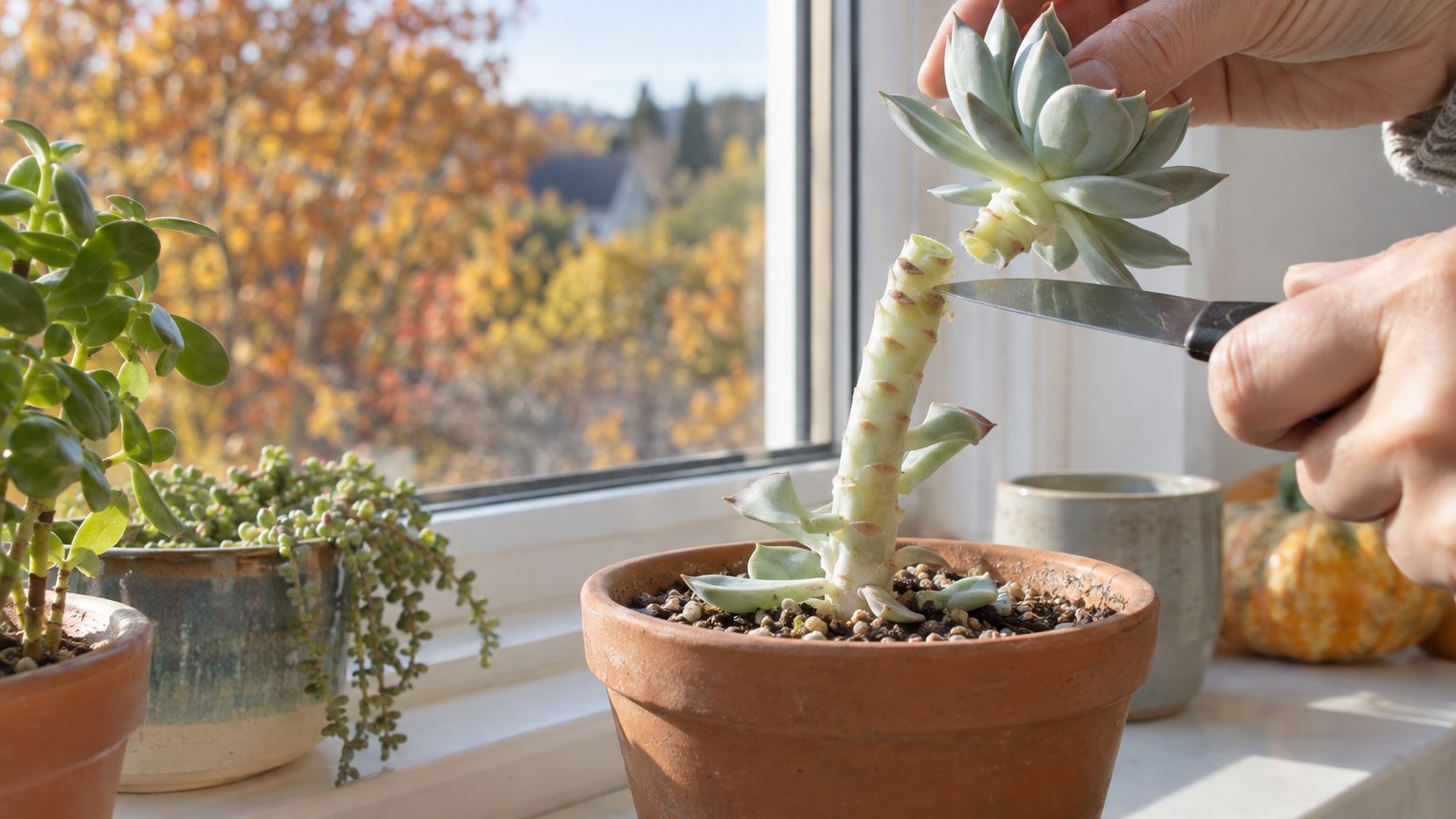
An echeveria with a three-inch neck between its rosette and the soil is not going through a phase. The stem cells have elongated, and cells that have lengthened do not shrink back. Moving the plant into stronger light stops the stretching, but it will never pull the plant back to its compact shape.
The fix, fortunately, takes a clean knife and a little patience.
- Etiolation permanently elongates stem cells; they cannot compress back to their original length.
- Beheading the rosette, air-drying the cut for 3–7 days, and rooting in dry soil produces a new compact plant in 2–3 weeks.
- Most popular succulents need 4–6 hours of direct sun daily, typically from a south-facing window or a full-spectrum LED grow light.
What the plant is actually doing
The technical term is etiolation. In weak light, growth hormones called auxins pool on the shaded side of the stem and push cells to lengthen, a survival gamble to reach brighter conditions. Succulents evolved on open, sun-baked ground, so they tolerate dim rooms poorly. Even a spot a few feet from a bright window can receive only a fraction of the light the plant would get outdoors.
The signs are easy to read: pale green color, leaves spaced far apart, and a rosette that flattens and leans toward the glass. New leaves also come in smaller than the old ones.
A plant that looked fine in July often starts stretching by December.
Shorter days and a lower winter sun cut the light further, while a heated room keeps the plant in active growth. That mismatch, plenty of warmth and not enough light, is the classic recipe for a leggy succulent. (Some species, like string of pearls, trail naturally, so check that what you’re seeing is stretching and not a normal growth habit.)
The repair: behead, root, regrow
Cut the rosette off with a sterilized knife, leaving about an inch or two of stem below the lowest leaves. Strip a few of the bottom leaves if needed.
Let the cut end dry on a paper towel or dry tray in bright, indirect light for three to seven days, until a callus forms over the wound. Then set the cutting on top of dry, fast-draining cactus mix, or insert the stem just barely into it. Hold off on watering until you see roots, usually within two to three weeks, then water lightly. A gentle tug that meets resistance means the roots have taken hold.
Do not throw the stump away.
Kept in a bright spot and watered sparingly, the bare base often sprouts new rosettes from nodes along the stem within a few weeks. One leggy plant can become two or three compact ones. Leaves that fall off during the process can sometimes be rooted too, though success varies by species.
A shortcut exists for plants that are stretched but otherwise healthy. Remove the lowest leaves, unpot the plant, and reset it deeper so the bare stem sits below the soil line. Many echeverias will root along the buried stem and look like a normal rosette again. Woody types like jade respond differently: prune just above a pair of leaves and the plant branches from that point.
Fix the light, or the stretch returns
Most popular succulents want roughly four to six hours of direct sun a day. In the Northern Hemisphere, that usually means a south-facing window; east and west exposures can work, while north-facing rooms rarely do. If your home lacks that window, a grow light is the practical answer.
A full-spectrum LED placed about 6 to 12 inches above the plants and run for 12 to 14 hours a day will do the job, and a cheap outlet timer takes the chore out of it. Check the manufacturer’s distance guidance, since intensity varies widely between fixtures. The plant tells you quickly whether it’s working: new growth should come in tight and colorful instead of pale and spaced out.
Increase light gradually, or the leaves will scorch.
A plant raised in dim conditions has soft, sun-naive tissue, so give it a week or two of stepped-up exposure before putting it in full sun. Rotate the pot a quarter turn every week so the plant doesn’t lean, and keep leaves off cold window glass in winter.
Not every succulent is a sun lover. Haworthia and gasteria evolved in partial shade and usually stay compact in an east window or a bright spot back from the glass, which makes them the safer picks for dimmer rooms.