
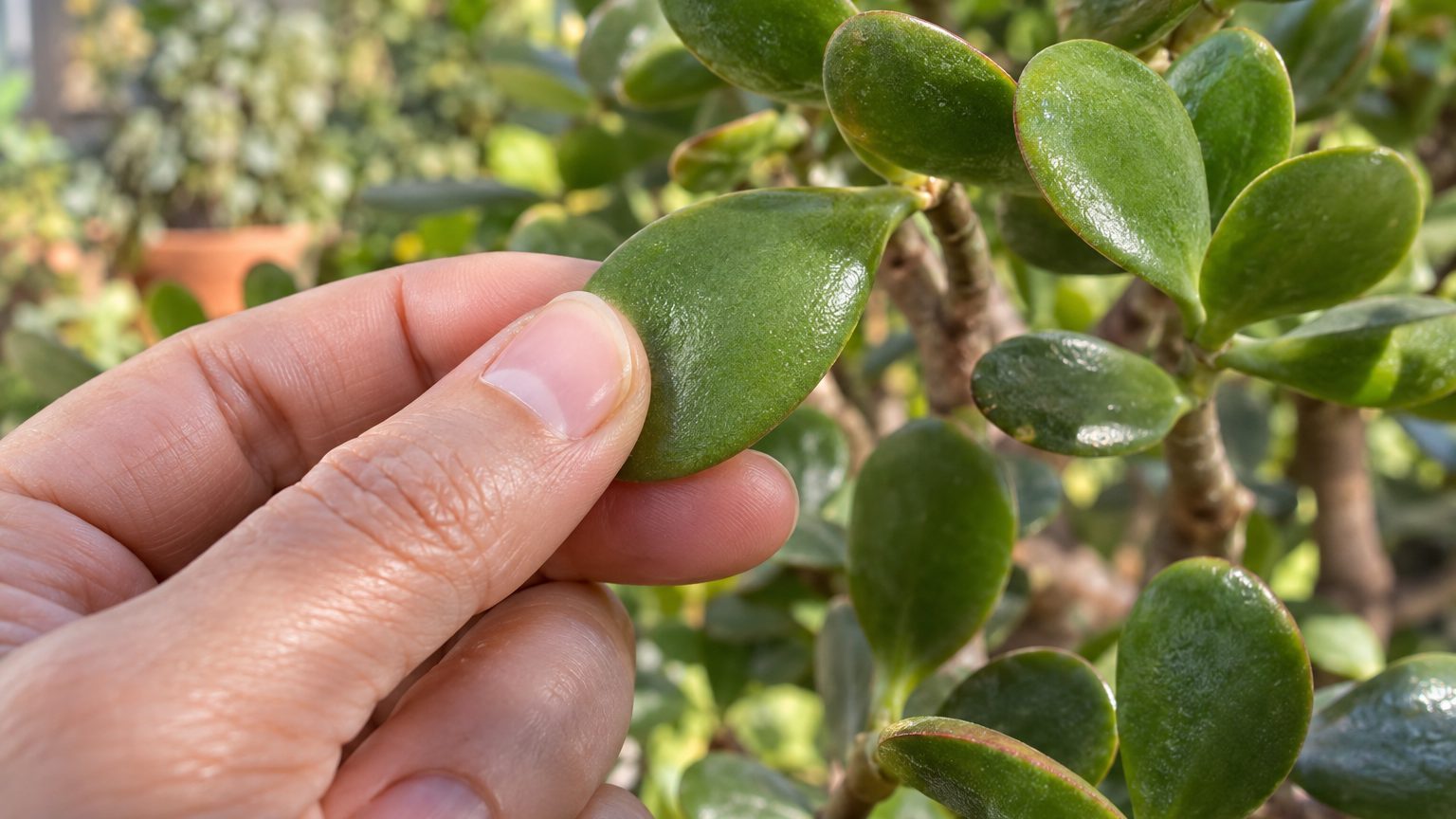
A jade plant dropping leaves is sending a message, and the texture of what lands on the soil is the easiest part to read. Soft and squishy points to too much water. Wrinkled and thin points to too little. Plump and firm, the trickiest case, usually means something changed around the plant.
Pick one up and squeeze it.
- Soft, mushy leaves signal root rot from overwatering and need immediate treatment with pruning and repotting.
- Wrinkled, thin leaves mean the plant is drawing on stored water reserves and needs a deep soak, not daily sips.
- Firm, healthy-looking leaves that fall anyway usually point to temperature swings, low light, or recent disturbance from moving or repotting.
Soft, mushy leaves: the overwatering signature
Jade plants (Crassula ovata) come from the dry, rocky regions of South Africa and Mozambique, and their thick leaves are small water tanks built for drought. When the soil stays wet, the roots can’t get oxygen and begin to rot. The damage then shows above ground as leaves that turn yellow, translucent and squishy, then fall at the slightest touch. The ones nearest the base usually go first.
Confirming it takes a minute. Slide the plant out of its pot: healthy roots are pale and firm, while rotted ones are brown or black, slimy, and smell like a stagnant pond.
If you find rot, act the same day. Cut away every soft root and any blackened section of stem with clean shears, then leave the plant bare for two or three days so the wounds can callus. Repot it into a gritty cactus mix, ideally with extra perlite or pumice, in a pot with a drainage hole, and hold off watering for about a week.
Terracotta forgives mistakes that glazed ceramic does not.
That porous clay wicks moisture out of the soil, which gives an overeager waterer a margin of error. A decorative pot with no hole at the bottom, by contrast, is the most common reason jade plants die in homes. Water pools at the base, the roots sit in it, and the plant looks fine until the leaves start dropping.
Wrinkled leaves: a plant running on reserves
Wrinkled, puckered leaves that feel thin and slightly rubbery tell the opposite story. The plant is drawing down the water stored in its leaves, and the leaves shrink as the reserves empty. If the drought continues, the oldest ones shrivel and drop so the plant can protect its newer growth. A small pot on a sunny summer windowsill can dry out faster than most owners expect.
The fix is a deep soak, not a sip. Water until it runs freely from the drainage holes, empty the saucer, and expect the leaves to plump up again within several days.
No calendar is reliable here. Light, pot size and season all shift the timing, so push a finger or a wooden skewer two inches into the soil and water only when it comes out completely dry. In practice that often works out to every two to three weeks in summer and roughly once a month in winter, when growth slows.
Wrinkled leaves on wet soil, though, point back to rotten roots.
This is the trap that catches careful owners. Roots that have rotted can no longer absorb water, so the plant shrivels as if it were thirsty, and adding more water only speeds the decline. If the leaves are wrinkled and the soil is still damp days after watering, unpot the plant and inspect the roots before reaching for the watering can.
Firm, plump leaves that drop anyway
Healthy-looking leaves hitting the floor are the confusing case, because the roots and the watering routine may be perfectly fine. Look instead at what changed in the past few weeks. A move to a new room, a repotting, a cold night, a blast of heat from a radiator, even a vigorous cleaning session that knocked the branches around can each trigger a shedding episode. Jade plants hate being rearranged.
Temperature is the usual culprit in winter. Jades are comfortable at roughly 65 to 75°F and begin to suffer when it falls toward 50°F, so a plant with leaves pressed against a cold windowpane can lose them overnight. Light matters just as much: they want at least four to six hours of bright light daily, and in a dim corner the plant stretches, thins out and sheds lower leaves to cut its costs.
Pests are worth a quick look. Mealybugs hide in the joints where leaves meet stems, looking like tiny bits of cotton, and a cotton swab dipped in isopropyl alcohol removes them one by one.
Some loss is simply normal. An established jade sheds a few older leaves from the lower stems now and then, usually shriveled and dry, while the rest of the plant looks glossy and firm. A handful of leaves over a month is routine housekeeping. A dozen in a week is a signal.
Don’t throw the fallen leaves away
A firm, undamaged leaf is a free plant waiting to happen. Let it dry for a few days until the broken end forms a callus, lay it on top of dry cactus mix, and keep it in bright, indirect light. Water only a little, and only when the soil has dried out. Within a few weeks, tiny pink roots appear, followed by a miniature rosette of leaves at the base.
Soft or mushy leaves are a different matter, since they carry the rot with them and should go straight in the trash. The same goes for any leaf with black spots at the broken end.
One last detail for patient growers: jade plants can live for decades and are often handed down within families, and a cool stretch of 50 to 55°F nights in autumn, with less water, is what nudges mature plants to produce clusters of small white-to-pink star-shaped flowers.