
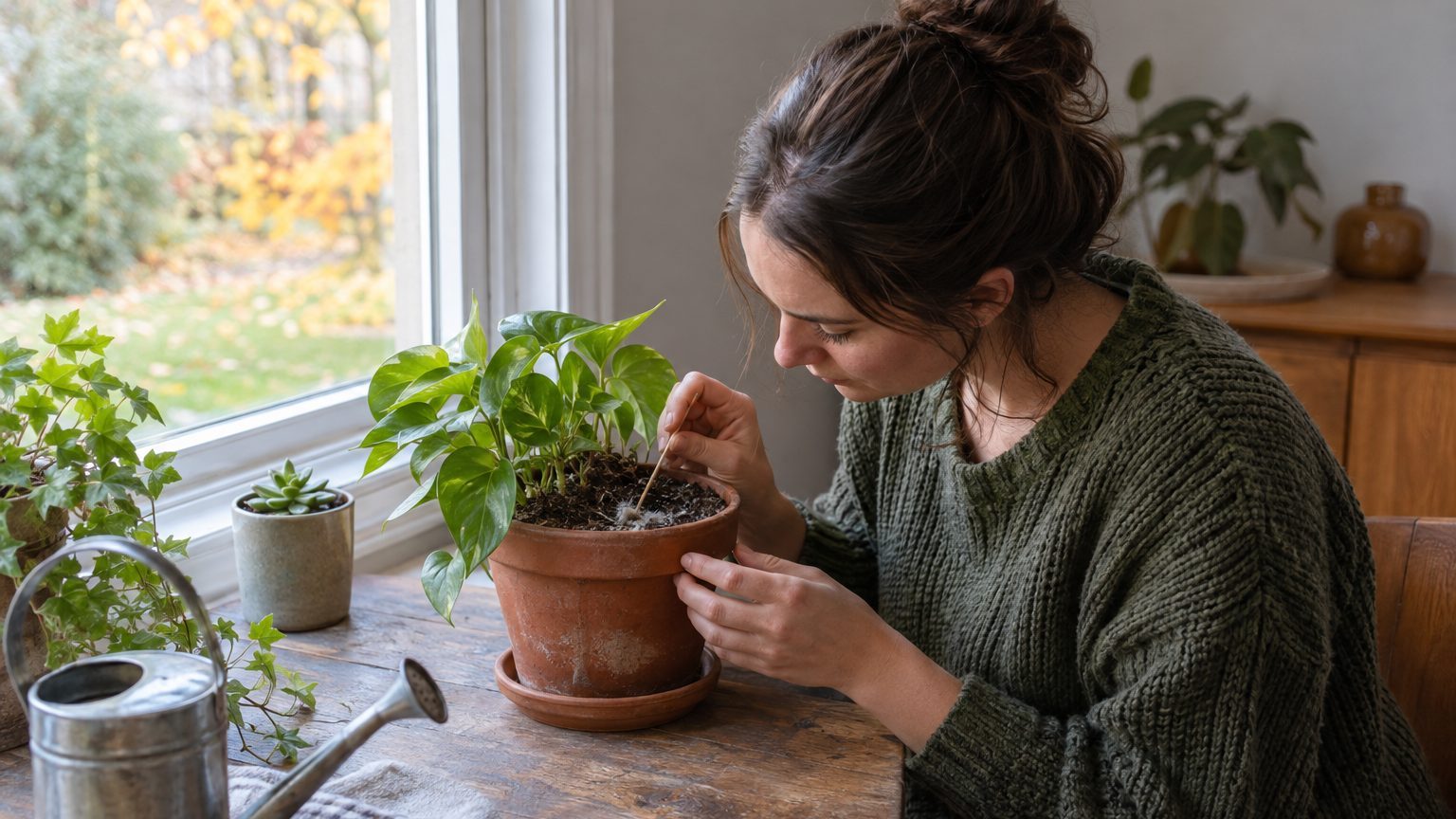
The white fuzz on your potting soil is, most of the time, a saprophytic fungus feeding on dead organic matter in the mix rather than on your plant. In most homes it is harmless to the roots. But three different things can look alike from standing height, and only one of them calls for real action.
A quick touch test sorts them out in under a minute.
Potting mix is mostly peat, coir, bark and compost, all of it organic and slowly decaying. Fungal spores arrive on the bag itself, in tap water, on air currents, even on your sleeve. They sit dormant until the surface stays damp and still for several days, then bloom into cottony patches that seem to appear overnight. A fresh bag of mix can produce the same fuzz after a week on a humid garage shelf, so the mold doesn’t mean you did anything outrageous.
- Most white fuzz on potting soil is a saprophytic fungus feeding on dead organic matter, not on the plant.
- Mold is soft and musty, salt crust is hard and odorless, and pests move when the soil is watered.
- A toothpick test and a quick check for movement distinguish all three in about two minutes.
Fuzzy, crusty or crawling: what you’re actually looking at
Saprophytic mold is soft. It looks cottony or web-like, white to grayish, sometimes with a faint yellow tint, and it smells musty, like a damp basement. It favors low light, still air and soil that never quite dries, which is why it shows up so often in winter, when plants sit near cold windows and drink slowly.
Mineral salts are the opposite: hard, chalky and odorless. They form a white or yellowish-gray crust on the soil surface, around the drainage holes and along the rim of terracotta pots. Calcium and magnesium in hard water, plus leftover fertilizer, stay behind as water evaporates. Brown, crispy leaf tips often show up alongside, because the same buildup can burn fine roots.
Pests are the third suspect, and the easiest to miss.
Springtails are pinhead-sized, white or gray, and hop when disturbed, like specks of pepper with springs. They eat mold and decaying matter and do little harm to established plants. Fungus gnat larvae are different: translucent white with a black head, up to about a quarter inch long, and they chew fine roots, which is a real problem for seedlings and cuttings. Mealybugs, meanwhile, leave waxy cotton-like tufts in leaf joints, and the root-dwelling kind hides in the root ball and around drainage holes, sucking sap out of sight.
One rarer culprit is worth knowing. Southern blight (Athelia rolfsii) sends white threads fanning across the soil and leaves tiny round tan to brown balls, roughly the size of mustard seeds, near the stem base. The stem softens and the plant collapses. If you see those little spheres, bag the plant and the soil, and sanitize the pot.
The two-minute diagnosis
Start with a toothpick. Fungal fuzz collapses and smears into a damp film, while salt crust is hard and scrapes off like dried chalk. Then put a few drops of water on a crusty patch: salts dissolve and reappear as the soil dries, whereas mold simply gets wetter and soggier.
Movement settles the pest question.
Water the plant lightly and watch the surface for half a minute. Springtails will jump, gnat larvae wriggle near the top inch, and adult gnats hover around the pot when you tap it. Check the drainage holes and the root ball for white fluff, and sniff the soil, since a sour or earthy smell points to fungus or rot, while salt has no smell at all. White powder on the leaves themselves is a separate disease, powdery mildew, and it needs a different treatment than anything below.
Getting rid of it, one culprit at a time
For mold, scrape off the top inch or two of soil and throw it in the trash (not the compost pile), then top up with fresh mix. Move the pot to a brighter spot with some air circulation, and let the top inch or two dry out between waterings. A small fan running on low for a few hours a day makes a bigger difference than most people expect. Some growers dust the surface with ground cinnamon, and the evidence for it is mostly anecdotal, though it does no harm. Another common remedy is a drench of one part 3% hydrogen peroxide to four parts water, which fizzes on contact and can knock back surface growth.
If the fuzz returns within a few weeks, or the soil smells sour, repot. Slide the plant out and check the roots: healthy ones are firm and pale, while brown, mushy ones mean overwatering has gone further than the surface. Trim the rotten parts, use fresh mix, and make sure the pot has drainage holes.
Salt buildup needs flushing, not scraping alone. Pour water slowly through the pot, about three to four times its volume, let it drain completely, and empty the saucer. Afterward, switch to rainwater or distilled water if your tap is hard, and cut fertilizer to half strength for a while. A terracotta rim stained with white deposits wipes clean with a cloth dampened in diluted vinegar.
Pests depend on the species. Springtails fade once the soil dries more between waterings. Fungus gnats respond to yellow sticky traps plus products containing Bacillus thuringiensis israelensis (BTi), which target the larvae and are sold as soil drenches or mosquito-dunk-style tablets. Mealybugs can be dabbed with a cotton swab dipped in rubbing alcohol or treated with insecticidal soap, repeated weekly for a month, since eggs hatch in waves.
Isolate any plant with live insects before doing anything else.
A last word on safety. A small patch of mold is no cause for alarm, but a large, spreading mat can release enough spores to bother people with asthma or mold allergies. Wear a mask and gloves while scraping, wash your hands afterward, and keep curious dogs and toddlers away from the pot until the soil is replaced.
Prevention is mostly about water and air. Use pots with drainage, skip saucers that hold standing water, and pick a mix with perlite or bark so it drains quickly. Water only when the top inch or two feels dry, and give crowded plants room to breathe. Bottom-watering helps too, since the surface stays dry and spores get nothing to colonize.
Terrarium keepers actually buy springtails by the hundreds, and sell them as a “clean-up crew” because they keep mold in check.