
Most plant parents have done it. The leaves look pale, or stretched, or just a little sad, so you scoot the pot closer to the window. Then closer again. Then you’re basically pressing the plant against the glass wondering why it still isn’t thriving. Sound familiar? The problem isn’t the distance. The problem is that most of us think about light completely wrong.
Plants don’t experience light the way we do. Walk into a room on a sunny afternoon and it feels bright everywhere. To a plant, that same room might as well be a cave. Human eyes adapt almost Instantly to dramatic Changes in light levels, evening out the differences so everything looks reasonably well-lit. Plants don’t get that luxury. They respond to the actual photons hitting their leaves, and the drop-off between a windowsill and a spot just six feet away can be staggering, sometimes losing 75% of usable light intensity over that short distance.
Key takeaways
- Light intensity doesn’t work the way you think it does—and your eyes are deceiving you about brightness
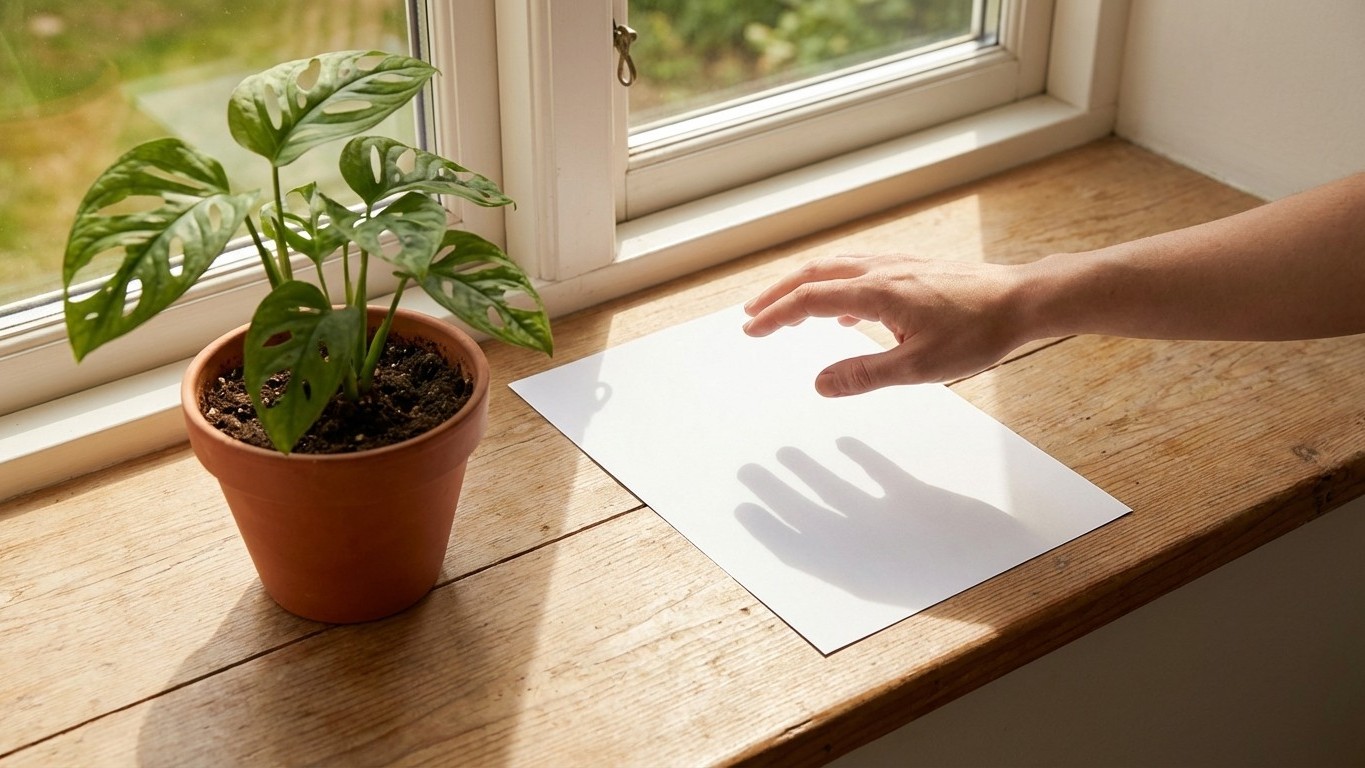
- There’s a 30-second test using your hand and paper that immediately reveals which spots in your home are actually suitable for plants
- The advice on plant tags is almost useless—but there’s a better framework for thinking about light zones
The real unit your plant cares about
Here’s where the simple trick lives: stop thinking in terms of distance and start thinking in terms of hours of direct versus indirect light. A north-facing window five feet away might give your pothos more usable daily light than a south-facing window twelve feet away where it sits in a beautiful, completely unusable glow. What matters isn’t proximity to glass, it’s how long quality light Actually-does/”>Actually touches the plant each day.
Light intensity follows what physicists call the inverse square law. Double the distance between a light source and your plant, and the light intensity drops to roughly one quarter, not one half. This is why moving your plant from two feet away from a window to four feet away isn’t a small adjustment, it’s potentially devastating for a sun-loving species. Conversely, a plant sitting directly on a sill under a north-facing window in winter might receive less total light energy than one sitting several feet from a large, unobstructed south-facing window. Location matters, but the window’s orientation and any obstructions outside matter just as much.
The trick that finally made this click for me, and for a lot of plant enthusiasts who discover it, is to observe the shadows your hand makes at different spots in the room at different times of day. Hold your hand about a foot above a white sheet of paper. A sharp, defined shadow means strong, usable light. A fuzzy, barely visible shadow means low light conditions. This takes thirty seconds and costs nothing, and it will immediately reframe how you see the light landscape of your home.
Why “bright indirect light” is almost useless advice
Nearly every plant care tag on the market says some version of “bright indirect light.” It’s the kind of advice that sounds specific until you actually try to follow it. What counts as bright? Indirect compared to what? A houseplant nursery worker once described it to me as the single most confusing phrase in home gardening, and she wasn’t wrong.
A more useful framework: think in light zones. The zone within three feet of an unobstructed south or west-facing window is high light territory. Three to eight feet from those same windows, or close to a north or east-facing window, is medium light. Beyond eight feet from any window, or in rooms with small windows, is low light. Most popular houseplants, monsteras, pothos, snake plants, peace lilies, were labeled “adaptable” precisely because they can survive medium to low light, but they will absolutely thrive better in the higher zones. Surviving and thriving look very different after six months.
Seasonal changes complicate this further. The sun sits lower in the sky in winter, meaning light enters rooms at a steeper angle and can Actually reach deeper into a space. Summer light is more intense but often stays near the window due to the higher sun angle. A plant that does perfectly well in its spot in February might struggle in the same spot by July, and vice versa. This is why rigid advice about where to put a plant doesn’t always age well, your home’s light environment is genuinely dynamic.
What to do instead of moving the plant again
The first adjustment worth making isn’t moving the plant. It’s removing obstacles. A sheer curtain can cut incoming light by 30 to 50 percent. Trees or overhangs outside the window do similar damage. Clean glass transmits meaningfully more light than dusty glass, a grimy window in a low-light room can be the difference between a plant limping along and actually putting out new growth. These are small, permanent wins that change the entire light environment without touching the plant.
If you’ve genuinely exhausted your window’s potential, a grow light Becomes the honest solution rather than a last resort. Modern LED grow lights have improved dramatically, and even a modest one positioned 12 to 18 inches above a plant for 12 to 14 hours a day can replicate a reasonable medium-light environment in a windowless interior room. They’re not a cheat, they’re just another tool, one that professional growers have used for decades.
Rotating the plant a quarter turn every week or two also pays dividends most people overlook. Plants lean toward their light source, and the side facing away from the window eventually becomes light-starved while the side near the window might be getting more than it needs. A simple rotation keeps growth even and ensures every part of the plant gets its share.
There’s a broader lesson hiding inside all of this. We tend to treat plants as passive objects that either survive our spaces or don’t, rather than as living things with specific environmental requirements that we can actually learn to read. Once you start watching shadows instead of measuring inches from the windowsill, your whole relationship with indoor gardening shifts. The question stops being “why is my plant dying?” and becomes “what is my space actually offering this plant?” Those two questions lead to very different answers.