
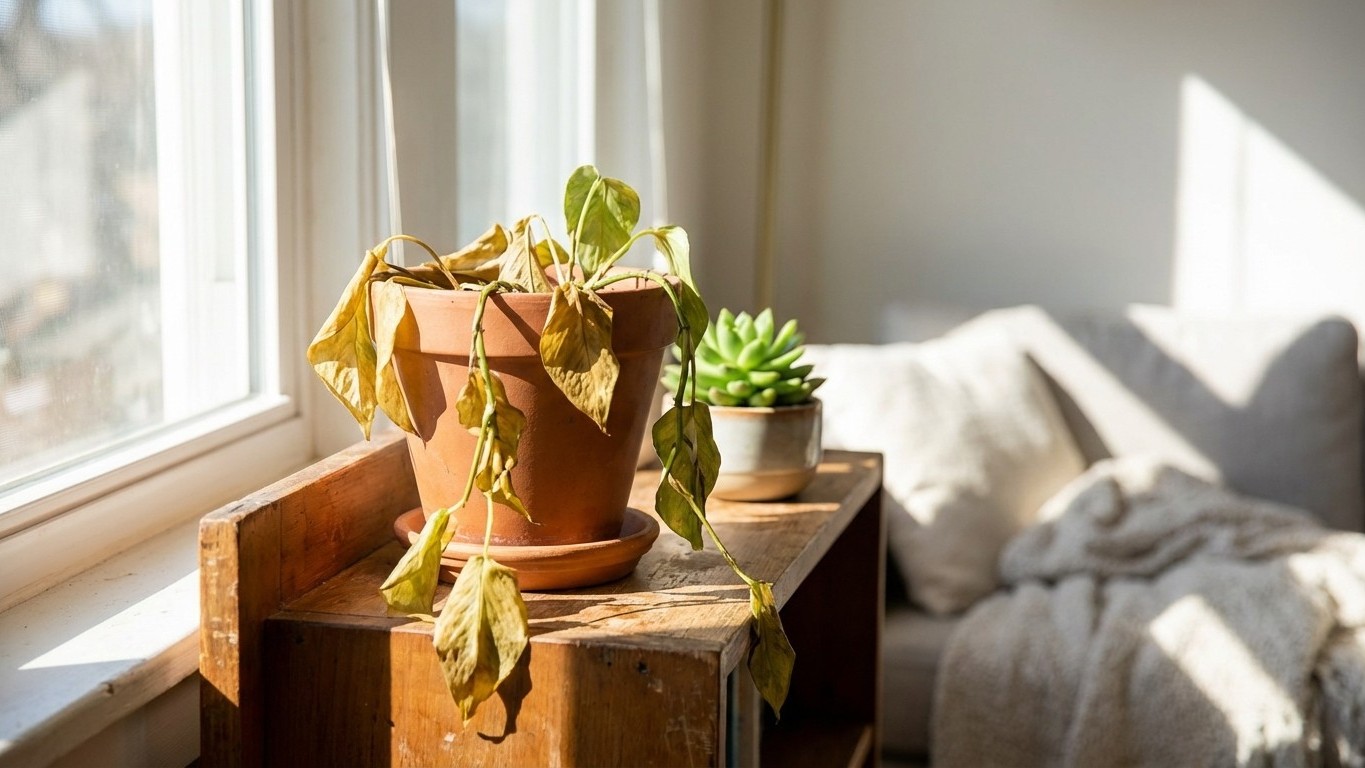
Shared shelves look gorgeous in plant styling photos. The layered greenery, the mix of textures, the curated jungle aesthetic, it photographs beautifully and feels even better in person. But some of those arrangements are quietly killing the plants involved, and the damage often shows up weeks after you’ve moved on to rearranging something else entirely.
Three plant types in particular are notorious for causing problems when grouped with others: succulents and cacti, ethylene-sensitive tropicals like peace lilies, and high-humidity lovers such as ferns and calatheas. Each one, for different reasons, creates conditions that actively work against its neighbors. Getting them wrong doesn’t just mean one sad plant. It can mean a cascade of decline across an entire shelf.
Key takeaways
- One common shelf arrangement is silently killing your plants through incompatible watering needs
- An invisible gas from everyday kitchen items is causing your orchids and peace lilies to collapse early
- That lush humidity cluster you created might be slowly destroying the other plants nearby
Succulents and Cacti: The Drought-Lovers That Drown Their Neighbors
The most common Mistake-90-of-diyers-make-that-ruins-everything/”>Mistake beginners make is grouping succulents with tropical houseplants because they all look like “easy” options at the garden center. The logic seems sound, put the low-maintenance plants together. The reality is the opposite. Succulents and cacti thrive on neglect, infrequent watering, and the kind of dry air that makes most tropical plants curl their leaves in protest.
When you place a succulent next to a pothos or a nerve plant, you face an impossible watering schedule. Water enough for the tropical, and your echeveria starts to rot from the roots up, quietly, invisibly, until it collapses. Water for the succulent, and the pothos dries out and drops leaves. There’s no middle ground. The plants don’t negotiate.
Light is the other fault line. Succulents need direct or very bright indirect sun for most of the day. Many tropical houseplants scorch under those same conditions. A south-facing windowsill that makes your cactus collection happy will bleach the leaves of a peace lily within two weeks. You’re not just dealing with different preferences, you’re dealing with incompatible survival requirements sharing the same square foot of shelf space.
The fix is simple but requires commitment: succulents get their own dedicated spot, ideally a sunny windowsill or a shelf near a south or west-facing window where other plants rarely survive anyway. Think of it as their private zone. Everything else benefits from the separation.
Ethylene Producers: The Invisible Gas That Triggers Early Death
This one surprises people. Certain fruits, apples, bananas, avocados, release ethylene gas as they ripen. Most people know this trick for speeding up a hard avocado in a paper bag. Fewer people know that ethylene exposure causes premature leaf drop, yellowing, and early flower death in many houseplants, especially peace lilies, orchids, and anthuriums.
Fruit bowls on kitchen shelves next to your plant display are more dangerous than they look. An apple sitting two feet from your orchid is actively working against your plant’s longevity. The gas is odorless, invisible, and very effective, the flower industry spends considerable resources keeping ethylene away from cut flowers during transport for exactly this reason.
But fruit isn’t the only source. Some plants produce ethylene themselves. Ripening tomatoes on the vine, for instance, are prolific producers. And certain stressed or decaying plant material, a rotting leaf left in a pot, an overripe plant that’s starting to decline — can also emit enough to affect sensitive neighbors. A peace lily that keeps dropping its white spathes prematurely, or an orchid that loses blooms faster than it should, often has an ethylene source nearby that nobody Thought to check.
The practical takeaway: keep your fruit bowl away from your most sensitive flowering plants, and don’t cluster orchids, peace lilies, and anthuriums near the kitchen counter. A bedroom shelf or a living room display away from the kitchen is a much better home for these plants.
High-Humidity Plants and the Mold Problem They Create
Ferns, calatheas, fittonias, and maidenhair ferns need humidity levels that most American homes simply don’t provide naturally. The usual response is to group them together and mist them, or place them on a pebble tray with water. This works, to a point. The microclimate created by clustering moisture-loving plants genuinely raises local humidity through transpiration.
The problem is what that sustained dampness does to everything else on the shelf. Wooden shelving warps and develops mold over time. Books nearby get that familiar musty smell. And plants that don’t need high humidity, succulents, snake plants, ZZ plants, start showing signs of fungal issues, particularly at the soil level, when they’re constantly sitting in a humid microclimate they didn’t ask for.
There’s also a pest angle worth taking seriously. Fungus gnats thrive in consistently moist soil. A single overwatered fern in a humid cluster creates ideal breeding conditions. Within a few weeks, the gnats spread to every pot on that shelf, regardless of whether the other plants actually needed more water. A calathea collection grouped with a pothos and a snake plant might look beautiful, but the snake plant will eventually show the stress of conditions that don’t match its needs, slower growth, occasional soft spots near the base, root issues that develop silently.
High-humidity lovers genuinely do better together, but the group should be self-contained: their own shelf, their own humidity tray, ideally in a bathroom or kitchen where ambient moisture is already higher. Mixing them with drought-tolerant plants creates a slow compromise that serves nobody well.
What Good Plant Grouping Actually Looks Like
The aesthetic goal (lush, layered, abundant) is completely achievable, the method just needs to match the biology. Group by water needs first, light needs second, humidity third. A shelf of tropical foliage plants with similar watering schedules (pothos, philodendrons, spider plants) is both visually lush and practically manageable. A dedicated succulent display near a bright window becomes a feature in itself, not a compromise.
The plants that die on beautiful Instagram shelves usually don’t die from neglect. They die from incompatibility, from being asked to share conditions that were never designed for them. Once you start seeing plant grouping as an ecological decision rather than a purely visual one, the choices become clearer, and the plants last longer. Which raises the question worth sitting with: how many plants have you lost to the wrong neighbors rather than the wrong care?