
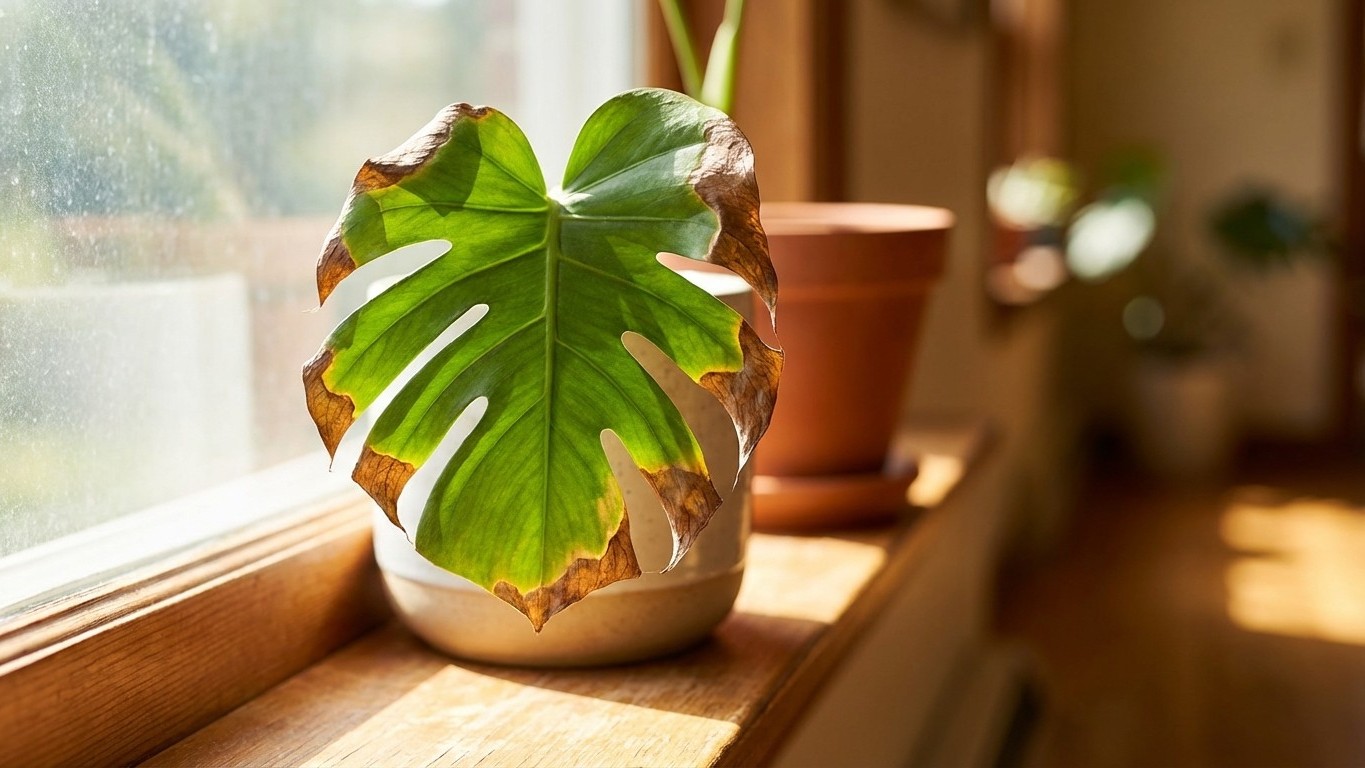
The clocks spring forward, the days stretch out, and suddenly your windowsill Becomes a different place entirely. That philodendron that survived the entire winter without complaint? Give it two weeks of longer, stronger afternoon sun and the leaves start looking wrong, not dead, not yellowing, but scorched along the edges in a way that’s easy to dismiss as “just dryness.” It isn’t. That browning, crispy margin is sunburn, and it’s already happening before most plant owners even notice the light has changed.
Key takeaways
- A single overnight clock change compresses months of seasonal light adjustment into 24 hours—and your plants can’t keep up
- Marginal leaf scorch (brown, crispy edges) appears within days, but most people mistake it for dryness or humidity problems
- The window to act is narrow: new growth emerging in spring is most vulnerable, and a simple sheer curtain solves it entirely
What the leaf is actually telling you
The specific sign to watch for is marginal leaf scorch: brown, papery edges that appear on otherwise green, upright leaves. Unlike root rot or overwatering damage, which tends to yellow the whole leaf from the center outward, sun stress hits the perimeter first. The tips and margins are the furthest points from the plant’s vascular system, so when leaf tissue starts cooking under UV intensity it wasn’t prepared for, those outer edges go first. The damage is often crisp rather than mushy, and it appears within days of the light shift, not weeks.
Here’s what makes this tricky: the plant looks healthy everywhere else. Stem firm, soil appropriately moist, new growth still emerging. So owners assume the browning is something else, low humidity, tap water minerals, a draft. They start misting, switching to filtered water, moving the pot away from the vent. Meanwhile the sun keeps hitting the leaves at a steeper spring angle, and the damage spreads inward.
Why the clock change specifically causes this
Most houseplant guides talk about seasonal light changes as a slow, gradual thing your plants “adjust to over time.” That’s accurate in a general sense, but Daylight Saving Time compresses that adjustment into a single overnight jump. The sun now rises and sets an hour later by the clock, which means your south- or west-facing window goes from receiving peak light at 3 p.m. to receiving it at 4 p.m. For many homes, that 4 p.m. slot is also when the sun is lower in the sky and more directly angled through glass, which concentrates intensity rather than diffusing it.
Glass makes this worse than outdoor conditions. A window acts as a lens to some degree, filtering out the infrared that creates radiant warmth outdoors but passing visible and UV light at full strength. A plant sitting 6 inches from a west-facing window in late March is experiencing light intensity that a plant in the same spot in January never encountered. The shift isn’t just about duration, it’s about angle, intensity, and the fact that the plant’s tissue was grown under winter conditions and hasn’t had time to produce the protective pigments it would develop with a gradual outdoor transition.
Tropicals are especially vulnerable here, and they make up the majority of common houseplants. Monsteras, pothos, peace lilies, snake plants, ZZ plants, most of these evolved under forest canopies where light is dappled and indirect. Even the ones marketed as “bright light” plants typically mean bright indirect, not direct sun through glass for two hours in the afternoon. The sudden spring window is closer to the latter.
What to do once you see the sign
Move the plant back from the glass, or move it to a different spot entirely. This sounds obvious, but the instinct is often the opposite, people see struggling plants and assume they need more light, not less. If the browning pattern is on the leaf edges facing the window, that’s the confirmation you need. Rotate the plant 180 degrees and see if new damage appears on what’s now the sun-facing side. If it does, distance is your answer.
A sheer curtain solves the problem without sacrificing the light that keeps the plant alive. Translucent fabric diffuses direct sun into the bright, indirect quality that most tropical houseplants actually prefer. The plant stays in its spot; the light simply arrives softened. This is particularly worth doing for anything in a south- or west-facing window between March and September, when sun angles are high and afternoon intensity peaks.
As for the already-damaged leaves: leave them on the plant. Removing a scorched leaf removes the photosynthetic capacity the plant still has in the undamaged portions of that leaf. Let the plant decide when to drop it. Trimming the crispy brown margin with clean scissors is fine cosmetically, it won’t hurt the plant and stops the damage from looking worse than it is — but full removal should wait until the leaf is entirely gone or the plant sheds it naturally.
Watering habits may need a small adjustment too. Longer days mean faster soil drying, so the schedule that worked through January and February might leave the plant slightly under-watered by April. Check the soil more often than you think you need to for the next month. Not every other week, every few days, at least until you understand how the new light regime is affecting moisture retention in your specific pots and soil mixes.
The window you actually have to act
New growth is more sensitive than mature leaves, which means any unfurling leaves right now are the most at risk. Catching the burn on a mature leaf and adjusting the plant’s position before new leaves emerge in earnest is the difference between minor cosmetic damage and genuinely stunted spring growth. Most plants push their hardest new growth between March and May, right in the window when light conditions are shifting fastest.
The clock change is a useful reminder that houseplants aren’t static decorations. They’re organisms responding in real time to an environment that just changed by an hour overnight. The question worth sitting with: how many other small environmental shifts in your home happen quietly, without a calendar event to flag them, and how long does it take you to notice what your plants are trying to say?