
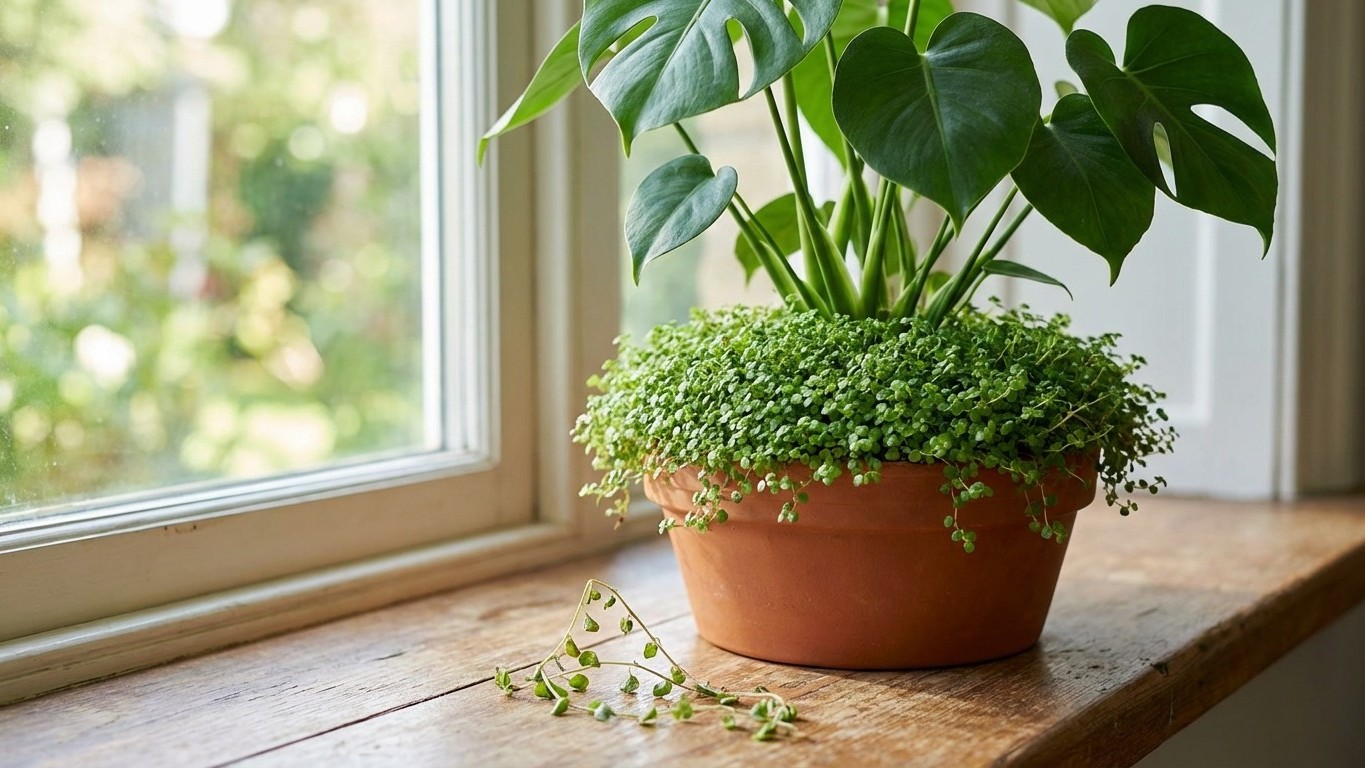
Sprays weren’t working. Not the hydrogen peroxide, not the neem oil drench, not the sticky yellow traps multiplying across every windowsill like bad wallpaper. The fungus gnats kept coming back, a fresh hatch every two weeks, hovering at face level the moment you leaned in to check a plant. The solution, it turned out, wasn’t in a bottle. It was alive, green, and sitting quietly in the terrarium section of a garden center.
Fungus gnats are drawn to moist conditions and, as their name suggests, feed on fungus and other organic matter. That’s the core of the problem, and also the key to solving it. Adult gnats lay their eggs (up to about 200) on organic matter near the soil surface, and after about three days, the eggs hatch into larvae that burrow into the soil to feed on fungi and decaying plant material, with adult gnats emerging from the soil two weeks later to repeat the process. Two weeks. The entire cycle runs on a tighter clock than most people realize, which is why letting your guard down for even a short stretch can send you back to square one.
Key takeaways
- Chemical sprays target adult gnats while larvae keep hatching underground—a losing battle that damages beneficial soil microbes
- Baby’s Tears forms a dense physical barrier that stops adult gnats from accessing soil to lay eggs, collapsing their entire reproductive cycle
- This living ground cover doubles as a moisture meter, naturally preventing the over-watering that causes infestations in the first place
Why Sprays Fall Short
The frustrating truth about spray treatments is that they address the wrong stage of the problem. Sticky traps really do work, not to resolve the underlying issue that allows fungus gnat larvae to thrive in your plants’ soil, of course, but at least to reduce the amount of fungus gnats buzzing around your plants. Killing-your-houseplants/”>Killing adults while larvae are actively hatching below is like mopping the floor while the tap is still running. Reducing the larvae with soil-drying methods doesn’t come close to eliminating the problem completely, and because many plants can’t be chronically under-watered for a long time, once you resume normal watering the gnats just multiply again. It’s a cycle most houseplant owners know by heart, and it’s exhausting.
Chemical sprays carry their own complications indoors. While chemical insecticides, systemic granules, or pesticides might seem like a quick fix to getting rid of gnats, they can also harm the beneficial soil microorganisms that help keep your soil healthy. You’re not just fighting bugs, you’re also potentially damaging the living system your plants depend on. There’s a smarter angle: instead of attacking the gnats, take away the environment they need to survive.
The Logic Behind a Living Ground Cover
Certain soil covers can reduce or prevent fungus gnat problems, because fungus gnats lay eggs in the top half-inch of moist soil. Deny access to that thin upper layer, and their reproductive cycle collapses. Most people reach for gravel or sand at this point, and there’s genuine logic to it: covering the soil with a thin layer of sand, diatomaceous earth, or fine gravel creates a barrier that makes it harder for adult gnats to reach the soil and lay eggs, and a layer at least half an inch thick is best.
But gravel doesn’t breathe. It doesn’t grow. It just sits there, functional but inert. A living ground cover does everything a mineral topdressing does, and more. For a dynamic approach, small, low-growing plants can serve as living mulch. Options include dwarf sedum, baby’s tears, and Irish moss. Living mulch can help retain soil moisture, suppress weed growth, and add visual interest to potted arrangements. The difference is that a dense mat of tiny leaves also creates a physical seal that’s actively hostile to adult gnats trying to probe the soil beneath.
The plant that delivers this most effectively for indoor use is Baby’s Tears (Soleirolia soleirolii). This perennial is known for its tiny, round leaves that form a dense mat of foliage, giving it a moss-like appearance. That mat is the operative word. The masses of tiny leaves clothe slender spreading stems that root as they run, forming a dense deep-pile carpet. A carpet that, in practice, Becomes a near-impenetrable physical barrier across the soil surface within a relatively short time after planting.
Baby’s Tears: What You’re Actually Dealing With
Baby’s tears, or Soleirolia soleirolii, is an herbaceous ground-covering perennial native to the western Mediterranean, which thrives outdoors in USDA Hardiness Zones 9 to 11 and as a houseplant in all regions. That last part matters: it’s not a fussy specialty plant. It’s a tough, adaptable grower that simply needs moisture and indirect light, conditions that already exist in most houseplant setups.
It thrives in moist, humid environments and is often used in terrariums, fairy gardens, and as a houseplant. Its rapid growth and spreading habit make it an excellent choice for filling in gaps between stones in pathways or as a living mulch beneath larger plants. Planting a small clump in a pot alongside a larger specimen, a monstera, a pothos, a fiddle leaf fig, and it will spread laterally and carpet the soil surface within a few weeks. Gnats looking to lay eggs suddenly find themselves navigating a miniature jungle with no clear access to bare soil below.
A critical caveat: Baby’s Tears loves consistently moist soil, requiring regular watering to keep the soil moist, especially during dry periods, as it cannot tolerate drought. This is Actually an advantage for the gnat-prevention strategy. Covered soil dries more slowly, making it harder to keep an eye on the moisture level. Because Baby’s Tears signals clearly when it needs water (it wilts dramatically, then springs back fast), it essentially becomes a living moisture meter. You water the plant when it asks, not on a schedule, which naturally prevents the chronic over-watering that causes gnat infestations in the first place.
Baby’s Tears is non-toxic to humans and pets, making it a safe choice for households with children and animals. No fumes. No residue. No spraying anything near food prep surfaces or curious dogs.
The Full Strategy: Ground Cover Plus Biological Control
To be honest, a living ground cover alone is most powerful as a prevention tool. For an active infestation, pairing it with a biological treatment makes the combination near-complete. A natural bacterium called Bacillus thuringiensis var. israelensis (BTI), found in mosquito dunks, works against fungus gnat larvae, simply add a piece of a dunk to your watering can. BTI targets larvae specifically, breaking the cycle from below while your ground cover shuts down new egg-laying from above. Although deadly to fungus gnat larvae, BTI is harmless to other living things, and it’s nature’s way of keeping mosquito populations under control.
The sequence is simple. Water your infested pot with BTI-infused water a few times over the first two weeks. Meanwhile, tuck small divisions of Baby’s Tears across the soil surface, spacing them a few inches apart so they spread to close the gaps. Because Baby’s Tears stems root at the nodes as they spread, it propagates itself, you only need to divide it to make new babies, preferably in spring when it’s in its most growing mood. One small four-inch pot can seed multiple larger containers.
If Baby’s Tears doesn’t suit your aesthetic or the light conditions in a particular corner, covering the soil surface with a layer of coarse sand, gravel, or diatomaceous earth creates a barrier that discourages adults from laying eggs and helps dry out the soil surface. These options work, they just don’t grow, adapt, or tell you when to water. Small companion plants can also act as a living mulch more broadly, dwarf sedums work beautifully with succulents, and even a thin spreading fern can serve the same purpose in a shadier spot.
The hardest part of fungus gnat control is accepting that sprays are crisis management, not solutions. The actual fix is environmental: fungus gnats are more of a nuisance than a serious threat to most houseplants, but their presence indicates excess moisture and potential soil health issues, and by adjusting watering habits, using natural controls, and keeping an eye on plant conditions, you can keep your indoor garden free from these flies. A mat of living green across every pot surface isn’t just a pest strategy, it’s a different way of thinking about what a houseplant pot actually is. Not a container of bare soil waiting to be colonized, but a small, complete ecosystem with no room for uninvited guests.