
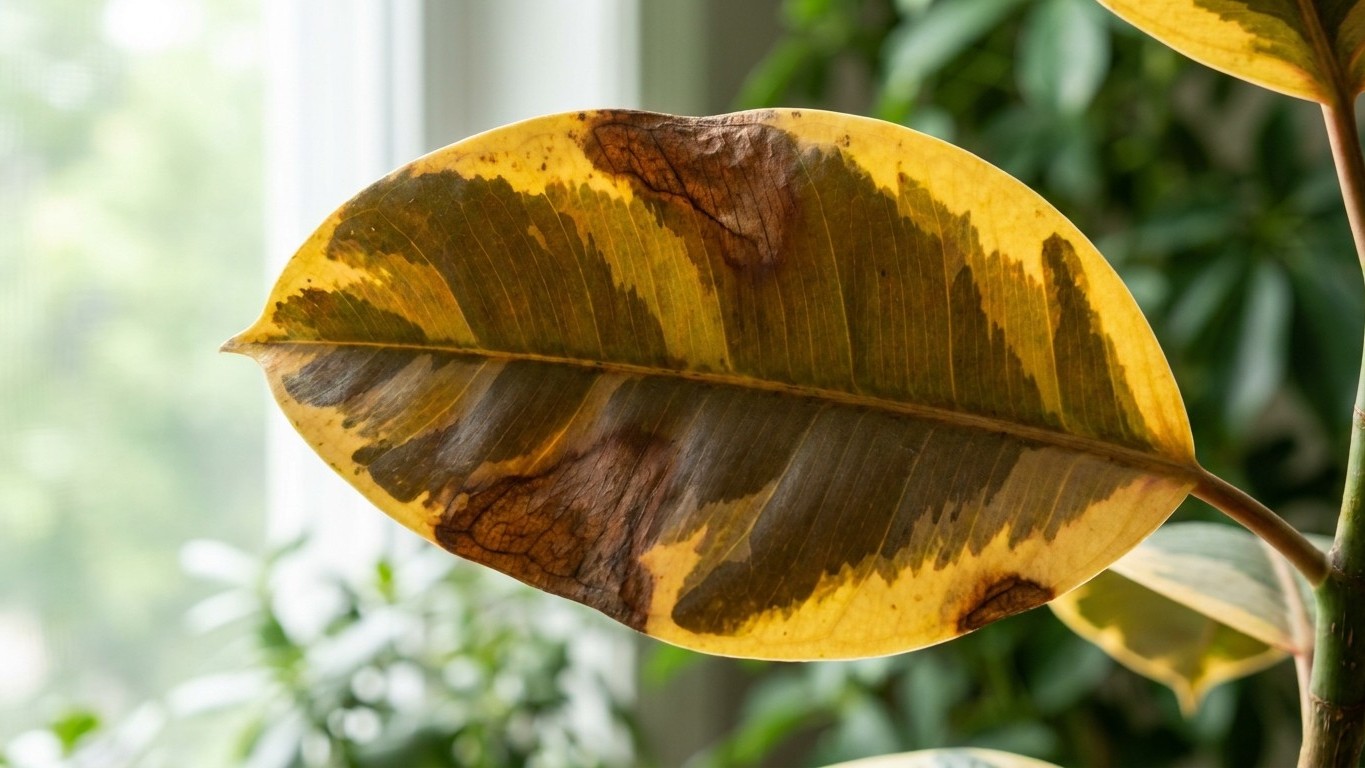
Every spring, garden centers quietly restock their shelves with rubber plants, not because demand spikes, but because thousands of perfectly healthy ones get discarded by well-meaning owners who mistake a preventable problem for a fatal disease. The culprit isn’t overwatering, root rot, or spider mites. It’s a cleaning mistake so common it barely registers as a mistake at all.
Key takeaways
- Garden centers restock rubber plants every April for a reason most people don’t realize
- One widespread cleaning habit creates symptoms that look exactly like a fungal infection or root rot
- The damage is completely reversible, but most plant owners throw out their plants before discovering the truth
The Leaf-Wiping Habit That Slowly Kills
Rubber plants (Ficus elastica) have those broad, glossy leaves that practically invite a good wipe-down. Dust accumulates on the surface, blocks light absorption, and makes the plant look dull, so the instinct to clean them is correct. The problem is what people use to do it. Across gardening forums and social media groups, the most common advice you’ll find recommends using oil-based products: coconut oil, olive oil, mayonnaise, commercial leaf-shine sprays loaded with mineral oil. The idea is that oil removes dust and leaves the leaf looking polished.
Here’s what actually happens. Rubber plant leaves breathe through tiny pores called stomata, concentrated on the underside of each leaf. An oil coating, even a thin one applied to the top surface, creates a film that traps heat and moisture against the leaf tissue. Over weeks, this leads to a condition that looks alarmingly like a fungal infection: brown edges, yellowing patches spreading inward, leaves that feel waxy but look burned. Most owners see this progression and assume the plant is diseased or dying. April, when people do their spring cleaning push, is exactly when these symptoms hit their visible peak after winter applications.
The science here is straightforward. A 2019 study on tropical foliage plants confirmed that oil-based leaf treatments significantly reduce gas exchange efficiency, with stomatal conductance dropping by up to 40% in some broadleaf species. Rubber plants, with their particularly dense waxy cuticle, are more susceptible than most because the oil bonds to that natural wax layer rather than simply sitting on top of it. Once bonded, it doesn’t wipe off cleanly.
What “Healthy” Actually Looks Like, and What You’re Misreading
A rubber plant in distress from oil damage shows a very specific pattern of decline. The oldest, largest leaves, the ones most likely to have been wiped the most, show symptoms first. You’ll see yellowing that starts at the edges rather than the center (which is the pattern you’d expect from root problems), and a strange texture: the leaf looks simultaneously glossy and scorched. New growth at the top of the plant often continues to emerge looking perfectly healthy, which confuses owners into thinking the problem is “spreading” rather than historical.
That new growth is the tell. A plant with root rot, bacterial infection, or a serious pest problem doesn’t push out healthy new leaves. A plant that’s been oil-damaged absolutely can, because the roots and vascular system remain intact. The damage is superficial, literally skin-deep, but it looks catastrophic. This is the exact moment when otherwise savvy plant owners decide the plant is past saving and chuck it.
A rubber plant can also shed three or four large leaves in rapid succession after oil damage, which amplifies the sense of crisis. A Ficus elastica dropping leaves feels dramatic because each leaf is so large. But leaf drop is the plant’s way of cutting losses on compromised tissue, not a sign of systemic collapse. Think of it less as the plant dying and more as it doing triage.
How to Actually Clean Rubber Plant Leaves
The fix is almost embarrassingly simple. A soft cloth, microfiber works best, dampened with plain lukewarm water removes dust from rubber plant leaves without any residue. For leaves that haven’t been cleaned in a while, adding a single drop of mild dish soap to a cup of water gives you enough surfactant to cut through grime without harming the stomata. Wipe the top surface gently, then flip the leaf and do the underside, which is where dust and pest eggs actually accumulate in meaningful quantities.
If you’ve already applied oil and you’re seeing the damage pattern described above, the recovery process requires patience more than intervention. Move the plant to a spot with bright indirect light (not direct sun, which will accelerate the burning of compromised leaves). Let the soil dry out more than usual between waterings to reduce the load on a stressed plant. Do not fertilize, a damaged plant can’t process a nutrient push, and it will cause more harm than good. New leaves will emerge within six to ten weeks if the root system is healthy.
For the leaves that are already yellowed and brown-edged, removing them cleanly at the petiole (the small stem connecting leaf to branch) is better than leaving them attached. The plant will eventually drop them anyway, and keeping damaged leaves on the plant means it continues investing resources in tissue it’s already written off.
The Deeper Issue With Leaf-Shine Products
The commercial leaf-shine industry is worth pausing on. These products are actively marketed for use on tropical houseplants, often with photos of glossy rubber plant and Ficus varieties on the label. The Royal Horticultural Society explicitly advises against oil-based leaf treatments for the majority of houseplants, recommending plain water or a very dilute soap solution instead. That advice exists precisely because the damage is so consistent and so widely misattributed.
The irony is that rubber plants don’t actually need help looking shiny. Their natural cuticle produces a glossy finish that rivals anything a bottle of leaf-shine spray can replicate. A plant that looks dull has simply accumulated dust, and the solution to dust is water, not oil. What you’re buying when you buy a leaf-shine spray is essentially a product designed to solve a problem it frequently creates. The healthiest rubber plant leaves you’ll ever see belong to plants that have never been touched with anything except a damp cloth.