
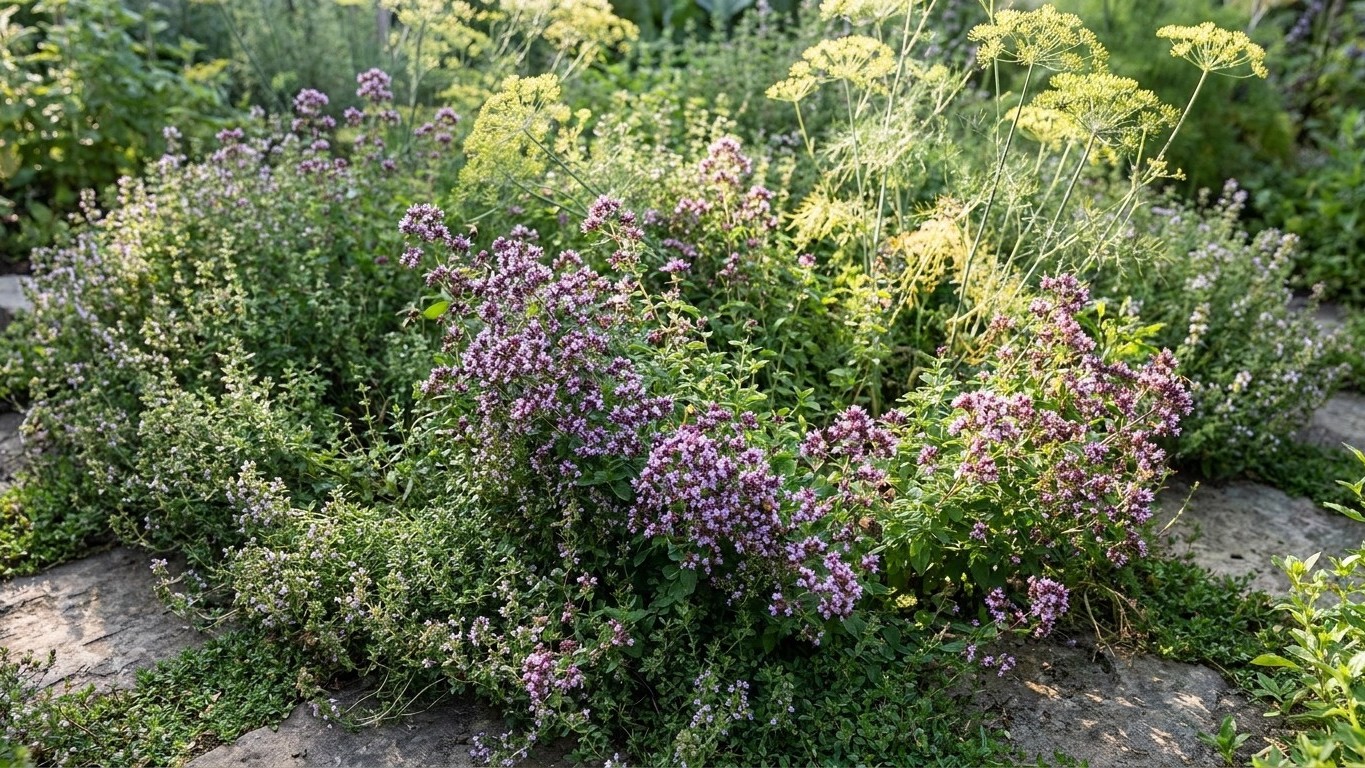
My neighbor Carol has never once mentioned her herb garden. No tour, no advice, no proud photo on her phone. And yet every June, her back bed erupts into a fragrant, overgrown tangle of parsley, dill, oregano, and chives so lush it makes my carefully tended plot look like a failed science experiment. Her secret? She planted most of it years ago and largely left it alone. Turns out, herbs are not just forgiving. Many of them are practically designed to thrive on neglect.
Key takeaways
- One neighbor planted herbs years ago and barely touches them—yet her garden thrives while carefully tended plots struggle
- Certain perennials like oregano, thyme, and mint spread aggressively on their own; others self-seed reliably if you let them flower
- The real secret isn’t gardening skill—it’s treating herbs as permanent garden architecture that gradually does the work for you
The perennials that show up whether you invite them or not
Oregano is a perennial herb, meaning it comes back year after year. In colder climates like Chicago, it dies back and then returns in the spring. That alone should make it a garden staple. But oregano goes further: it spreads via seeds and runners from a modest original planting to cover large swaths of the garden. You might not be able to use all the oregano that grows, but it stabilizes soil, softens path edges, and the bees adore its tiny purple flowers later in the season.
Thyme operates on the same principle. Once established, you can harvest thyme pretty much daily, it just keeps growing back. Thyme comes back year after year in zones 6 and up. In colder climates, you might have to replant it every spring, but in warmer conditions, these perennial plants never stop growing. A tiny 4-inch pot from the nursery in April can, within two seasons, blanket an entire raised bed edge. As a Mediterranean herb, creeping thyme thrives in full sun and rarely needs watering once established. It prefers poor to average soil, making it perfect for rockeries, pathways, and drought-tolerant landscaping.
Mint deserves its own paragraph, and its own container. Most mint plants will grow 1-2 feet tall and can spread up to 4 inches per month. Plant it directly in the ground without barriers and by July you will be relocating it from places it was never invited. The move? Grow mint on its own in a large container or pot. If you’d like to grow it in your landscape, you can keep it in a nursery pot placed in the ground. The flavor, the tea possibilities, the fresh summer cocktails — all worth the minor hassle of a little containment.
Spring is also the ideal time to propagate by dividing and layering hardy perennial herbs that survived the winter: chives, hyssop, lavender, lemon balm, mints, oregano, sage, thyme, tarragon, and winter savory. One clump of overgrown chives from a neighbor can give you four new plants for free. This is how Carol’s garden actually works: it feeds itself.
The self-seeders that reward your laziness
Not every herb worth growing is a perennial, but the best annuals have a trick up their sleeve. Native to Eurasia and the Mediterranean, dill is most at home in warmer climates. It’s an annual herb, but to create a permanent patch, allow some of the plants to flower and go to seed each year — you’ll have plenty of early dill to start the next growing season. Plant it once, and if you don’t disturb the soil too heavily in fall, it shows up again in spring like a reliable but slightly unpredictable houseguest.
Cilantro plays the same long game, though with more drama. Because longer days and hot weather in late spring will eventually cause cilantro to bolt, the key to a continuous harvest is succession planting, after sowing your first seeds, wait a week or two and then continue planting more every couple of weeks. Cilantro is more of a cool-weather plant, so you may need to take a break over the summer. The payoff for patience: cilantro frequently self-sows. As seeds fall to the ground, little plants may pop up during the season and the following spring. Let it bolt. Let it seed. Come back in September and find a fresh crop waiting.
Parsley operates on a slightly longer timeline. It’s a biennial, meaning it wants to live at least two years in the garden before going to seed, which is good news. Plant parsley once and harvest from it again and again this year and then again next year, as long as conditions are favorable. One small note: the seeds can take anywhere from two to four weeks to get going, so starting them indoors is a good idea. They can be direct sown, but weeds can quickly establish themselves while you wait for the parsley to sprout. Soaking the seeds overnight in warm water will help speed up germination.
What to put in the ground right now
Late April is a genuinely useful window. Less heat-tolerant herbs such as cilantro and dill can be planted in early spring. Many others may be transplanted outdoors or directly sown in early to late spring: bee balm, catnip, chamomile, chervil, chives, fennel, lemon balm, lovage, marjoram, mint, parsley, rosemary, sage, and thyme. Basil is the exception, wait until well after the last spring frost to transplant or sow tender annuals outdoors like basil, which requires a soil temperature of 60-70°F.
Soil preparation is honestly minimal for most herbs. Some herbs are sensitive to soil moisture and need special care: sage, rosemary, and thyme require well-drained, slightly moist soil, whereas parsley, chervil, and mint grow best in damp soil. Because herbs are shallow-rooting, adding organic matter to sandy soils is particularly beneficial. A handful of compost worked in at planting is genuinely sufficient for most species, no elaborate amendments, no pH testing required for the average home cook’s herb bed.
One habit worth building: deadhead herbs by pinching or snipping florets or seed heads off the top of the plant to prevent bolting and going to seed, unless, of course, you want them to self-sow. That’s the paradox at the heart of a low-effort herb garden. The trick is deciding which plants you’re harvesting from and which ones you’re letting run their full cycle to replenish the bed. Herbs are light-feeding plants that often don’t need much supplemental fertilizer. To keep them looking lush, simply amend the soil with compost before planting and then feed with a monthly dose of diluted liquid organic fertilizer from spring through early fall.
The overlooked upside: your herb garden works for the whole garden
A dense herb bed does more than supply the kitchen. Thyme attracts beneficial insects like pollinators and predatory feeders, and it also deters larval stages of pests such as tomato worms, flea beetles, and cabbage moths. Dill, similarly, attracts beneficial insects such as wasps and other predatory insects to your garden and is a host plant for the caterpillar of the black swallowtail butterfly. Planting a thick border of thyme, dill, and oregano around your tomatoes and peppers is, in effect, a passive pest management strategy that Costs Almost Nothing after the first season.
The real pivot in thinking about herbs is this: stop treating them like a kitchen supplement and start treating them like permanent garden architecture. Early spring is the perfect time to plant groundcover herbs once the soil is workable. Some can be started from seed, while others are better added as nursery plants. Once established, the difference is noticeable fast: these low-growing herbs form a tight layer, blocking weeds, releasing scent in the warmth, and delivering fresh harvests through the season. Carol didn’t build a high-maintenance kitchen garden. She built a system that gradually took over the work for her, and by June, it puts everything else to shame.
Sources : gardeningknowhow.com | nwedible.com