
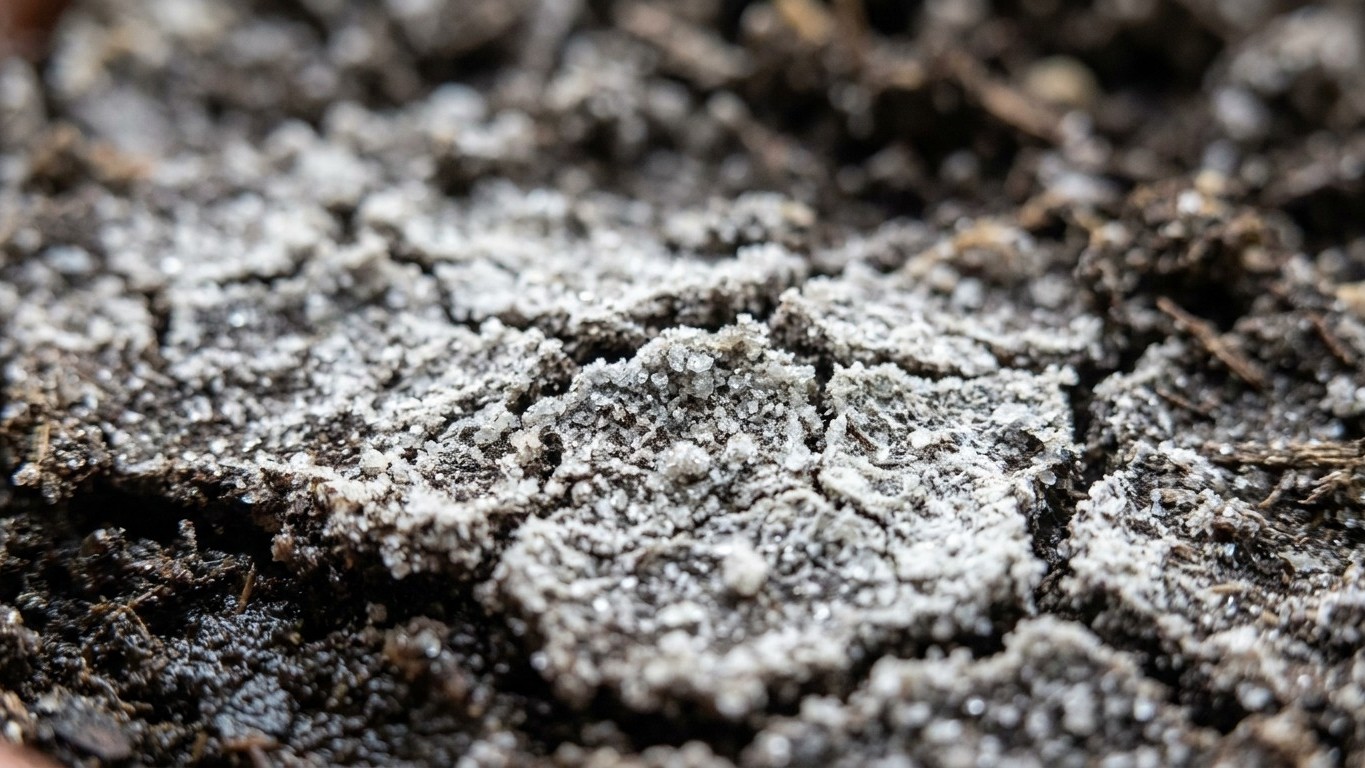
Bottom watering is sold as the smart gardener’s secret. Let the soil wick moisture from below, protect the leaves, avoid fungus gnats, the logic sounds airtight. For a full year, that’s exactly what I did with every plant on every windowsill. Twelve months of disciplined, tray-filling routine. The plants looked fine, mostly. Until I took a closer look at the topsoil.
What I found when I scraped back the surface layer wasn’t soil anymore. A thin white crust had formed across nearly every pot, a mineral deposit left behind by tap water salts that had been climbing upward through capillary action and then evaporating at the surface. In some pots, the top inch of substrate had essentially turned hydrophobic: water beaded on it rather than absorbing into it. The roots near the top of the root ball were dry, brittle, and in several cases, dead.
Key takeaways
- What looks like a simple gardening hack can create invisible mineral deposits that dehydrate roots from the inside out
- The signs of salt stress were hiding in plain sight—leaf browning, stunted growth, and even the gnats the method was supposed to prevent
- One monthly step completely reverses the damage and makes bottom watering actually work
What Bottom Watering Actually Does to Your Soil Over Time
The mechanics of bottom watering are elegant in theory. Place your pot in a tray of water, the soil draws moisture upward through capillary action, and the roots chase the water down toward the drainage holes, encouraging deep root development. That part is real and genuinely useful. The problem starts with what the method never addresses: the upper third of the soil.
Regular top watering does something that’s easy to overlook. The downward flow of water physically flushes accumulated mineral salts out through the drainage holes. Tap water carries calcium, magnesium, chlorine, and fluoride. Every time you water from above and let excess drain out, you’re running a mild flush through the root zone. Stop doing that for twelve consecutive months, and those minerals have nowhere to go. They migrate upward with capillary movement, then stay behind as the water evaporates. The white crust I was seeing? That’s years worth of salt buildup compressed into months, because I was essentially running the mineral accumulation cycle in one direction only.
A 2020 study on container plant management found that soils relying exclusively on sub-irrigation showed significantly higher electrical conductivity readings in upper soil layers over time, electrical conductivity being the standard measure of salt concentration in growing media. High salt concentrations pull moisture out of root cells through osmosis, essentially dehydrating roots even when the surrounding soil feels damp. My plants weren’t dying from underwatering. They were dying from the opposite of what I thought I was giving them.
The Signs That Were There All Along
Looking back, the clues were consistent, even if I misread every single one. Leaf tip browning on my peace lily : I blamed low humidity. Slow, stunted new growth on the pothos — I blamed low light and repotted it twice for no reason. A spider plant that refused to push out new pups despite otherwise healthy-looking foliage. These are textbook salt stress symptoms. Roots under osmotic pressure redirect energy away from reproduction and growth, focusing on basic survival. The plant looks alive. It’s just not living.
Fungus gnats, which bottom watering is specifically supposed to prevent, also appeared in three pots by month eight. The reason: the top layer of soil, perpetually dry and crusty, had developed small cracks and air pockets that actually made a hospitable dry-looking surface, while the deeper soil remained consistently moist, which is precisely the environment gnat larvae need. The dry top was camouflage, not prevention.
How to Bottom Water Correctly Without Destroying Your Soil
The fix isn’t to abandon bottom watering entirely. The method has real merits, particularly for plants sensitive to wet foliage like African violets, or for succulents where the crown of the plant should stay dry. The fix is to break the exclusive routine with a periodic deep flush from the top.
Most experienced growers who use bottom watering recommend a full top-water flush roughly once a month, or every four to six waterings. Take the pot to a sink, water slowly and generously from above until water runs freely from the drainage holes for at least thirty seconds, then let it drain completely before returning it to its saucer. This single step resets the salt gradient in the soil and rehydrates that neglected upper root zone. Think of it as clearing the cache, the day-to-day system runs fine, but occasionally you need to purge what’s accumulated in the background.
Soil choice also matters more than most people realize. Peat-heavy mixes, once they dry out at the surface, become hydrophobic quickly, water simply won’t penetrate. Chunky mixes with perlite, bark, or coarse sand stay more structurally open and resist that compaction. Switching my pothos from a standard peat mix to a chunkier blend reduced surface crusting dramatically within two months.
Rehabilitating Plants After Salt Stress
For plants already showing symptoms, recovery is possible but requires patience. Start with three consecutive top-water flushes over two weeks. Remove any visibly crusted top layer of soil, the top half inch, and replace it with fresh mix. Trim dead root tips if you’re doing a full repot, which allows the plant to redirect energy toward new healthy growth rather than maintaining damaged tissue.
Switching to filtered or distilled water eliminates mineral buildup almost entirely, though it’s an expense and a logistics challenge if you’re managing a dozen pots. Collecting rainwater is a more practical and free alternative, its near-zero mineral content means years of bottom watering without the salt accumulation problem. Several of my plants recovered fastest after I started using rainwater collected from a simple bucket left on a balcony during storms.
The deeper irony in all of this: the plants that suffered least during the year were the ones in terracotta pots. Because terracotta is porous, it allows some lateral salt migration out through the pot walls, visibly showing as white streaks on the exterior, which most people treat as a cosmetic nuisance. Those streaks are actually the pot doing the grower a favor, acting as a slow mineral release valve that plastic containers simply can’t replicate.