
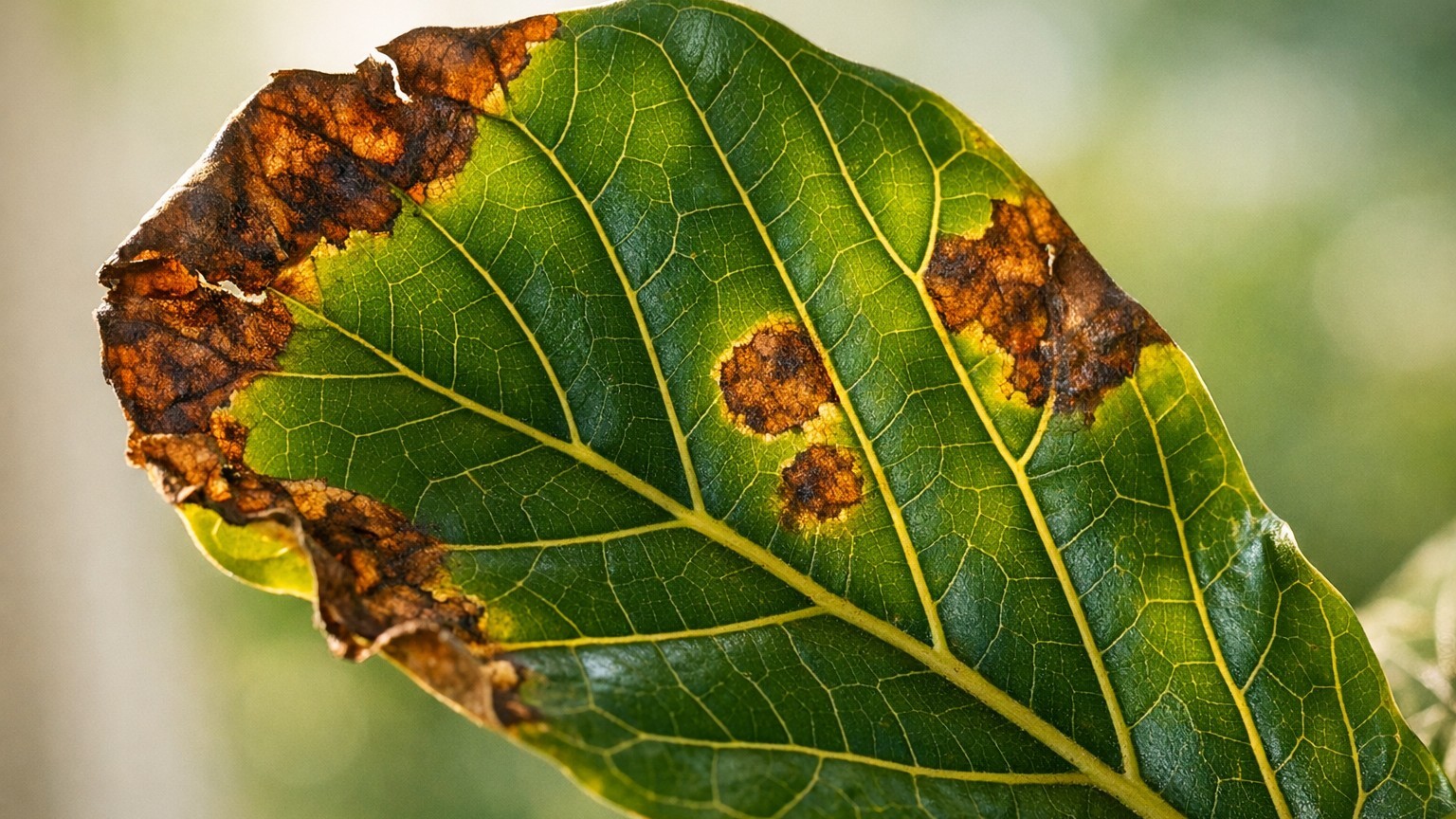
Brown spots on a fiddle leaf fig are one of the most stressful sights in the indoor plant world. They spread. They don’t reverse. And when they appear after you’ve been trying to care for the plant, the frustration is something else entirely. The olive oil leaf-shining trick is popular enough to have thousands of pins on Pinterest and plenty of YouTube endorsements, but it’s also one of the fastest ways to damage a fiddle leaf fig’s leaves, and the science behind why is worth understanding before you reach for that bottle.
Key takeaways
- A viral plant care hack is quietly destroying thousands of fiddle leaf figs—and the science behind it is surprising
- Those brown spots appeared right after you started treating your plant. Here’s why the timing is the biggest clue
- There’s a shockingly simple way to make your fiddle leaf fig shine that doesn’t involve any products at all
Why olive oil seems like a good idea (and why it isn’t)
The logic is seductive. Olive oil is natural, moisturizing, and leaves a visible shine on whatever it touches. On kitchen counters, on cast iron pans, even on leather shoes, it works beautifully. The problem is that plant leaves are not leather. They’re living surfaces covered in microscopic pores called stomata, and those pores are responsible for gas exchange: taking in carbon dioxide, releasing oxygen, and regulating moisture. Coat them with oil, and you’ve essentially wrapped the leaf in plastic wrap.
Fiddle leaf figs (Ficus lyrata) are already notoriously sensitive to environmental stress. They originated in the tropical rainforests of West Africa, where humidity is high and air circulation is constant. Their large, waxy leaves are naturally glossy, they don’t need help. When you apply olive oil weekly, you’re not enhancing that natural shine; you’re adding a foreign layer that sits on the surface, clogs stomata, and prevents the leaf from breathing properly. The brown spots that appear over the following days are often a sign of cellular damage, sometimes compounded by a secondary fungal or bacterial infection that found a perfect warm, oily environment to colonize.
The actual cause of those brown spots
Not all brown spots on a fiddle leaf fig mean the same thing, and it’s worth diagnosing before assuming the oil is the only culprit. That said, the timing here is telling. Spots that appear within one to two weeks of starting a new treatment are almost always linked to that treatment.
Oil on leaf surfaces creates heat concentration under direct or indirect light. Even a room with bright indirect light, which is exactly what fiddle leaf figs need, can become enough to essentially cook portions of the leaf when oil amplifies the light’s effect. Think of it like a magnifying glass in slow motion. The result is dry, crispy brown patches that typically start at the edges or in the center of the leaf, spreading outward as the damage deepens.
There’s also the issue of residue buildup. A single application might not cause immediate visible harm. Weekly applications, though, accumulate. The oil doesn’t fully evaporate or absorb, it sits there, oxidizes slightly, and creates a progressively thicker barrier. By week two or three, you’re looking at a leaf that is functionally compromised even if it still looks shiny from across the room.
A less-discussed factor: olive oil can attract dust and airborne particles, which then stick to the leaf surface. That added particulate layer makes the gas exchange problem even worse, and in humid indoor conditions, it can accelerate mold growth on the leaf surface itself.
What to do right now if this has already happened
First, stop the oil applications immediately. Then, the most effective next step is to gently clean the affected leaves with a soft cloth dampened with plain lukewarm water. Some plant care sources recommend a tiny drop of neem oil-free, very diluted soap solution for stubborn residue, but keep it minimal and rinse thoroughly. The goal is to remove the oil layer without stressing the leaf further.
Do not remove the brown-spotted leaves right away unless they’re more than 50% damaged. Fiddle leaf figs drop leaves when stressed, and the shock of losing several leaves at once can trigger a downward spiral that’s hard to reverse. Give the plant two to three weeks in stable conditions, consistent temperature, no cold drafts, no relocation, before evaluating which leaves to prune.
Watering habits matter here too. If the soil stayed moist under an oily leaf canopy, root stress may have compounded the surface damage. Check that the top inch of soil is dry before the next watering, and make sure the pot has adequate drainage. Overwatering and leaf-surface issues often appear together in stressed fiddle leaf figs, making diagnosis tricky.
How to actually make fiddle leaf fig leaves shine
The safest and most effective method is also the simplest: a clean, damp cloth, wiped across each leaf to remove dust. Dust accumulation is the real enemy of leaf shine, it creates a matte, dull appearance by scattering light instead of reflecting it. Removing dust once every two to three weeks is all the “shine treatment” a healthy fiddle leaf fig needs.
If you want a product specifically designed for the job, look for commercially formulated leaf shine sprays that are labeled safe for Ficus varieties. These are typically water-based, contain no oils or waxes that clog stomata, and evaporate cleanly. They exist precisely because the DIY oil trick has caused enough plant casualties to create a market for something better.
One surprising detail that most plant guides skip: the naturally waxy cuticle of a fiddle leaf fig leaf actually self-repairs over time when the plant is healthy and well-lit. A plant getting the right amount of bright indirect light (a south or east-facing window is ideal) will maintain its own gloss far more effectively than any weekly shine treatment. The leaf’s appearance is, in many ways, a direct readout of its internal health, no product required.