
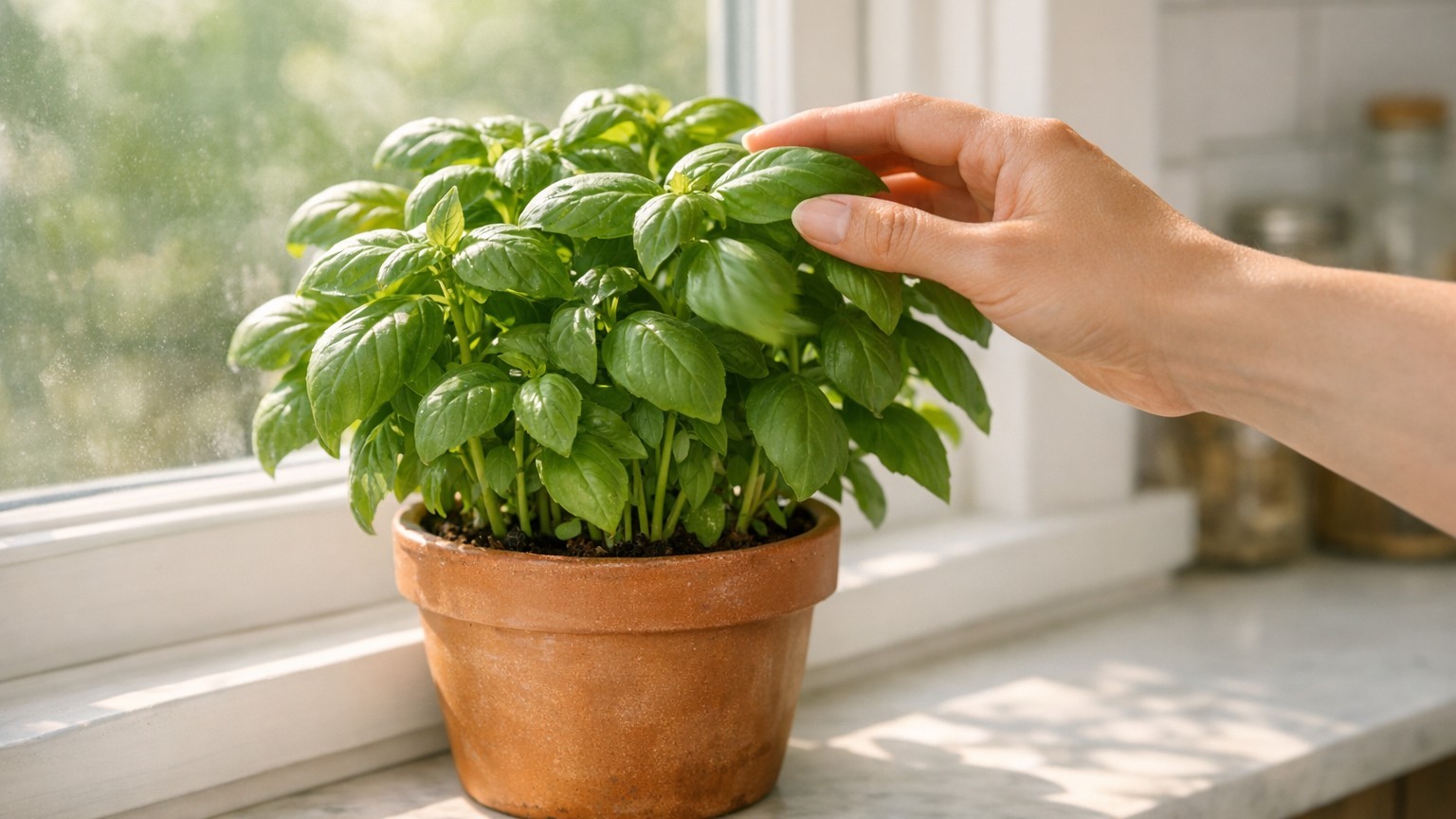
A single pot of basil on a sunny kitchen windowsill. No plug-in device, no chemical spray, no candles burning through the evening. Just a herb that most Americans already grow for pasta sauce, and it works well enough that a neighbor couldn’t tell the difference. That’s not a fluke or a gardening myth. There’s real chemistry behind it, and understanding how it works makes you a smarter grower.
Key takeaways
- One common kitchen herb contains four different mosquito-repelling compounds that confuse the insects’ sensory systems
- Catnip’s active compound is reportedly 10 times more potent than DEET, but there’s a catch most people miss
- Passive plants help, but touching and crushing leaves unlocks their full repellent power—here’s why
The Plant That Earns Its Spot on the Sill
Basil is the star here, and its mosquito-repelling credentials go deeper than folk wisdom. Basil contains not one but four mosquito-repellent volatile compounds: estragole, citronellal, limonene, and nerolidol. That’s a broader chemical arsenal than most people realize when they pick up a seedling at the farmers market. These essential oils are released through the leaves when brushed or crushed, creating a scent barrier that disrupts mosquito olfactory receptors. The mechanism is precise: four volatile compounds in basil interrupt the mosquito’s heat and carbon dioxide sensors, reducing their ability to recognize a meal, confusing and irritating the insects and forcing them to leave in order to recover their senses.
Placement matters more than most people think. The chemical compounds that repel insects are produced in the plant’s leaves, so maximum light means maximum defense. A kitchen windowsill with southern or western exposure gives basil exactly what it needs. Basil is one of the most practical mosquito-repellent plants because it is fragrant, edible, attractive, and easy to grow in containers. Its strong herbal scent can help discourage mosquitoes and flies, especially around outdoor kitchens and sunny patios where leaves are harvested often. For the best effect, place basil where people can brush past it or pick it regularly. That last point is the real trick: passive presence helps, but simply brushing against the plant to release the oils helps, and for even better protection, plucking a handful of foliage and gently rubbing it on exposed skin goes further.
Not Just Basil: The Full Windowsill Arsenal
Rosemary deserves a spot right next to the basil. Rosemary is a fragrant, woody herb that’s easy to grow indoors, and like many herbs, its strong volatile oils are too overpowering for many common pests, specifically deterring mosquitoes, flies, and the cabbage moth. It’s also nearly indestructible on a sunny sill. Bonus: it seasons your roasted chicken while guarding the window.
Then there’s catnip, and this one surprises almost everyone. Researchers found that nepetalactone, the essential oil in catnip that gives the plant its characteristic odor, is about ten times more effective at repelling mosquitoes than DEET, the compound used in most commercial insect repellents. The finding was reported at the 222nd national meeting of the American Chemical Society by an Iowa State University research group. Ten times more potent than DEET — that’s roughly the population of New York City worth of repellent power hiding in a humble herb. The nuance, though, is real: nepetalactone evaporates quickly, and the compound is highly volatile, meaning its active repellent effect dissipates faster than DEET-based formulations. Crushing a few leaves periodically refreshes that effect. Cat owners, fair warning: catnip isn’t just for cats, the plant contains a chemical called nepetalactone, which is both a feline attractant and a mosquito repellent.
Lavender rounds out a strong trio. Lavender is prized for its long-stemmed elegance and calming scent, and the same strong essential oil that promotes relaxation in humans is precisely what makes it a deterrent to pests, proven to deter moths, fleas, flies, and mosquitoes. Unlike basil, lavender wants dry soil and doesn’t appreciate being overwatered. Give it gritty, well-draining mix and full sun, and it will outlast an entire summer with minimal fuss.
The Honest Science: What Plants Can and Can’t Do
No responsible article skips this part. Mosquito-repellent plants are helpful garden allies, not a complete mosquito-control system. A basil plant sitting passively three feet from the window won’t create a forcefield. A healthy basil leaf emits roughly 0.002–0.008 mg of total volatiles per hour, orders of magnitude below the threshold needed to affect mosquito behavior at distances greater than 10 cm. That’s the honest ceiling of passive repellency.
But that’s also precisely why how you use the plant changes the equation. These plants work best when placed close to people, touched often, harvested regularly, and combined with good mosquito prevention. Crush a few basil leaves before sitting by the window. Brush the rosemary when you walk past. Run a fan near the plants, airflow carries volatile compounds across a wider area than still air ever could. Combining repellent plants with mosquito prevention basics such as removing standing water, using screens, and wearing protective clothing creates a genuinely layered defense.
The pilot study data on whole-house scale is also worth knowing: in a tropical setting, houses protected with repellent plants saw 50% fewer mosquitoes overall compared to control houses, and indoor populations of the dangerous Anopheles funestus mosquitoes were reduced by an impressive 83%. Tropical conditions accelerate volatile release, so those numbers won’t translate perfectly to a Cincinnati kitchen, but the directional effect is real.
Making the Setup Actually Work
Three plants, one windowsill, zero plug-in devices. Most aromatic, pest-repelling herbs need at least six hours of bright, direct sunlight daily. A south- or west-facing window in most U.S. homes clears that bar from May through September. Water basil daily, rosemary sparingly, and lavender only when the top inch of soil is dry, overwatering is the single fastest way to kill all three.
Once basil produces flowers, it stops producing new leaves, so remove buds when they appear. Pinching keeps the plant compact, delays flowering, and, critically for repellency, triggers more leaf production, which means more volatile oil output. Think of it as a monthly trim that doubles as pest control maintenance.
One underrated bonus: a DIY repellent spray can be made by steeping chopped basil leaves in alcohol or vinegar, then straining and spraying on skin or clothing. That bridges the gap between passive windowsill defense and direct, topical protection for evenings on the porch. The living plant does the quiet work indoors; the spray extends coverage outdoors. Two tools, one herb, grown three feet from your kitchen sink, and your neighbor still can’t figure out where you hid the plug-in.
Sources : planetnatural.com | mosquitomagnet.com