
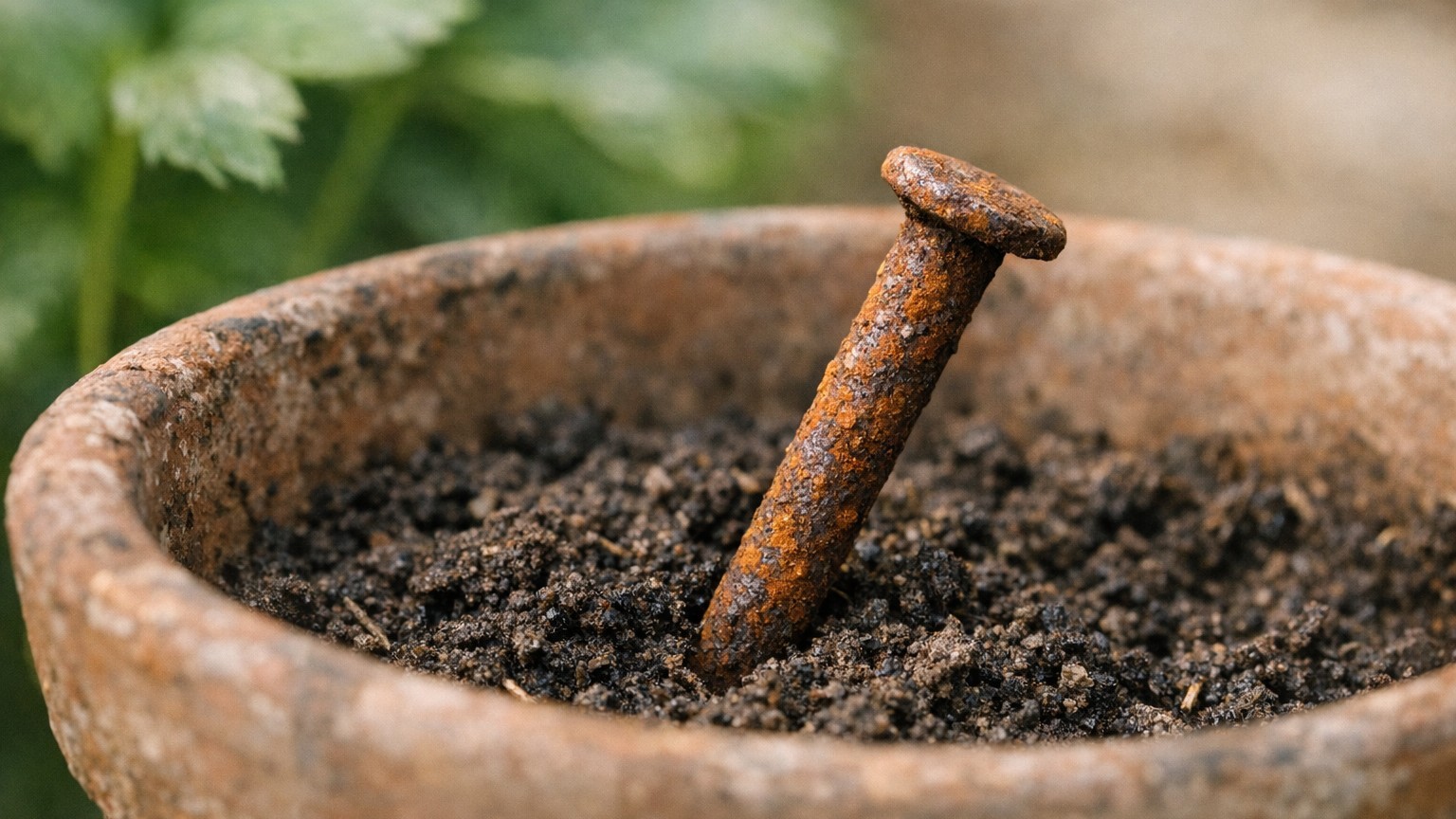
Somewhere in a garden shed, a grandfather is doing something that makes absolutely no sense, or so it seems. He picks up an old rusty nail, walks over to his potted ferns, and pushes it deliberately into the soil. For years, this looked like superstition dressed up as gardening wisdom. Then you look it up, dig into the science, and realize the old man understood something about plant nutrition that most people still don’t.
Key takeaways
- A rusty nail in soil triggers a subtle chemistry shift that unlocks hidden iron your plants desperately need
- Iron deficiency in plants isn’t usually about missing iron—it’s about soil conditions that lock it away
- The real mechanism behind the trick is far more clever than direct iron feeding
Why plants need iron in the first place
Iron is a nutrient that all plants need to function. Many of the vital functions of the plant, like enzyme and chlorophyll production, nitrogen fixing, and development and metabolism are all dependent on iron. Think of iron as the plant’s respiratory system engineer, without it, nothing runs smoothly. Iron is also an important part of vital enzymes like cytochrome, which helps to detoxify environmental pollutants and other xenobiotics. That’s not a minor side job.
The most obvious symptom of iron deficiency in plants is commonly called leaf chlorosis, where the leaves of the plant turn yellow, but the veins of the leaves stay green. That specific pattern is the tell-tale sign. It occurs because iron is immobile within the plant, causing new growth to show symptoms first. So if your newest leaves are yellowing while the older ones still look decent, iron is the likely suspect. Left untreated, the yellowing can progress to complete leaf whitening, and in severe cases, leaves may develop brown spots or edges. A slow, ugly decline — and entirely preventable.
Rarely is an iron deficiency caused by a lack of iron in the soil. Iron is typically abundant in the soil, but a variety of soil conditions can limit how well a plant can get to the iron in the soil. This is the part most gardeners miss. If the soil is alkaline (a pH of 7 or above), iron may be present, but fixed to soil particles in such a way that it is not available to plants. This will cause iron chlorosis in many plants. Overwatering compounds the problem further: heavy soils frequently have issues with compaction and drainage, and in soils that stay wet or do not drain for long periods, roots do not get enough air, reducing their ability to take up iron.
The science (and the limits) of the rusty nail trick
Here’s where it gets genuinely interesting. Rusty nails contain iron oxide, that telltale reddish coating formed when oxygen and iron react in the presence of water. Sometimes referred to as ferric oxide, this rust is high in iron, and plants need iron. Grandfather’s logic wasn’t wrong on the basic premise. Rusty nails contain iron, which is the main component of various physiological and biochemical activities in plants, an essential part of vital enzymes like cytochrome, and helpful for chlorophyll synthesis. Supplementing the plants with the iron oxide in nails will also help in chloroplast structure and function, making them greener, healthier, and more active.
But here is where the story gets complicated. The iron produced by rusty nails is iron oxide, an essentially insoluble compound. Only a very tiny amount might theoretically be released by bacterial action, and very little of that will be absorbed by plants. So the nail in the pot isn’t exactly a magic iron drip-feed. The problem isn’t in the diagnosis, but in the delivery. Rust is the wrong form, released too slowly, in a way that soil pH will largely neutralize before roots ever see it. The iron is there, but the plant’s root system isn’t designed to process it in that raw, solid form.
Yet dismissing the trick entirely misses a subtler truth. Rusty nails can slightly increase the soil acidity, which helps acid-loving plants. That shift in pH is the real mechanism at work for many species. When soil is highly acidic (pH less than 7.0), iron becomes soluble in water and can therefore be absorbed by plant roots, benefiting plants in case of an iron deficiency in the soil. The nail isn’t feeding the plant directly, it’s quietly tweaking the soil’s chemistry so the plant can feed itself. There’s a difference, and it matters.
How to actually do it (and do it right)
If you want to try the technique, there are two practical approaches. An easy and safe way is to make a rusty nail “tea”: submerge the nails in water for five or six days. The water will turn brown from the rust. You can then use it to water your plants as you normally would. This method concentrates what little soluble iron the rust releases, which is more effective than simply dropping a nail into dry soil. Alternatively, for container plants, put nine or ten nails in a perimeter around the outside of the container, with the rustiest portion inserted into the soil. As you water, it will push the iron from the rusty nail into the soil gradually over time.
A word on sourcing those nails. Rust is essentially iron oxide, but it may also contain other elements or impurities if you don’t know the source of the nails. When trying this trick, use nails from a source you trust, such as your own garden or a location with minimal exposure to potential contaminants. Old, uncoated steel nails are ideal. Avoid anything with paint or zinc galvanization, those coatings introduce chemicals you don’t want near plant roots. The rusty nail hack benefits gardenia, azalea, ixora, and many other indoor plants — all acid-preferring species that stand to gain the most from even a modest shift in soil pH.
When the nail won’t be enough
If you suspect an iron issue, the first step isn’t adding anything, it’s testing your soil. “Often the solution isn’t adding iron,” one expert notes. “It’s adjusting pH.” For alkaline soils, better options include iron sulfate mixed into the potting medium, or chelated iron solutions — a form where the iron is bound to organic molecules that protect it from reacting with soil chemistry before the roots can use it. You can spray a solution of iron sulphate directly onto the foliage (many plants readily absorb minerals through their leaves) or water the soil with a solution of iron chelate, which is a form of iron that is readily absorbed by plant roots.
An overabundance of phosphorus can also restrict iron uptake. Phosphorus prevents iron from entering plants, so fertilizing with no-phosphorus formulas will allow phosphorus levels to drop, making it easier for plants to access the iron already in the soil. This means that over-fertilizing with a standard NPK product can actually be the cause of the very problem you’re trying to solve. The grandfather with his rusty nail probably never over-fertilized. He just trusted the slow, steady logic of letting soil chemistry do the work, and that instinct, it turns out, was exactly right.
Sources : diyncrafts.com | yourindoorherbs.com