
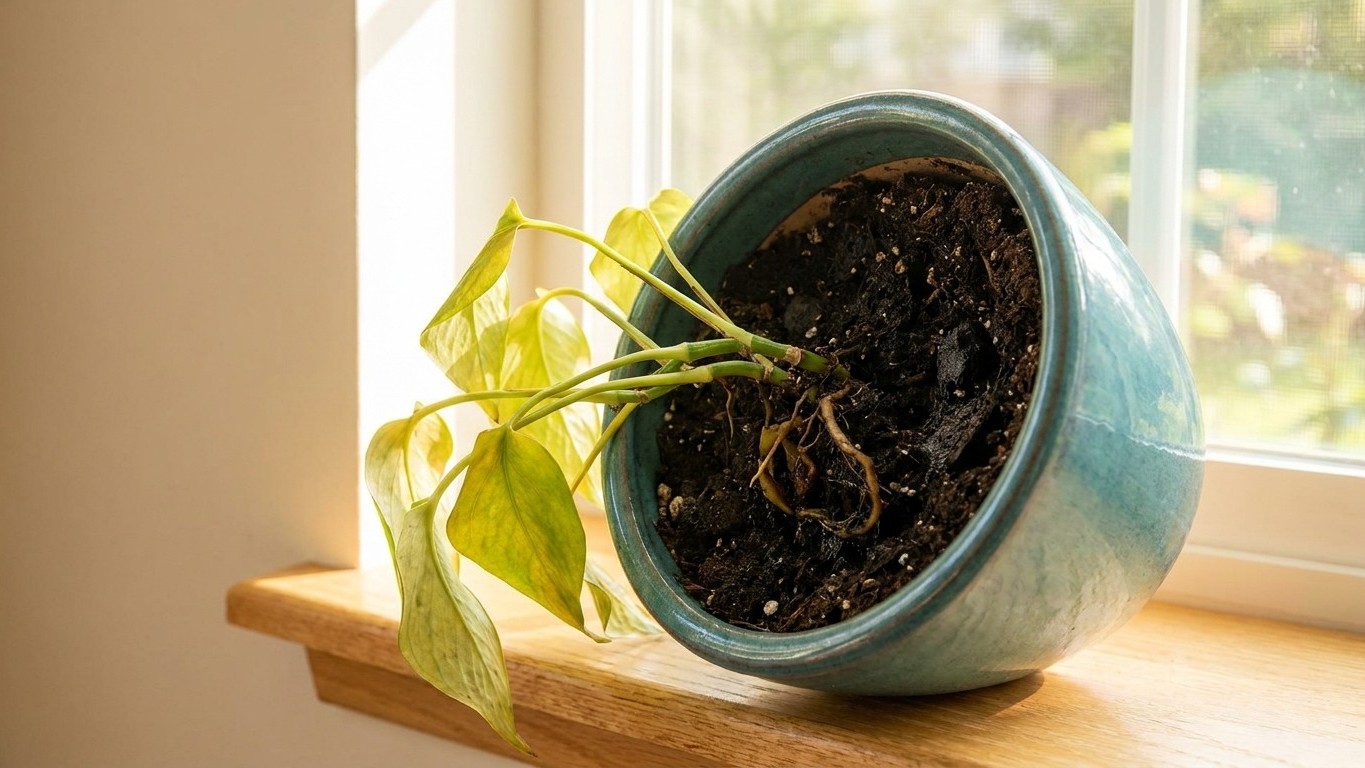
Three weeks. That’s all it took for a decorative pot to turn a healthy pothos into a science experiment gone wrong. The plant looked gorgeous sitting in that glossy cachepot on the windowsill, no plastic nursery pot in sight, no ugly plastic rim breaking up the ceramic finish. Then came repotting day, and pulling the root ball out revealed a pool of standing water and a tangle of roots that had gone from white to black.
The mistake is a common one, and an understandable one. Cachepots exist because plain nursery pots aren’t exactly interior design showpieces. But a cachepot is meant to be a decorative shell, not a growing container. Skip that distinction and the plant pays for it.
Key takeaways
- What’s actually happening underground when water has nowhere to drain
- Why root rot makes pothos look thirsty (and why watering more makes it worse)
- How three weeks of sitting in trapped water causes irreversible damage to even ‘indestructible’ plants
What actually happens underground
A container needs drainage holes for water to properly drain out; without them, water just sits in the bottom of the pot and starts to rot the roots. That’s not a slow process either. Regular inspection of soil often reveals it staying unusually soggy, since waterlogging occurs when the container or soil lacks drainage, stopping air and water from flowing through the soil, and without air, roots essentially suffocate and begin degrading.
What makes this particular failure so sneaky is that the plant doesn’t scream for help right away. Root rot makes a pothos look thirsty, with drooping leaves and wilting vines that look like the plant needs water, so the instinctive response is to water more. That instinct is exactly backwards, and it accelerates the damage. That extra water feeds the pathogens destroying the roots, and the plant can decline beyond rescue within days.
Pull the plant out after weeks of sitting in trapped water and the evidence is unmistakable. Healthy roots are firm and white to tan, while rotted roots turn brown or black, feel mushy, and sometimes smell foul. Under a magnifying glass, this isn’t just cosmetic decay. Pythium, a common root rot pathogen, thrives in waterlogged soils and is more likely to strike plants sitting in water for extended periods, causing sudden wilting and yellowing of leaves along with a soggy appearance of roots that turn from light brown to black, feel slimy, and give off a foul smell.
Why three weeks is enough time to do real damage
Pothos has a reputation as nearly indestructible, and that reputation is mostly deserved. It survives low light, forgotten watering days, and the kind of neglect that kills more finicky tropicals within a month. But standing water is the one condition its roots can’t out-tough. Overwatering reduces the availability of oxygen in the soil, making it difficult for plants to absorb water and nutrients, and without oxygen, roots accumulate toxins, weaken, and eventually die. Three weeks is plenty of time for that chain reaction to run its course, especially in a container with zero outlet for excess moisture.
Temperature and season matter too, which is easy to forget when a plant just moved to a new spot for the winter light. Pothos struggles to absorb moisture during low temperatures, especially fall and early spring, so the soil remains damp for extended periods, and roots sit in water and start rotting after some time. A cachepot without drainage simply removes the plant’s only safety valve during exactly the season when it needs one most.
The stems tell their own story, and it’s often the last place people check. Brown and mushy stems indicate a problem, though pothos vines are relatively fleshy and commonly seen cascading down from pots, which makes it difficult to identify stem problems close to the soil line. By the time a stem near the soil goes soft, the rot has usually been working for a while.
The fix that actually works, long term
The good news: this is one of the easiest houseplant disasters to prevent, and one of the more fixable ones if caught early. The standard advice from plant retailers and growers alike is almost universally the same. If you want to use a decorative pot that has no drainage hole, use it as a cachepot, keeping the pothos in a plain plastic nursery pot with drainage holes, and setting that inside the decorative container. The nursery pot does the actual growing work. The cachepot just dresses it up.
For a plant that’s already showing signs of trouble, recovery starts with getting eyes on the roots. The best course of action is to remove the plant from the pot and check the roots, carefully lifting it out for a closer look and using fingers to gently untangle them; any discoloration, mushiness, or foul odor means it’s best to remove all the affected roots. Clean scissors, sterilized between cuts, keep any lingering fungus from spreading to the parts of the root system that are still salvageable. Repotting into a fresh, well-draining mix amended with perlite, vermiculite, or coco coir comes next, making sure the new pot actually has drainage holes, followed by holding off on watering for about a week to let damaged roots recover without added stress.
There’s a middle-ground fix too, for anyone attached to a specific decorative pot. Drilling drainage holes into ceramic or terracotta is possible with the right masonry bit, though it turns a decorative container into a functional one and means adding a saucer underneath to catch runoff. Whichever route gets chosen, the underlying rule doesn’t bend: soil needs somewhere for excess water to go, and a pothos left to sit in its own runoff for weeks is borrowing against a recovery that isn’t guaranteed. The plant that looked best on day one is rarely the one still thriving three weeks later.
Sources : airenrich.com | simplifyplants.com