
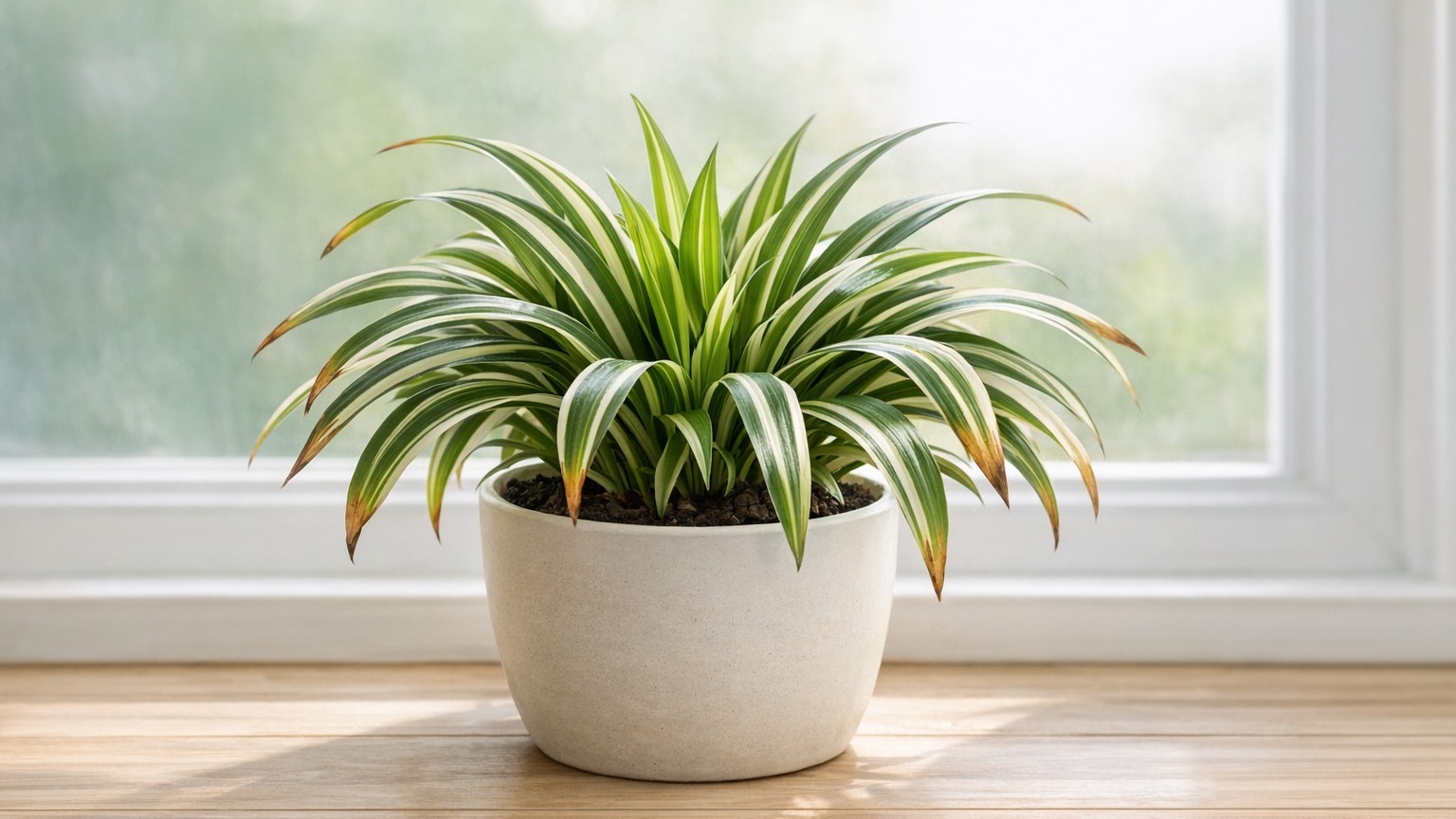
Brown tips on a spider plant are practically a rite of passage for new plant parents. And somewhere along the line, almost everyone picks up the same folk remedy: let your tap water sit out overnight, uncovered, and the chlorine will evaporate away, problem solved. I followed that advice religiously for months. Filled a pitcher each evening, left it on the counter, watered the next morning. The tips kept browning. Not dramatically, not alarmingly, but enough to keep me questioning what I was doing wrong.
Turns out, quite a bit. But the overnight water ritual wasn’t the fix it’s cracked up to be, and understanding why sent me down a rabbit hole that changed how I care for every plant in my home.
Key takeaways
- A decades-old plant care ritual may be doing absolutely nothing for your spider plant’s health
- Municipal water systems switched from chlorine to chloramine decades ago—one evaporates, one doesn’t
- Spider plants are mysteriously sensitive to something invisible in tap water that has nothing to do with disinfectants
The chlorine myth, and what your tap water actually contains
Chlorine does evaporate from standing water. That part is true. Given enough time, anywhere from 30 minutes to a few hours depending on your water’s chlorine concentration and surface area — most free chlorine will off-gas at room temperature. So the overnight method technically works for chlorine removal, if chlorine were actually the main culprit behind brown tips.
The problem is that most municipal water systems in the United States have switched from chlorine to chloramine as their primary disinfectant. Chloramine is chlorine bonded to ammonia, and unlike its simpler cousin, it does not evaporate. You can let a glass of tap water sit for a week and the chloramine level will barely budge. The EPA has confirmed chloramine as a standard treatment in hundreds of water systems nationwide. If your utility uses it, and there’s a real chance it does, your overnight pitcher ritual is accomplishing almost nothing.
What actually causes those brown tips on spider plants
Spider plants (Chlorophytum comosum) are often labeled as indestructible, which makes browning tips feel like a personal failure. The reality is that these plants are unusually sensitive to mineral buildup, a trait that has nothing to do with disinfectants and everything to do with the dissolved solids that travel invisibly through your pipes.
Fluoride is the biggest offender. Most U.S. municipalities add fluoride to drinking water at around 0.7 parts per million, a level set for dental health benefits. Spider plants are among the most fluoride-sensitive houseplants around, and repeated watering causes fluoride to accumulate in the soil over time. The plant absorbs it, moves it to the leaf tips (the farthest point from the roots in its vascular system), and deposits it there. Brown tips follow. Letting your water sit overnight removes zero fluoride.
Excess salts from fertilizer compounds the issue. Even light, well-intentioned feeding schedules push mineral levels in potting soil higher than most spider plants can handle gracefully. The tips act as the plant’s pressure valve, which is why the damage is almost always at the margins rather than the center of the leaf.
What actually works (and what I switched to)
The most straightforward solution: use filtered water or rainwater. A basic activated carbon filter (the countertop kind, common in Brita-style pitchers) does a reasonable job of reducing chloramine, fluoride, and heavy metals. Rainwater, collected in a clean container from a downspout, is naturally soft and mineral-free, spider plants respond to it noticeably well.
Distilled water is the nuclear option. Zero minerals, zero disinfectants, zero problems for fluoride-sensitive plants. The downside is cost and environmental waste if you’re buying it by the gallon. For a single spider plant, though, one gallon can last several weeks.
Soil management matters just as much as water quality. Flushing the pot thoroughly every few months, running a generous amount of water through the drainage hole and letting it carry dissolved salts out — prevents mineral buildup from compounding. Repotting annually with fresh potting mix resets the clock entirely. And holding back on fertilizer is almost always the right call with spider plants; they’re light feeders and don’t need monthly dosing through the growing season.
One detail that rarely gets mentioned: the pot itself. Spider plants kept in pots without drainage holes accumulate minerals with no escape route. Every watering deposits a thin layer of dissolved solids into the soil, and there’s nowhere for it to go. A drainage hole isn’t optional for this species, it’s the mechanism that makes mineral management possible in the first place.
The ritual wasn’t useless, exactly, just misapplied
Letting water sit overnight isn’t entirely without merit. Water at room temperature is genuinely better for tropical houseplants than cold tap water straight from the pipe, which can stress roots adapted to warmer, humid environments. Bringing water to room temperature before watering is a real best practice. The mistake is assuming that temperature adjustment also handles the chemistry.
There’s also the psychological value of a ritual, something plant people rarely want to hear dismissed. A watering routine, even an imperfect one, creates consistency, and consistency is what plants actually thrive on. Regular watering schedules prevent the oscillation between bone-dry and waterlogged soil that stresses roots far more than a little chloramine ever could. The overnight pitcher turned out to be a habit worth keeping, just for different reasons than I originally thought.
My spider plant’s tips never fully recovered, brown tip cells are dead and don’t regenerate, but new growth came in clean after I switched to filtered water and started flushing the soil. Trimming the damaged tips with clean scissors (cutting at a slight angle so they blend with the leaf shape) is purely cosmetic, but it does make the plant look considerably healthier while the new leaves catch up. Six months later, the plant pushing out runners in every direction suggests it’s no longer particularly bothered.