
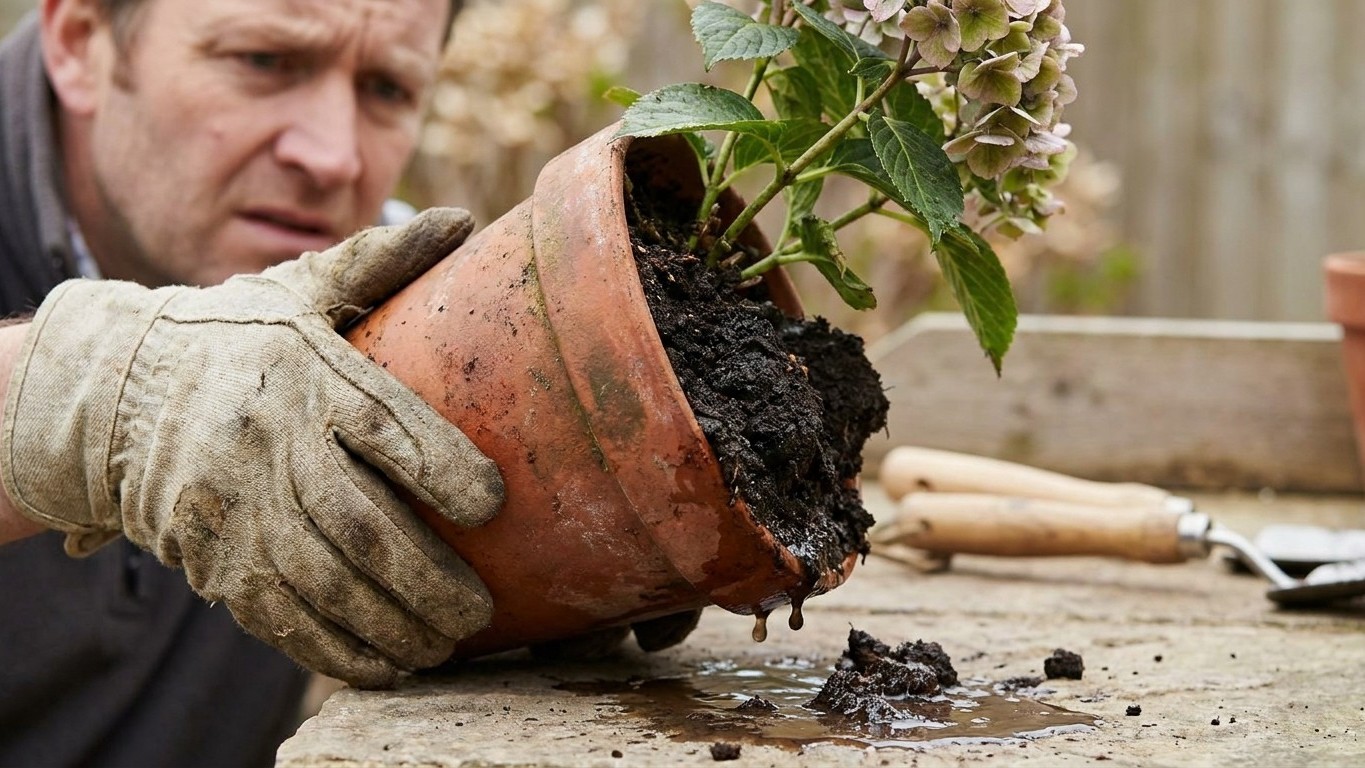
The leaves hung there every evening, limp and sad, and the instinct was always the same: grab the watering can. Night after night, more water went into that pot, convinced the plant was thirsty. Then came the day the pot got lifted off its saucer, and the smell hit first, followed by the sight of roots sitting in a swamp of dark, waterlogged soil. That’s when it became obvious: the hydrangea wasn’t dying of thirst. It was drowning.
This mix-up trips up more plant owners than you’d think, because drooping hydrangea leaves genuinely look identical whether the plant is parched or flooded. Hydrangeas are moisture-loving plants, and insufficient watering is a common cause of wilting, since if the soil around the roots becomes too dry, the plant cannot maintain its turgor pressure, leading to drooping leaves and stems. But waterlogged soil can suffocate the roots, causing them to rot, and root rot disrupts the plant’s ability to absorb water, leading to wilting despite the presence of moisture in the soil. The exact same wilted, sagging look can mean two opposite problems, and reaching for the watering can when it’s actually the second one only makes things worse.
Key takeaways
- A hydrangea’s drooping leaves can signal two opposite problems: thirst or drowning—and they look exactly the same
- One diagnostic detail reveals the true culprit before adding more water causes irreversible damage
- What was rotting beneath the pot’s surface explains why well-intentioned watering was slowly killing the plant
How to tell thirst from drowning before it’s too late
The fix isn’t complicated, but it does require touching the dirt instead of just staring at the leaves. Test the soil before watering. If it’s dry two inches or more down into the soil, it’s time to water again. If your finger comes back with soil clinging to it, cool and clumped, that’s your answer already, and no amount of extra water helps a plant in that state.
Timing matters just as much as texture. Wilting from underwatering usually reverses within hours after watering. If your hydrangea doesn’t perk up by the next day, another issue is likely at play. That’s the detail that should have raised a flag much earlier in my own case: a thirsty hydrangea bounces back almost instantly once it gets a drink. Mine never did. It sagged in the morning, sagged at noon, sagged again the following evening, no matter how generous the watering can had been the night before.
There’s a warning built right into the plant’s chemistry, too. Reaching for the watering can is the wrong response in three of the five scenarios that cause wilting, since heat stress, underwatering, overwatering, root rot, and heavy flower heads all produce visible drooping, but each requires a completely different response, and adding water to an already-overwatered plant accelerates root rot. That single sentence rewired how I look at every droopy plant on my patio now. Drooping isn’t a request. It’s a symptom, and symptoms need diagnosis, not a reflex.
What was actually cooking under that pot
Lifting the pot revealed the classic signature of a hydrangea that had been drowning for weeks. Overwatering can lead to root rot, where the roots become dark, mushy, and emit a foul odor, severely hampering the plant’s ability to take up water and nutrients. The smell alone was the giveaway, something between wet cardboard and old pond water, nothing a healthy root ball should ever produce.
The oxygen angle is the part most people miss. Roots don’t just need water, they need air pockets between the water. This excess moisture can lead to root rot, severely impacting root health and reducing oxygen availability. Every extra evening watering had been packing that soil tighter, squeezing out the air, and slowly suffocating the exact tissue responsible for keeping the leaves upright. It’s a strange kind of irony: trying to save the plant was the thing killing it.
Fungal pathogens love exactly this kind of environment. These diseases are generally found where plants are in cold wet soils and/or overwatered, and poorly draining potting media can also favor these diseases. A decorative pot with no drainage hole, or one drainage hole clogged with compacted soil, turns into the perfect incubator. Add a saucer that traps runoff underneath, and you’ve basically Built a Terrarium for root-rot fungi.
Rescuing the plant without losing the whole season
Once root rot is confirmed, watering less isn’t enough on its own; the damaged tissue has to go. If your hydrangea is more severely damaged, you’ll need to replant: gently uproot it from its pot, shake off excess soil, and using clean pruning shears, snip off any rotten roots and leaves, which will appear discolored or slimy. It’s not a pleasant job, and it feels destructive while you’re doing it, but leaving mushy tissue in place just reinfects whatever soil you put around it next.
After the trim, resist the urge to plant it straight back into wet ground. Let the roots dry in a warm, but shady, place for a little while, then replant in a partially sunny, well-draining area or a fresh, large, well-draining pot, adding fresh potting soil and possibly hydrangea fertilizer, and don’t use the same soil, pot, or garden area, in case any fungi remain that could reinfect the hydrangea. That last detail surprised me most: reusing the same contaminated pot, even after cleaning it, can reintroduce the very spores you just cut away.
Going forward, the container itself deserves as much attention as the watering schedule. In order to prevent root rot, you will need a pot with proper draining. A layer of perlite mixed into the potting soil, a pot with a genuinely open drainage hole, and a saucer that gets emptied rather than left to pool, those three habits do more for a hydrangea’s health than any amount of well-intentioned evening watering ever could.
My hydrangea survived, minus about a third of its root mass and every leaf that had already gone slimy. It sulked for two weeks in a shady corner before pushing out new growth, proof that the diagnosis mattered more than the dose. The real lesson wasn’t about hydrangeas specifically. It was about trusting what’s under the soil, not just what’s visible above it, the next time a plant looks like it’s begging for water.
Sources : thepracticalplanter.com | botanicalinterests.com