
Fourteen plants in four years. A ficus, three pothos, two monsteras, a string of pearls that barely lasted a month, and a parade of herbs I kept insisting I could keep alive on a north-facing windowsill. Each one followed the same script: looking okay for a few weeks, then yellowing, then wilting despite seemingly enough water, then dead. I was doing everything I thought I was supposed to do, including the one piece of advice that appears in virtually every beginner plant guide ever published: put something in the bottom of the pot for drainage.
The nursery worker who finally stopped my losing streak was not running some trendy urban plant shop. He was a weathered man at an old-school garden center who watched me stare blankly at a bag of decorative pebbles and asked what I was planning to do with them. When I explained, he shook his head, walked me over to a broken terracotta pot sitting near a potting bench, picked up a single curved shard, and said: use this, just this, over the hole. Nothing else. That single piece of advice, and everything that surrounds it, changed how every one of my plants has fared since.
Key takeaways
- A decades-old gardening practice might be actively killing your plants without you realizing it
- The symptoms of drowning roots are nearly identical to dehydration, creating a deadly spiral
- One piece of broken pottery outperforms expensive drainage materials—here’s the science why
Why your plants were drowning, not thirsting
Overwatering is a prevalent issue that can severely impact plant health, occurring when plants receive more water than they can effectively use or drain, leading to waterlogged soil and oxygen-deprived roots. The cruel irony is that the symptoms of drowning roots look almost identical to dehydration. If your plant is slowly wilting with leaves turning yellow, crisping around the edges, or dropping, you might be dealing with root rot, and the problem with root rot is that its symptoms look a lot like the symptoms of underwatering, because rotten roots are unable to absorb water for the rest of the plant. So the instinct is to water more. Which accelerates the rot. Which kills the plant faster.
Plant roots need to breathe even though they’re deep in the potting mix, and when plants are overwatered, the roots suffocate and die, throwing the plant out of balance because plants absorb moisture through their roots and release it into the air from their leaves. Think of the root system as the plant’s lungs. Soil that never dries out between waterings is essentially holding a pillow over them. Over-watering, in simple terms, drowns your plant: soil that is constantly wet won’t have enough air pockets, the roots can’t breathe, and stressed roots follow.
The shard trick, and the science hiding behind it
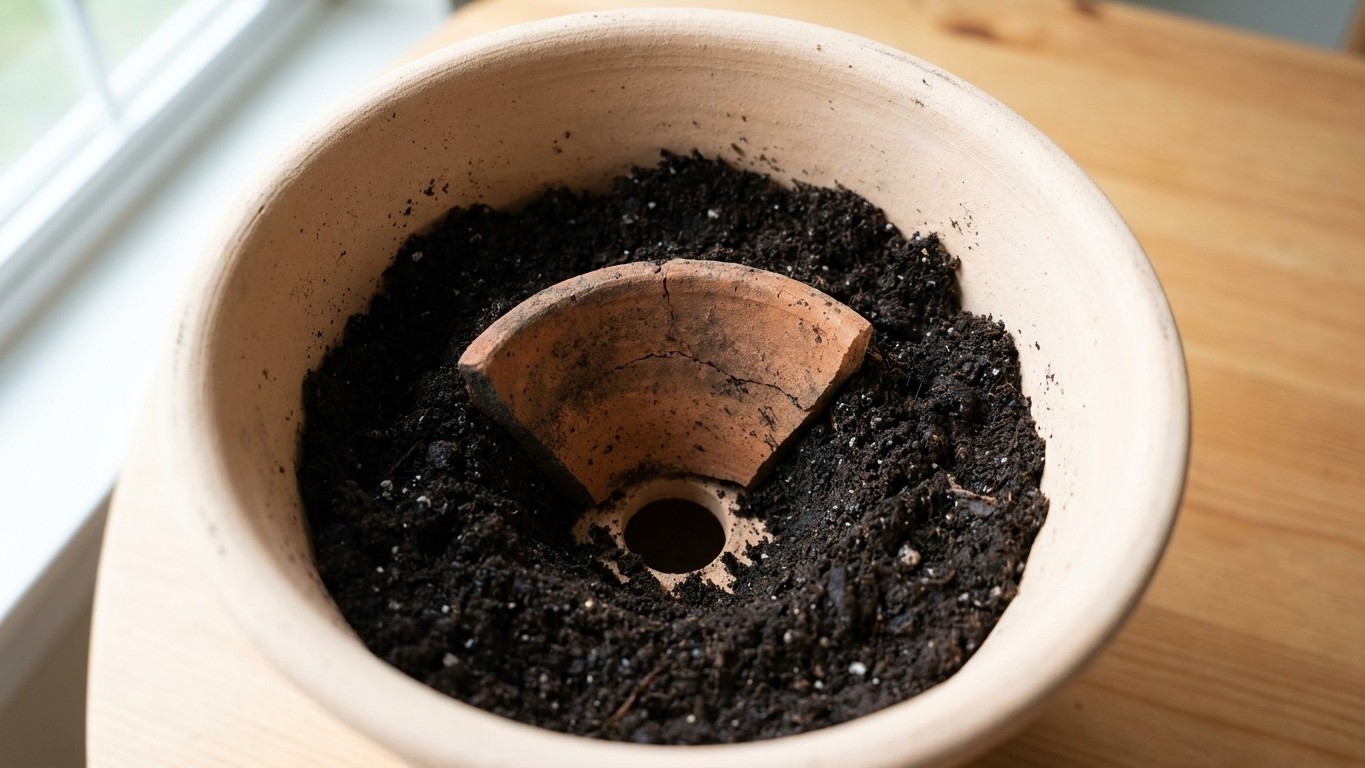
The old nursery worker wasn’t telling me to fill the bottom of the pot with broken pottery. He was telling me to do something far more precise: place a couple of pieces of broken terracotta over the drainage hole before adding soil to the pot, to prevent soil from washing out while still allowing water to drain. One curved piece, placed concave-side down. A single pottery shard placed over the hole loosely lets water escape around the edges, the goal is not to create a flat, sealed layer.
This is not the same as filling the bottom two inches of a pot with gravel or pebbles, a distinction that turns out to matter enormously. For generations, gardeners believed that adding a layer of rocks, pebbles, or broken ceramics at the bottom of a pot helped water drain faster. The reality is this practice creates a “perched water table”: water does not move easily from fine material like soil to coarse material like rocks. Instead of draining through the rocks, the water “perches” or pools in the soil just above the rock layer — essentially raising the water table closer to the plant’s roots. The very thing you put in to prevent wet roots ends up keeping roots wetter. Result? Exactly the root rot you were trying to avoid.
Linda Chalker-Scott, an extension horticulturist and associate professor at Washington State University, has noted that studies show water does not flow easily from layers of fine materials like soil to layers of coarse materials like rocks or pieces of broken pots, meaning “drainage material added to containers will only hinder water movement,” which is the opposite of what gardeners intend. A thick layer of shards at the pot’s base falls squarely into this trap. A single piece over the hole does not — it just keeps the soil inside the pot where it belongs.
What actually protects your plants
The shard over the drainage hole solves a specific problem: we all know the importance of using a pot with a drainage hole, but water isn’t the only thing that washes out of it, over time, you can lose quite a bit of soil through the drainage hole in a pot. One terracotta shard, curved side up, stops that soil loss without creating the waterlogged layer that thick drainage materials produce. Using broken terracotta pieces as drainage this way, rather than rocks, also makes your pots lighter, which matters when you’re moving larger planters.
But the shard is only part of the picture. If you’re worried about drainage, don’t look at the bottom of the pot, look at the soil mix. The drainage happens throughout the entire pot, not just at the base. The best soil for most Houseplants is light and airy, allowing water to flow through freely while holding just enough moisture for the roots to drink — a good mix creates tiny air pockets that roots need for oxygen, without which they can’t absorb water or nutrients and begin to suffocate. Adding perlite to your potting mix is the single most effective upgrade most beginners never make. The best way to increase drainage in containers is to alter the composition of the entire potting medium with a soil amendment, adding perlite or other organic amendment throughout the potting mix, not underneath it.
Terra-cotta containers typically allow the potting mix to dry out faster than plastic or ceramic pots because of the porous nature of the material, moisture evaporates from the sides of the pot, not just the top, which can help prevent overwatering and root rot. If you keep losing plants in plastic or glazed ceramic pots, switching to unglazed terracotta, and then smashing one if it ever breaks, gives you both a better container and a ready supply of the most practical drainage aid in your potting kit.
Recovering a plant that’s already in trouble
If you suspect root rot has already set in, the window to save the plant is narrow but real. A favorite houseplant with root rot can sometimes be saved if you act quickly, remove the plant from its pot, taking care not to spill contaminated soil onto other plants. Healthy roots should be firm and white, while overwatered roots may appear brown, black, or mushy. Using clean, sharp pruners, remove any roots that are dark, mushy, or broken, leaving only firm, white roots, then repot the plant in a clean, sanitized container with fresh potting soil and excellent drainage.
After repotting, restrain yourself. Water sparingly for the next few weeks, allow the top inch of soil to dry before watering again, since damp conditions can allow remaining fungi to rebound, the goal is to encourage healthy new growth while making conditions unfavorable for root-rot organisms. Also worth knowing: when repotting, ensure that the new container is not significantly larger than the previous one, as excess soil can retain more moisture than the plant needs. A pot two sizes too big is almost as dangerous as a pot with no drainage at all.
The nursery worker’s advice sounds almost absurdly simple, break a pot, use a piece, grow plants. But the reason it works is rooted in physics that most plant guides quietly ignore. The science of how water moves between different soil textures, the concept of the perched water table, the role of pot material and mix composition: all of it points toward the same conclusion. One small, curved shard of terracotta over a drainage hole, paired with a well-amended potting mix and a watering schedule tied to actual soil moisture rather than a calendar, is the kind of unglamorous system that keeps plants alive for years. The broken pot you were about to throw away might be the most useful thing in your gardening kit.
Sources : renegadegardener.com | quora.com