
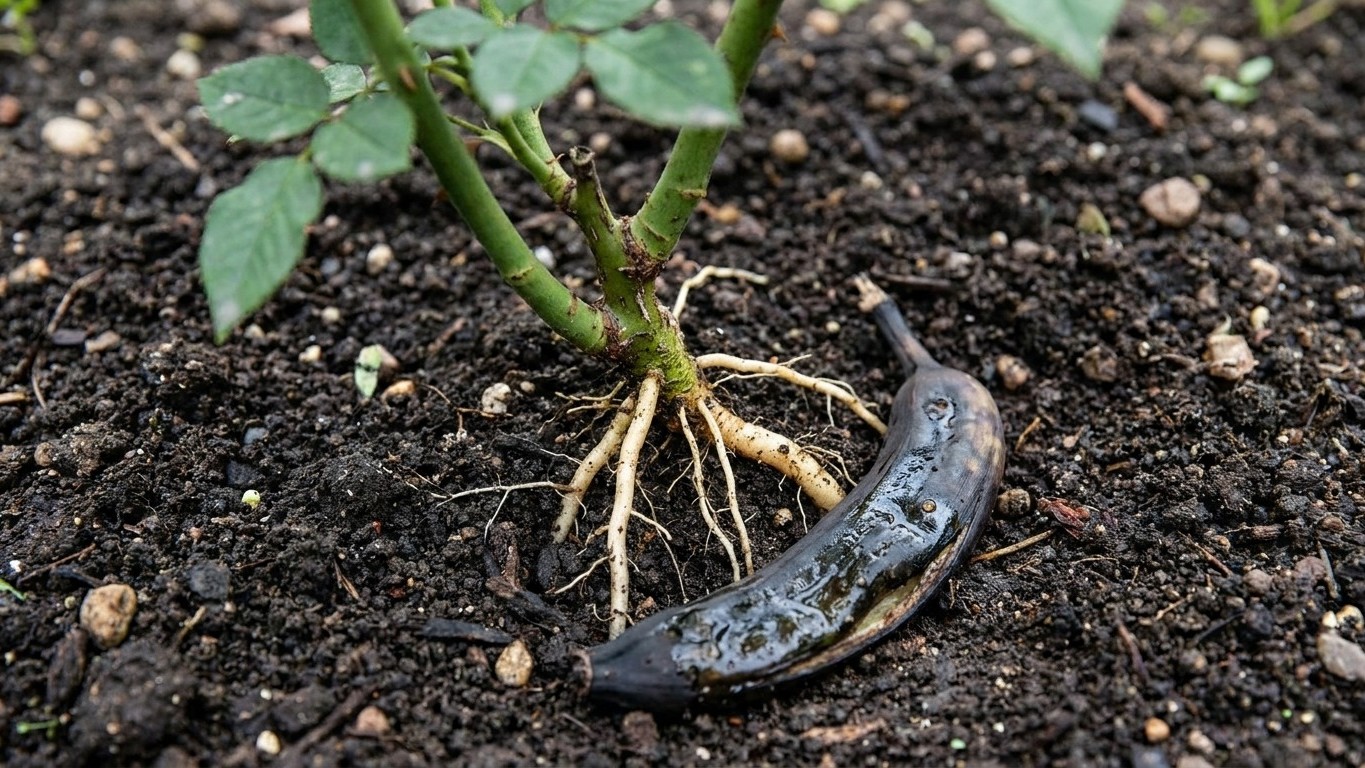
Digging up a rose bed a month after burying banana peels, expecting dark, crumbly soil loaded with potassium. Instead: a slimy black pocket, a faint sour smell, and roots that seemed to be avoiding the spot entirely. That’s not a fluke. It’s exactly what happens when fresh organic matter gets shoved into the ground without any processing first.
The instinct makes sense. You’re already tossing the peel anyway, so why not let the roses have it? Banana peels seem like the perfect sustainable solution, since you’re eating the fruit anyway, and it feels environmentally responsible and cost-effective, especially when commercial fertilizers can be expensive. But good intentions and good soil science are two different things, and roses end up paying the price for the gap between them.
Key takeaways
- That black slimy pocket you dig up isn’t fertilizer—it’s a nitrogen trap that actually steals nutrients from soil
- One banana peel contains 10 times less potassium than commercial fertilizer, so you’d need hundreds to make a difference
- Whole peels attract rodents, mold, and gnats while creating dead zones roses physically avoid
What’s actually happening underground
A whole peel buried next to a root ball doesn’t turn into plant food on contact. Fresh banana peels must decompose before their nutrients become available, a process that can take many months. During that stretch, the peel isn’t feeding anything. It’s rotting in place, and rotting organic matter does something rose growers rarely expect: it steals nitrogen instead of supplying it.
Research from the University of Florida Extension notes that burying undecomposed organic material near plant roots can temporarily rob nitrogen from the surrounding soil as microbes work to break it down, a “nitrogen tie-up” that can actually slow plant growth in the short term. That’s the opposite of feeding. The bacteria and fungi tackling the peel need nitrogen to multiply, so they pull it straight out of the soil, leaving roots with even less than before you buried anything. For a rose bush already working hard to push out new canes and buds, that’s a rough month to go without.
The nutrient math doesn’t help much either. A fresh banana peel contains roughly 0.9% potassium by weight, along with small amounts of nitrogen and phosphorus, which UC Master Gardeners point out is a very low concentration compared to even a basic organic fertilizer, which might contain 4 to 6% potassium. One or two peels tucked under a rose simply can’t deliver what the plant needs during active bloom season. The potassium content, while higher than nitrogen and phosphorus, is still inadequate for roses’ needs, and you would need enormous quantities of banana peels to provide meaningful nutrition, creating more problems than benefits in your rose beds.
The rot pocket nobody warns you about
Here’s where the digging-up-a-month-later discovery gets explained. A whole peel buried shallow doesn’t decompose evenly. It becomes a wet, oxygen-starved clump that roots physically avoid. You’re more likely to attract gnats and cause a pocket of rot, and the plant may not access much nutrition until the peel breaks down weeks later. Roses don’t grow toward that kind of mess. They grow around it, which means the very spot you targeted for feeding becomes a dead zone.
Then there’s the traffic the peel invites. In California’s dry climate, whole peels buried in garden soil also decompose slowly and can attract rodents, ants, and fruit flies. Underground critters find the sugary, softening tissue just as appealing as we find a ripe banana on the counter, and leftovers on the ground invite moles to dinner fast, since ground-dwelling pests like moles and voles are drawn to buried scraps. A mole tunnel through a rose’s root zone does far more damage than any nitrogen shortage ever could.
Mold is the other guest that shows up uninvited. Slow breakdown can lead to moldy patches and pest interest, especially if peels are not chopped or buried deeply. That White Fuzz you might spot near the base of a rose isn’t a sign the fertilizer is “working.” It’s fungal growth feeding on decaying plant tissue, and it can spread to actual living root tissue if conditions stay damp long enough.
What to do with the peel instead
None of this means banana peels are useless in a rose garden. It means the raw, whole-peel-in-a-hole method skips the one step that makes the whole idea work: decomposition somewhere other than right against living roots. While banana peels aren’t that harmful to your roses, they’re far from ideal fertilizers when used this way, but composted first, they become something genuinely useful.
Composting breaks peels down before they touch plant roots, reduces pest attraction, and turns the scraps into stable organic matter. A hot compost pile, kept moist and turned regularly, can finish the job fast. Hot composting rapidly breaks down banana peels, with peels decomposing in 2-3 months with this approach. Cold composting works too, just slower, as a slower, low-maintenance option where banana peels are layered with other organic matter and left to decompose naturally, a process that takes 6-12 months.
Timing matters as much as method. Coffee grounds should be added to rose beds in spring after the danger of frost has passed, while banana peel fertilizer is best applied during bud development, which is when roses need potassium the most to promote flowering. If mulching rather than composting sounds more appealing, keep the peels off the crown. Place skins on top of the soil around the base of plants, leaving a four- to-six-inch peel-free zone around the plants’ stems, and cover with a two-inch layer of mulch to help break down the skins and prevent attracting unwanted insects.
One habit worth stealing from serious rose growers before piling on any potassium source: test the soil first. If your report already shows strong potassium levels but low nitrogen or phosphorus, piling on banana skins will not fix the real gap, and you’ll need a better balanced fertilizer to match what the lab report shows. A ten-dollar soil test tells you more in a week than a month of guessing ever will, and it saves your roses from becoming an unwitting science experiment buried six inches under.
Sources : growyourownfeast.com | housedigest.com