
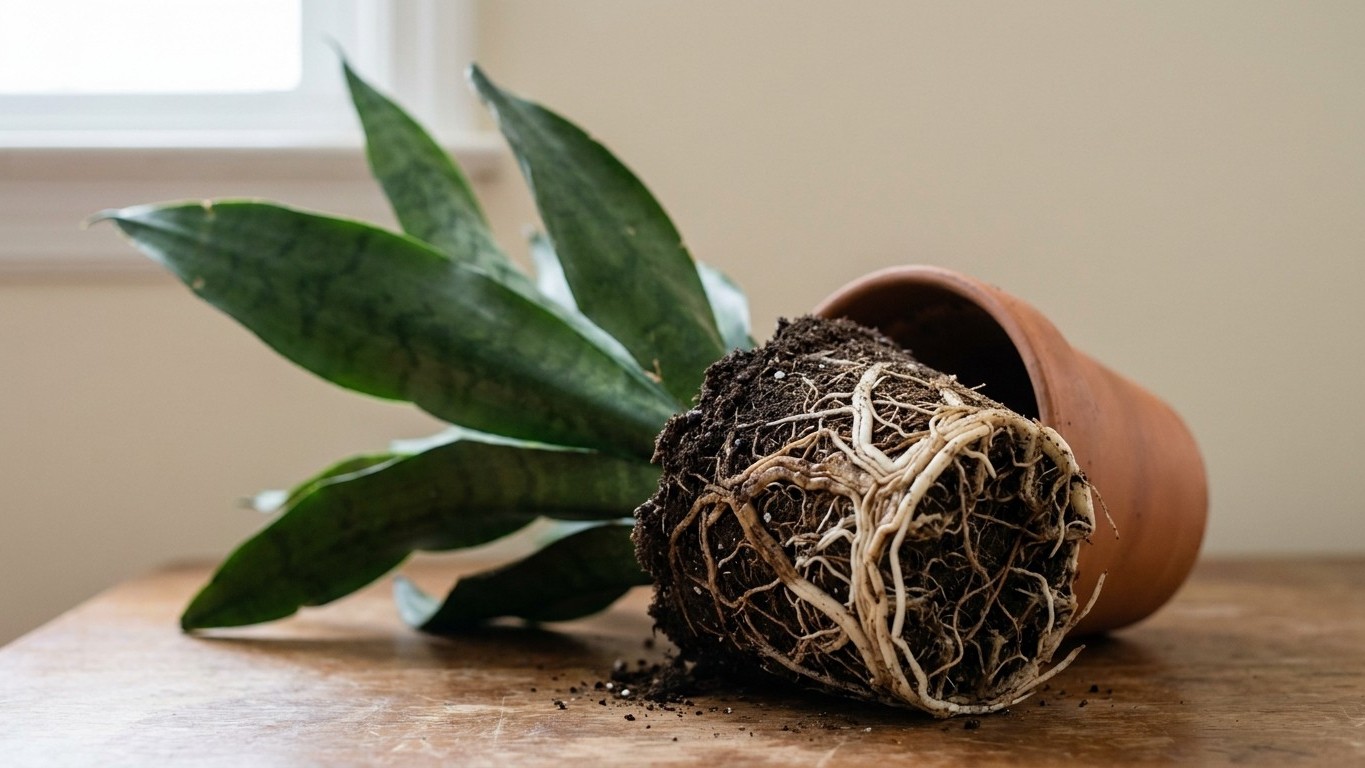
Snake plants are supposed to be indestructible. That’s the whole point of buying one. So when mine started looking a little tired last spring, I figured I’d do it a favor: skip the gradual sizing up, grab a pot that was two full sizes larger, fill it with fresh soil, and call it done. Efficient. Practical. A time-saver. The roots told a completely different story when I finally tipped it out four months later.
What I found wasn’t a thriving root system that had “room to grow.” The bottom third of the pot was a dense, waterlogged mass of decomposing soil, and the outer roots, the ones that had ventured into all that extra space, had turned brown and mushy. The plant hadn’t colonized the new soil. It had drowned in it.
Key takeaways
- A seemingly healthy snake plant can hide catastrophic root damage for months while it quietly drowns underground
- The bottom third of the pot became a decomposing, pathogen-breeding graveyard—and the plant had no idea it was happening
- Recovery required surgery: cutting away liquefied roots, using cinnamon powder, and switching to a smaller terracotta pot with gritty soil
Why “going big” backfires with snake plants
Snake plants (Sansevieria, now reclassified as Dracaena trifasciata if you want to be technical about it) are succulents at heart. Their roots are shallow, compact, and evolved to handle dry, rocky African soils where water disappears fast. When you place that root system in a large pot filled with several inches of fresh potting mix, the soil surrounding the roots stays wet far longer than the roots can tolerate. The plant pulls moisture from its immediate vicinity, but the excess soil, the part the roots haven’t reached yet, just sits there. Saturated. Slowly becoming a breeding ground for fungal pathogens.
The rule of thumb that actually works: choose a pot no more than 1 to 2 inches wider in diameter than the current root ball. That modest increase gives the plant room to expand without creating a reservoir of stagnant moisture around it. A 4-inch jump in pot size, which is what I did, essentially multiplied the risk zone by a factor most snake plants can’t overcome without impeccable drainage conditions that most indoor setups simply don’t provide.
What root rot actually looks like, and how fast it happens
The deceptive thing about root rot is the timeline. Above the soil, a snake plant with compromised roots can look completely normal for weeks, even months. The thick, waxy leaves store enough water and nutrients to keep up appearances long after the damage has begun underground. By the time you see yellowing, soft mushy leaves at the base, or that faint sour smell rising from the pot, the rot has usually been active for a long time.
When I unpotted mine, I could identify three distinct zones. The top layer of roots, close to the base of the plant, was white and firm, still healthy. The middle section showed roots that had turned tan and slightly soft. The bottom third was genuinely alarming: dark brown, slimy, and in places completely hollow. Those roots weren’t just dead; they had essentially liquefied. The culprit was almost certainly Pythium or Phytophthora, two of the most common water-mold pathogens that thrive in exactly the conditions I had created: cool, poorly aerated, perpetually damp soil.
Research published through university extension programs consistently shows that root rot in overwatered container plants progresses fastest when three factors combine: low light (my bathroom corner, guilty), compacted or moisture-retaining soil, and a pot with more volume than the root system can actively dry out. I’d checked every box.
The recovery process, and what actually saved the plant
The snake plant survived, but not because I did anything heroic. The healthy white roots in the upper section gave it a fighting chance. Recovery required cutting away every brown, soft, or suspicious root with sterilized scissors, dusting the cuts with powdered cinnamon (a surprisingly effective natural antifungal), and letting the plant sit bare-root in indirect light for about 24 hours before replanting. That drying window matters more than most people realize: it lets the cut surfaces callous slightly before contact with fresh soil.
The new pot was a terracotta container, 5 inches across, which was actually smaller than the oversized pot I’d been using. Terracotta is genuinely worth the switch for plants prone to overwatering issues: the porous walls allow moisture to evaporate from all sides, not just the top surface, which can reduce soil drying time by 30 to 40 percent compared to glazed ceramic or plastic. I also switched to a gritty mix, two parts standard potting mix to one part perlite, to improve drainage further.
Three weeks after repotting, new growth appeared at the base. Slow, but there. A sign the root system had stabilized enough to support the plant’s energy-expensive growth process again.
The sizing logic that should replace “when in doubt, go bigger”
The instinct to give plants more space is understandable. We apply human logic: more room, more freedom, faster growth. With most drought-tolerant houseplants, the opposite is closer to the truth. Snake plants, ZZ plants, cacti, and most succulents actually perform better when slightly root-bound. A snug pot accelerates the soil drying cycle, which is exactly the condition those plants evolved for. Some growers even report that mild root-binding triggers blooming in snake plants, a phenomenon that rarely occurs when the plant has too much comfortable space to expand into.
The one scenario where a larger jump in pot size makes sense is with fast-growing tropical plants like pothos or philodendrons, which have aggressive root systems capable of colonizing new soil quickly enough to prevent moisture buildup. Even then, most experienced growers cap the size increase at one pot size per repotting session, checking root density before deciding rather than repotting on a fixed calendar schedule. Roots that are visibly circling the drainage holes or pushing up through the soil surface are the actual signal to act, not the calendar date, not a vague sense that the plant looks “tired.”