
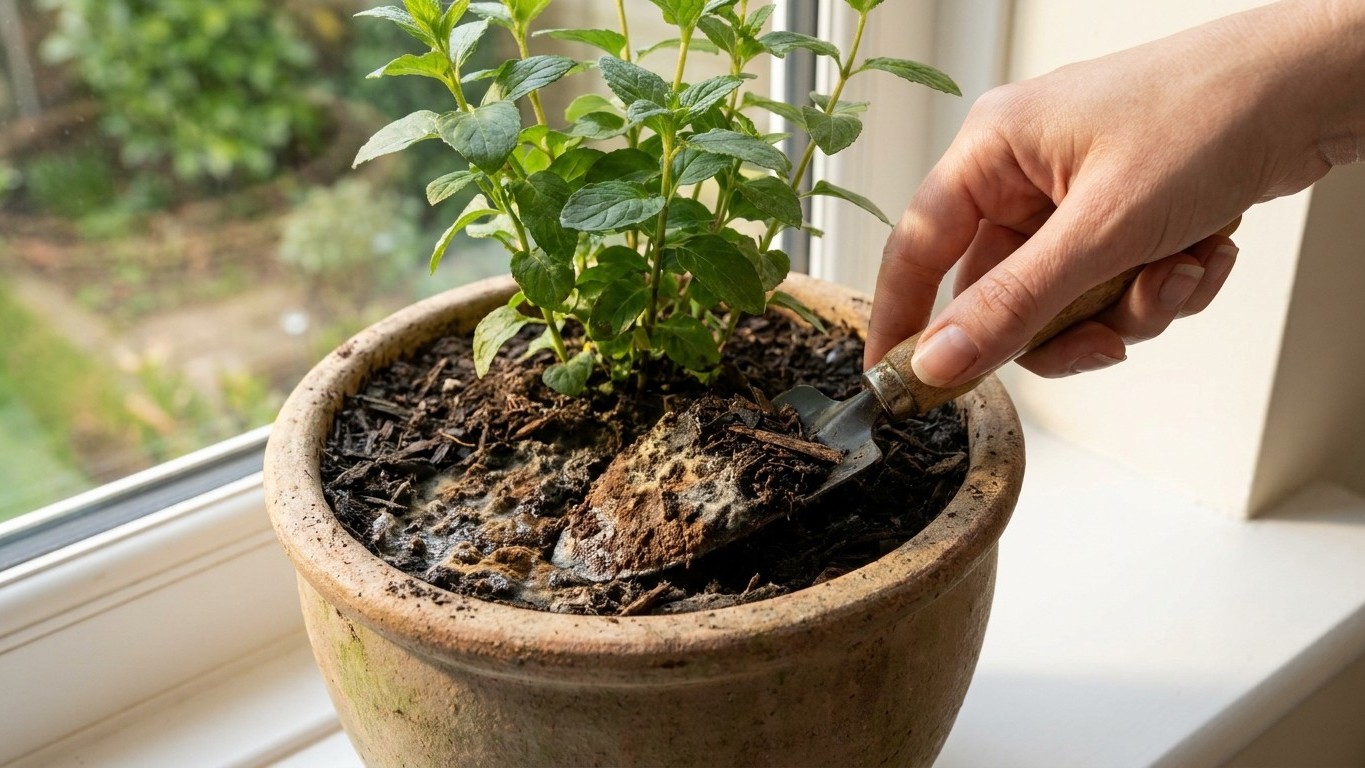
A heatwave hits, your indoor pots dry out faster than usual, and you reach for the logical fix: mulch the soil surface to slow evaporation. Reasonable. Widely recommended. Except that a month later, the leaves are yellowing, the stems feel soft at the base, and when you finally scrape the mulch aside, the soil underneath is a cold, soggy mess, and the roots below it smell like a wet basement. What happened?
The short version: mulch works almost too well indoors. Mulching covers the top of the soil with an organic or inorganic layer, reducing evaporation by shielding it from direct sunlight and airflow. Outdoors, that’s exactly what you want. Indoors, where there’s no direct sun baking the soil, no wind pulling moisture away, and drainage is limited to whatever holes exist at the bottom of a pot, that same protective barrier can trap water indefinitely. The soil stops cycling. And that’s when trouble starts.
Key takeaways
- Mulch that works perfectly outdoors can trap moisture indefinitely in pots with limited drainage and no airflow
- Yellow leaves and wilting under mulch often signal overwatering, not underwatering—but most people respond by watering more
- The hidden layer beneath mulch becomes a breeding ground for mold, fungus gnats, and root rot before you ever notice
The Invisible Feedback Loop
The core issue isn’t mulch itself, it’s the combination of mulch with an unchanged watering schedule. Most indoor plant owners keep watering the same amount they always have, just now with a layer of organic material sealing the surface. Adding too much mulch may keep the soil too wet and cause the plant to rot. To avoid overwatering, push aside the mulch before watering to check whether the soil is damp or dry. That step — physically lifting the mulch before reaching for the watering can, is the one almost everyone skips.
Plant roots love water, but they also love air. When soil gets too wet, there’s no longer any way for air to circulate around the roots, which gives bacteria and mold the perfect opportunity to start eating them. This is root rot, and it’s the silent predator of mulched pots. Root rot starts in the plant’s root zone, hidden by soil, and stays out of sight and out of mind until it’s advanced. The mulch makes it even more invisible, adding another physical layer between you and the warning signs underground.
The tricky part is that overwatered plants look almost identical to underwatered plants. You’ll see wilting, brown leaf tips, yellowing leaves, and foliage that drops unexpectedly. These classic “watering stress” symptoms make it easy to misdiagnose what your plant really needs. Many people respond to those yellow leaves by watering more, compounding the exact problem they’re trying to solve.
What You Actually Find Under There
Scraping the mulch back after a month is genuinely eye-opening. The surface soil, cut off from air exchange, often shows white mold or a grayish crust. Mold shows up when ingredients stay damp and trapped without enough airflow. Many organic materials are basically food for microbes. If a mix is too fine or too packed, water lingers and oxygen drops, and that’s when the fuzz starts winning. In a closed pot, with no wind and no UV exposure, these conditions are essentially permanent.
Then there are the fungus gnats. Moist and decomposing grass clippings, compost, organic fertilizers, and mulches are favorite breeding spots. Adult female fungus gnats lay their eggs in organic, moisture-rich environments like potting mix, which hatch into larvae in a matter of days at room temperature. In addition to feeding on fungi and organic matter, these larvae also chew on houseplants’ roots. A thick layer of organic mulch keeping the surface perpetually damp is, from a fungus gnat’s perspective, a five-star hotel.
Dig a little deeper and the roots tell the real story. Healthy plant roots are firm and white. Unhealthy, rotting roots are soft and brown. If they’re really far gone, rotten roots are mushy black. Continuous exposure to wet soil conditions significantly increases the risk of root rot. The excess moisture provides a breeding ground for fungi. Also, weakens the roots, making them more susceptible to rotting.
The Layer Thickness Problem
Outdoor mulching guides throw around depths of 3 to 4 inches like candy. Indoor pots operate under completely different rules. For indoor plants, a layer no deeper than one inch is recommended. Avoid using outdoor mulch entirely, as it tends to be too heavy and may not be suitable for indoor plants. After watering, apply a layer of mulch about half an inch to an inch thick on top of the soil. That’s the entire safe window, half an inch to one inch. Go beyond that, and you’ve essentially capped the pot.
Material choice matters equally. Inorganic soil toppers for indoor plants, such as coarse sand, small river stones, polished gemstone chips, or small pieces of sea glass, allow moisture to penetrate while letting excess moisture evaporate, making them a better choice for plants that prefer to be kept on the dry side, such as succulents and cacti. These soil toppers are also less likely to harbor fungi and bacteria, so they are less risky than organic mulches. For moisture-loving tropicals, light shredded bark or coconut coir in a thin layer is a reasonable organic option — but only if you check the soil moisture before every single watering.
How to Fix It and Mulch Smarter
If the damage is already done, speed matters. A favorite houseplant with root rot can sometimes be saved if you act quickly. Remove the plant from its pot, taking care not to spill contaminated soil onto other plants. Inspect the roots for signs of rot, such as darkening, mushiness, or a foul odor. Healthy roots should be firm and white. Use clean, sterilized shears to cut away any soft, rotting roots, trimming back to healthy tissue to prevent the spread of the infection.
Repot in fresh, well-draining mix and resist the urge to water immediately. Allow the top inch of soil to dry before watering again. Damp conditions can allow remaining fungi to rebound. As for mulching again, yes, you can, but separate the mulch from the base of the plant before watering. Pouring water directly onto the mulch may lead to water retention and root rot.
The bigger lesson here is about the indoor environment itself. Indoor environments, especially those with heating or air conditioning, can dry out the air and cause the soil to lose moisture quickly, but they also eliminate the very forces (wind, sun, natural drainage into open ground) that make mulch self-regulating outdoors. You want to cover up the soil, but you don’t want to go too crazy — the soil needs to breathe so that the roots can breathe as well. Mulch in an indoor pot isn’t a set-and-forget solution; it’s a variable that demands active management. The plants that survived the heatwave without mulch were probably doing better than the ones drowning quietly under a well-intentioned blanket of bark.
Sources : quora.com | hortmag.com