
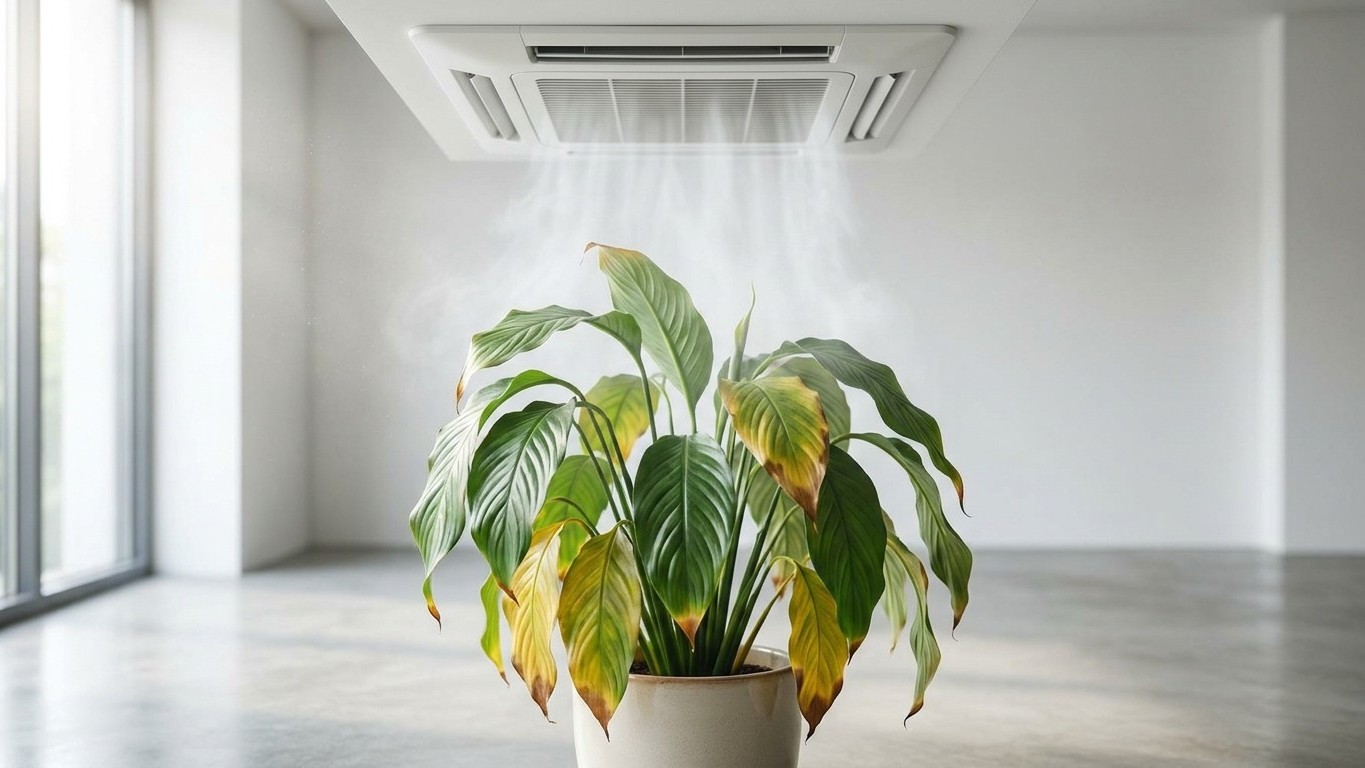
Cold air blasts directly onto a peace lily, leaf after leaf yellows, then droops, then falls. That sequence isn’t bad luck, it’s a predictable physiological response to one of the most common placement mistakes indoor plant owners make. Peace lilies are tropical plants, native to the forest floors of Central America and Southeast Asia, where temperatures stay warm and air movement is gentle. What feels like a refreshing breeze to you is, to that plant, the botanical equivalent of standing in a wind tunnel at 60°F.
Key takeaways
- AC vents don’t just cool air—they strip humidity to levels that devastate tropical plants, triggering a cascade of stress responses
- Brown leaf tips and yellowing appear weeks before dramatic leaf drop, but most owners misdiagnose them as watering problems
- Recovery is possible, but takes patience and a new home away from all air currents and temperature swings
Why Air Conditioning Is Particularly Harsh on Peace Lilies
A standard central air system doesn’t just lower the temperature, it aggressively removes moisture from the air. Relative humidity in a well-sealed, air-conditioned room can drop to 30% or lower, while peace lilies thrive in humidity levels between 50% and 60%. That’s roughly the difference between the air in Phoenix in July and a rainforest understory. The plant’s stomata, the tiny pores on its leaves that regulate water and gas exchange, essentially get overwhelmed trying to manage the dryness.
The cold itself compounds the problem. Peace lilies are sensitive to temperatures below 60°F, and a vent blowing 55°F air directly onto the foliage triggers what botanists call cold stress, a state where cellular processes slow, water uptake becomes inefficient, and the plant prioritizes survival over leaf retention. Dropping leaves isn’t a malfunction; it’s the plant shedding metabolic weight it can no longer support.
There’s also the issue of temperature whiplash. Air conditioning typically cycles on and off throughout the day, meaning a plant placed beneath a vent experiences repeated swings between ambient room temperature and cold blasts. That inconsistency is more damaging than sustained cold, because the plant never gets to stabilize its internal processes. Think of it as the difference between living in a cold climate and being shoved in and out of a walk-in freezer every twenty minutes.
Reading the Warning Signs Before You Lose the Plant
Leaf drop is the dramatic finale, not the opening act. The warning signs arrive earlier, and recognizing them can save you weeks of wondering what went wrong. Brown leaf tips are usually the first visible signal, caused by the combination of low humidity and cold air desiccating the tissue faster than the roots can replace moisture. The tips go brown from the outside in, a crispy, papery texture that’s distinct from the soft, waterlogged browning you’d see with overwatering.
Yellowing leaves across the whole plant follow, often misread as a watering problem. Many owners respond by watering more, which makes things worse. Cold-stressed roots absorb water poorly, so excess moisture just sits in the soil and invites root rot, a second problem layered onto the first. If your peace lily is yellowing and you haven’t changed your watering schedule, check the location before you adjust the water.
Wilting without dry soil is another red flag. A peace lily that droops despite adequate moisture is telling you its roots can’t function properly, often because the soil temperature has dropped too far. Soil temperature below 60°F slows root metabolism dramatically, and no amount of surface watering compensates for roots that have essentially gone offline.
Where Peace Lilies Actually Want to Live
The ideal spot for a peace lily hits three criteria: bright indirect light, stable temperatures between 65°F and 80°F, and humidity above 40%. A north or east-facing window, away from any vents, heating registers, or drafty doors, covers most of that. South and west windows work too, as long as the plant sits a few feet back from the glass to avoid direct afternoon sun, which scorches the leaves.
Distance from vents matters more than most guides acknowledge. A peace lily placed six feet from an air conditioning vent can still suffer if the airflow pattern in the room directs cold air toward it. The practical test is simple: hold a lightweight tissue near the plant and watch it move. If it flutters, the plant is in a draft zone.
Bathrooms are genuinely excellent locations for peace lilies, not just a design cliché. The steam from showers provides passive humidity that these plants love, and bathroom temperatures tend to stay consistent. A bathroom with a frosted window giving filtered light can be close to ideal. The one caveat: if the bathroom gets cold at night, say, below 60°F in winter, that benefit disappears.
For rooms where humidity is stubbornly low, as it often is in tightly sealed modern homes during summer cooling season — a pebble tray with water under the pot adds localized humidity without wetting the roots. Grouping plants together has a similar effect, since transpiration from neighboring plants raises the ambient moisture around the whole cluster. A humidifier set to 50% works too, and peace lilies placed near one recover noticeably faster from stress damage.
Reviving a Peace Lily After Cold Stress
Moving the plant is step one, and the results aren’t instant. Peace lilies are resilient, one of the reasons they remain so popular, but recovery from cold stress and leaf drop takes four to eight weeks. During that time, resist the urge to fertilize. Adding fertilizer to a stressed plant pushes energy into growth the roots can’t yet support, and it often leads to salt buildup in soil that’s not being metabolized efficiently.
Trim any fully yellow or brown leaves cleanly at the base with sterilized scissors. The plant won’t recover those leaves, and leaving them on draws energy away from new growth. Healthy new leaves emerging from the center of the plant are your confirmation that recovery is underway, that first unfurling pale green spear is the plant signaling it has stabilized.
One detail that often surprises people: peace lilies that have survived cold stress tend to become more sensitive to future temperature drops. The cellular damage, even when partial, lowers their cold tolerance slightly. A plant that tolerated 62°F before the incident may show distress at 65°F afterward. That’s a nuance worth keeping in mind as you find your plant’s new permanent home.