
Three weeks. Not a single sprout. If you sowed lamb’s lettuce (mâche, or corn salad) in mid-August hoping to get a jump on autumn salads, and the seed bed stayed stubbornly bare, the soil itself is the culprit, not your technique. This isn’t a case of bad seed or bad luck. It’s basic plant physiology, and understanding it changes everything about when you sow next time.
Key takeaways
- Seeds have a hidden biological switch that shuts down germination above 68°F—and your August soil is likely still too warm
- Most gardeners prep loose, fluffy seed beds when mâche actually demands firm, compact soil to absorb water and sprout
- Shade, mulch, and evening watering can trick summer soil into conditions cool enough for germination to happen
The seed that refuses to wake up in warm soil
Lamb’s lettuce has a built-in survival mechanism called thermodormancy. Direct seed when soil temperatures range from 41°F to 68°F. At temperatures greater than 70°F, seeds go dormant and will not germinate. That’s not a rough guideline, it’s a hard biological switch. Above that threshold, the seed essentially shuts down and waits, sometimes for weeks, until conditions improve.
Mid-August soil in most of the country sits well above that ceiling, especially in the top inch where seeds are sown. Even after a cool evening, soil holds onto daytime heat far longer than air does, which is exactly why your thermometer might have read a pleasant 75°F outside while the seed bed itself stayed near 80°F for hours. The ideal germination temperature is 12 to 15°C, and above 20°C germination becomes much more erratic. Translated to Fahrenheit, that’s roughly 54 to 59°F as the sweet spot, with things going sideways past 68°F. So a seed sown when the ground was still cooking from summer wasn’t lost or defective. It was simply doing what evolution wired it to do: refusing to gamble a fragile seedling on conditions that looked like the peak of summer heat rather than the cooling drift toward fall.
The soil texture mistake nobody talks about
Heat isn’t the only trap. Many gardeners prep a seed bed the way they would for radishes or beans, forking it loose and fluffy, when mâche actually wants the opposite treatment. Unlike radishes or beans, which like loose soil, mâche seed needs intimate contact with the earth to drink water and germinate, so the soil needs to be firmed down; if you’ve just tilled and the ground is full of air pockets, the seeds will dry out and never germinate. That single detail explains a lot of failed August sowings that had nothing to do with temperature at all.
The fix is almost embarrassingly simple: rake the surface lightly, sow, then press the bed down with the flat back of a rake or a board before watering. Lamb’s lettuce prefers firm, compact soil, so there’s no need to dig deep, which also spares your back and joints; a light surface scratch followed by a pass with a roller or the back of a rake to firm the earth is enough. Skip the deep digging, skip the fluffy tilth you’d give a carrot bed, and think instead in terms of a well-tamped path rather than a pillow.
What actually works when the calendar says August
None of this means August sowing is doomed. It just needs a different playbook than the one you’d use in cooler weeks. Shade is the single biggest lever you can pull. On top of preferring compacted soil, mâche doesn’t like full sun for germination either, so if nearby plants aren’t already casting shade, wooden boards or a light mulch placed over the row help, removed once seedlings appear. An upturned crate, a shade cloth, even the dappled shadow of a still-standing tomato row can drop soil temperature enough to matter.
Watering technique matters just as much as watering frequency. Because the seeds sit barely covered, the top layer of soil dries out fast in summer heat, and a heavy stream from a hose will either wash them away or bake them once the water evaporates. Fine seeds like mâche or lettuce dry out quickly at the surface in high summer, so sowing at the end of the day and watering with a fine spray morning and evening until germination, positioning rows in partial shade when possible, helps a great deal. A light mulch layer on top does double duty, holding moisture in and buffering the soil against those brutal midday temperature spikes. The soil needs to stay moist to encourage germination, and a light mulch or floating row cover can prevent the surface from drying out during summer.
If shade and mulch still aren’t enough because a heat wave has settled in, the honest answer is to wait. Sowing into soil that’s simply too hot is like planting into concrete: the seed can survive there indefinitely without ever committing to grow. In warmer regions, sowing in a nursery bed with partial shade helps avoid heat stress, and mâche is generally best sown from late August into September, sometimes mid-month in northern areas. A week or two’s delay, once nights start dropping and soil temperature follows, often does more for germination rates than any amount of extra watering on scorching ground.
Reading your own soil instead of the calendar
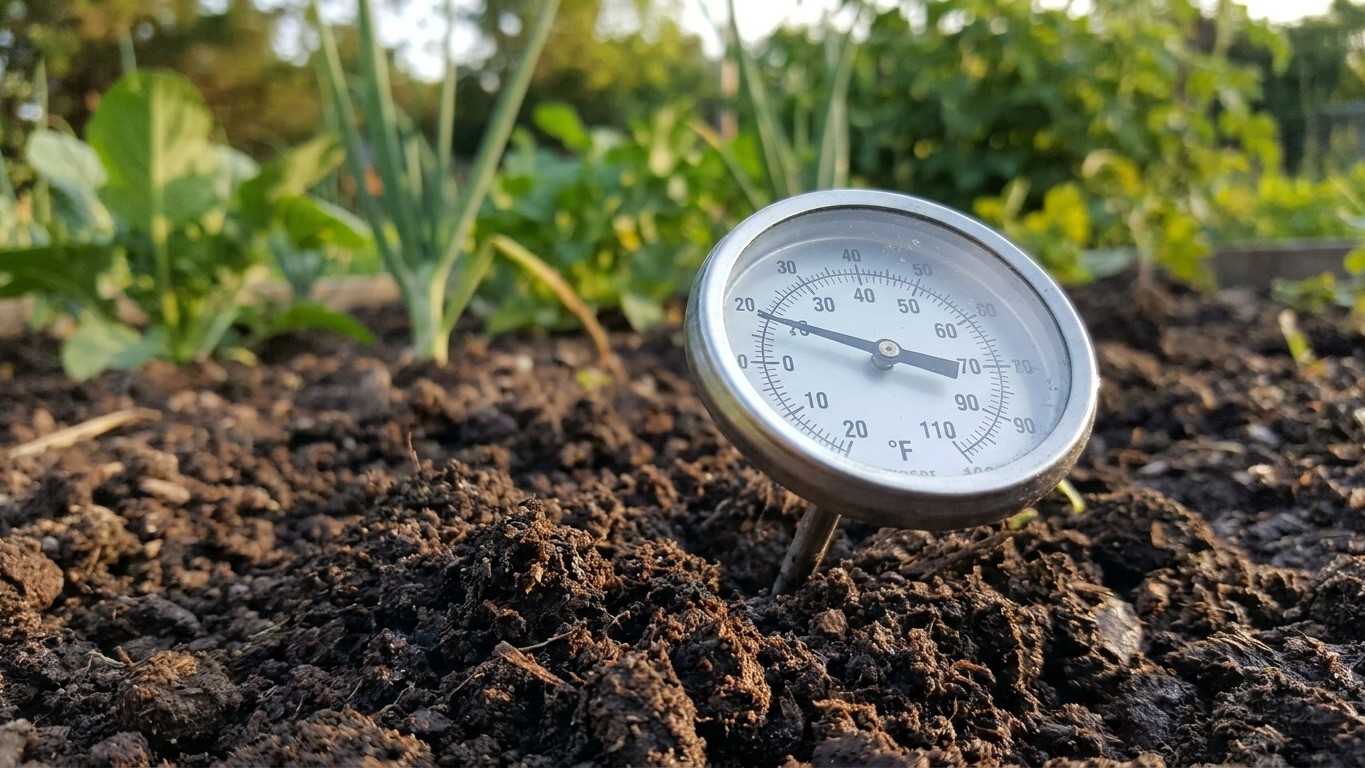
The real lesson from a bare seed bed isn’t “sow later,” it’s “check the ground, not the date.” A cheap soil thermometer pushed two inches down at midmorning tells you more than any planting chart. If it reads above 68°F, that seed packet can wait in the shed a little longer, or go into a shaded nursery tray instead of open ground. Mâche rewards patience in a way few other salad greens do: sown at the right moment, even into cold, it will sit through frost and keep producing tender leaves well into winter, quietly proving that the three-week wait was worth it.
Sources : sowrightseeds.com | magicgardenseeds.com