
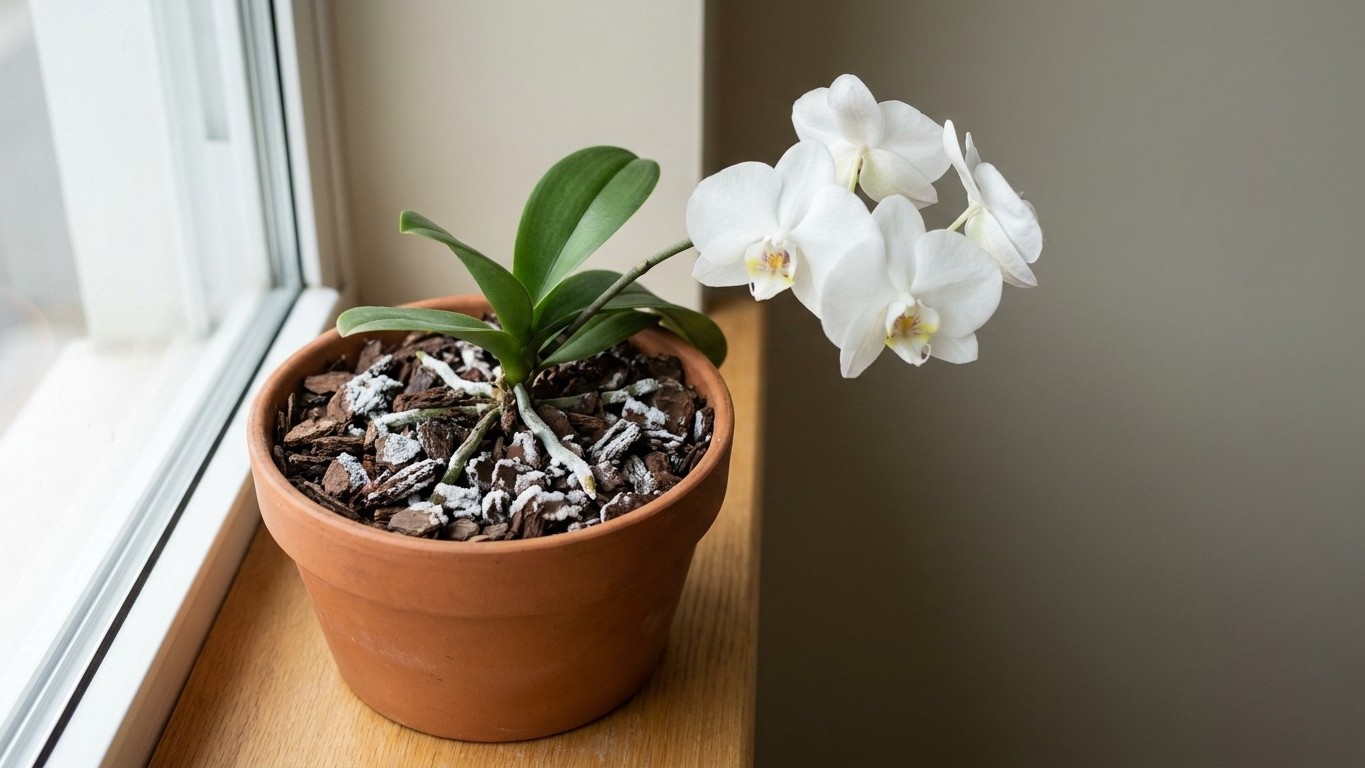
Two years of gentle intentions, one crusty layer of white residue, and a lesson every orchid owner should learn before it costs them a plant. The story is common enough that orchid forums are full of variations on it: a grower switches to softened water because it seems less harsh than “hard” tap water, keeps up the routine faithfully, and then one day repots the plant only to find the bark coated in a chalky, sometimes brownish film that wasn’t there before. That crust isn’t harmless mineral dust. It’s sodium, and it’s been quietly working against the roots the entire time.
Key takeaways
- Water softeners replace harmful minerals with sodium—a swap that’s perfect for pipes but toxic for orchids
- That white crust isn’t harmless: it reverses osmosis and pulls moisture OUT of roots instead of in
- Recovery is possible, but only with complete repotting, fresh bark, and a monthly flushing routine
Why “softer” doesn’t mean “safer” for orchids
Water softeners work by swapping calcium and magnesium ions for sodium ions, which is exactly what makes shower heads and coffee makers happier and pipes free of scale. But that swap is the problem for plants. Softened water has been passed through a chamber in which sodium chloride salt has been dissolved, causing the calcium, magnesium and iron carbonates, the “hardness” minerals, to settle out of solution, and growers should not use such softened water on their plants, as it can be toxic to them. The American Orchid Society isn’t alone in flagging this. Their advice is blunt: never use soft water for orchids, since softened water is often high in sodium salt which is not good for orchids and can harm the delicate roots and growing tips.
The mechanism is fairly straightforward once you think about it. Softened water contains a high level of sodium that can deplete the essential nutrients that plants need to sustain healthy growth. A water treatment expert quoted on the subject put it this way: “The introduction of excess sodium (salt) is terrible for most plants if the levels are extremely high. Sodium also counteracts other essential minerals such as calcium and potassium.” every watering can was quietly displacing nutrients the orchid actually needed while depositing something it couldn’t use.
What that white crust in the bark actually is
Orchid bark isn’t like potting soil. It doesn’t hold much water, and it dries out between waterings, which means minerals left behind by evaporating water don’t get flushed away on their own. Over months, then years, they accumulate on the surface of every chunk of bark and around the base of the pot. Salt buildup looks like whitish to brownish crusts on the medium and around the pot, or on the surface of the mounting substrate on mounted orchids, and can be a sign of over-fertilizing. With sodium-softened water, that crust builds even without a single drop of fertilizer added.
The damage isn’t just cosmetic. Roots absorb water through osmosis, moving from an area of lower salt concentration to one of higher concentration. When the surrounding bark carries a heavier salt load than the root itself, the process can reverse, pulling moisture out of the root instead of into it. That’s why growers who’ve made this mistake often describe the same progression: tips turning brown and papery, roots losing their healthy green sheen after watering, and growth slowing to a crawl long before the plant looks obviously sick. It’s a slow injury, not a dramatic one, which is exactly why it can go unnoticed for two years.
What orchids actually want from their water
Here’s the twist: orchids aren’t picky in the way people assume. A marketing director for the National Garden Bureau has noted that the only real recommendation is not to use salt-softened or distilled water for orchids, and that rainwater versus tap water doesn’t matter much. Ordinary tap water, left out overnight so chlorine can dissipate, is perfectly fine for the hardy Phalaenopsis hybrids sold in most garden centers. The exceptions worth avoiding are the two extremes: water that’s been salt-softened, and well water, which may have a high mineral content, and softened water has sodium added, both of which can damage orchid roots.
If a household is on well water or runs very hard tap water, the fix isn’t necessarily an expensive reverse-osmosis setup, though that’s an option for serious collectors. Growers in that situation can rely heavily on collected rainwater and distilled jugs, or invest in an RO system for on-demand pure water. Distilled and RO water do come with one caveat: they strip out everything, including the trace minerals orchids do need, so without fertilizer, orchids watered only with reverse-osmosis water will gradually show yellow leaves and weak growth. Regular dilute feeding solves that easily.
Rescuing a plant that’s already crusted over
The good news: sodium buildup in bark is reversible if it’s caught before root damage becomes severe. The road to recovery starts with decanting the orchid, removing all of the old medium, thoroughly flushing the roots, and using a dilute solution, one quarter of the recommended strength, while watering well between feedings and checking regularly for salt buildup as the plant recovers. Fresh bark matters here as much as fresh water. Old bark holds onto salts in its fibers even after a rinse, so simply flushing the existing pot rarely gets everything out.
Going forward, a monthly flush is worth building into any watering routine regardless of water source, since even mineral-rich but otherwise safe water leaves some residue over time. Flushing media and root zones with plain, fresh water at least once a month will dissolve and remove mineral salts that can otherwise build up in the pot and media and harm plants. It’s a five-minute habit that costs nothing and prevents exactly the kind of slow, invisible damage that turns two years of careful watering into a repotting surprise nobody wants to find.
Sources : gardeningknowhow.com | orchideria.com