
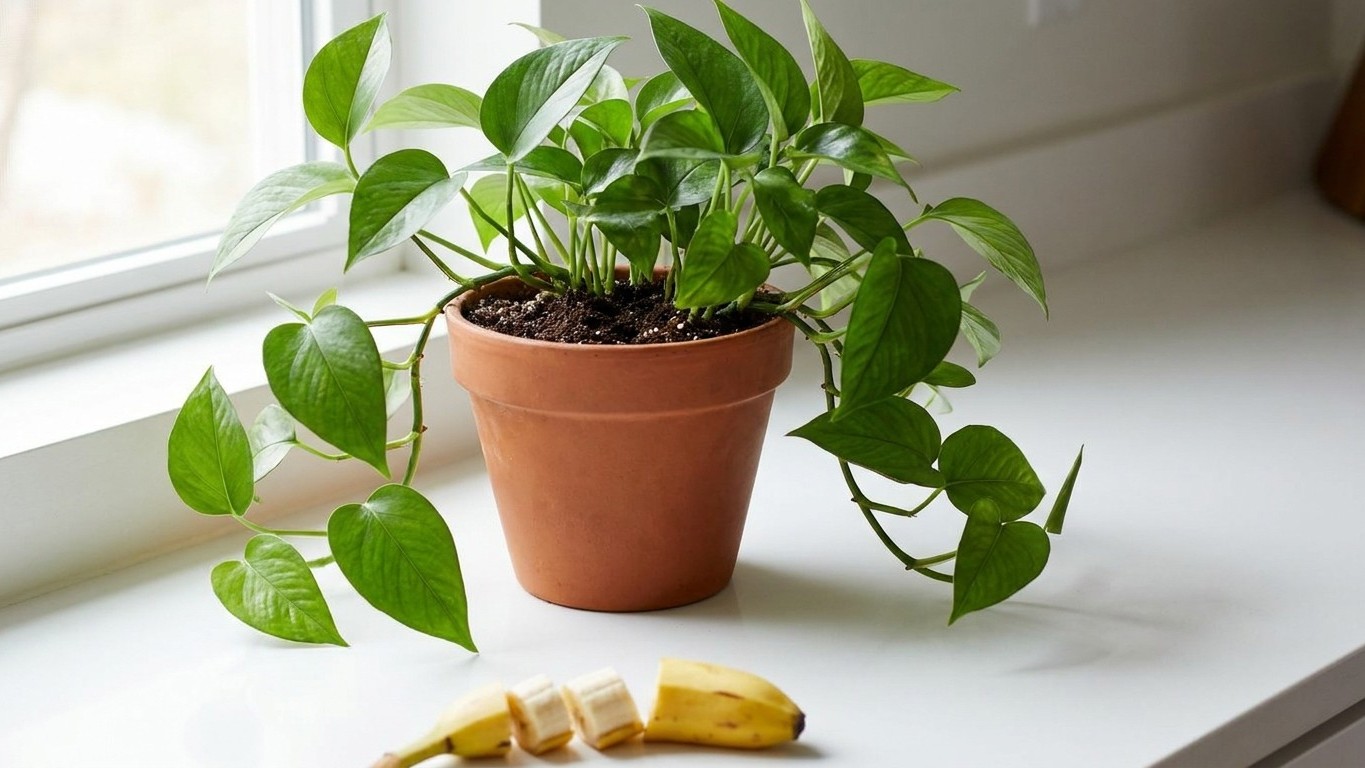
Scroll through any houseplant forum right now and you’ll find dozens of plant parents swearing the same thing: since they started slipping banana peels into their pots, root growth has been noticeably more vigorous. The trend isn’t new, but the scientific context behind it has gotten sharper, and there’s good reason to take a closer look, along with some important caveats about how you actually do it.
Key takeaways
- Banana peels contain potassium that acts like rebar for roots — but only if soil microbes break them down first
- Most people are doing it wrong: whole peels buried at the bottom actually rot and harm plants instead of helping them
- The real magic happens when you chop peels, bury them near active feeder roots, and wait weeks for the slow-release payoff
What’s Actually Inside a Banana Peel
Banana peels are filled with potassium, calcium, magnesium, and a small amount of phosphorus, a combination that encourages good root growth and strong stems. That’s not nothing. Potassium, in particular, gets to the heart of why so many plant owners report dramatic results. Research links potassium transport with cell expansion, membrane trafficking, auxin homeostasis, and phloem transport — placing it among important general regulatory factors of root growth. In plain terms: potassium is to root architecture what rebar is to concrete. Without it, the structure exists, but it won’t hold under pressure.
Beyond potassium, banana peels contain a moderate amount of calcium, which supports strong cell structure and reduces the risk of leaf tip burn, plus small amounts of magnesium, which deepens leaf color and boosts photosynthesis. A peer-reviewed study published in Agriculture in 2024 went further: across multiple experiments, plants given peel-based treatments often grew taller, produced more leaves, or germinated faster than plants grown in untreated soil, with analyses confirming high potassium alongside nitrogen, phosphorus, calcium, and magnesium, exactly the elements farmers buy in commercial fertilizer blends.
The catch? Nitrogen is lower than you might expect for something classed as fertilizer. A banana peel is not a complete plant food. It mainly adds potassium and a few other minerals, but doesn’t provide a balanced N-P-K profile, so it works best as a supplement alongside compost or a complete organic fertilizer. Think of it less as a meal and more as a targeted vitamin.
Why Burying Works (When Done Right)
Here’s where most advice on social media gets it wrong. Dropping a whole banana peel at the bottom of a pot isn’t the same as feeding your plant. Plants do not absorb minerals directly from an intact peel, soil life has to decompose it first. Microbes, fungi, and critters like worms break down the tissue and release nutrients at a pace that depends on temperature, moisture, and how the peel has been processed. A buried peel is not immediate fertilizer. It’s a slow-release deposit — a kind of underground savings account that pays out over weeks.
Raw peels take longer to release their nutrients than processed forms. Decomposition studies show that banana peel breakdown in soil happens over a timeline of two to six months, depending on temperature, moisture, and microbial activity, essentially creating a slow compost pocket. Research has found that peels that had broken down for about two months supported the best germination and growth, which tracks with the experiences of plant owners who start seeing results after several weeks, not days.
Placement matters more than most people realize. The most active feeder roots are not hugging the stem, they spread gently outward, forming an invisible crown, and that’s where they “shop” for nutrients released by fungi and bacteria. By hiding small pieces of banana peel in that crown zone, you offer a slow, local source of potassium that decomposes with help from earthworms and microbes. The bottom of the pot, by contrast, is often a low-oxygen zone where decomposition stalls and rot can set in.
The Mistakes That Actually Hurt Your Plants
If you bury a peel deep in a pot, it can rot in an anaerobic pocket and draw nitrogen from the surroundings as it breaks down, which is why some plants seem to sulk rather than thrive. Whole peels are the other culprit. To extract as many nutrients as possible, it’s recommended to cut up the peels before adding them to soil, as this helps them decompose faster. Smaller pieces mean more surface area, and more surface area means more microbial contact — the real engine of nutrient release.
Indoors, the pest risk is real and often underestimated. Banana peels are one of the most common carriers of fruit fly larvae, and the flies are strongly attracted to banana scent. If you’re using peels indoors for houseplants, this is the biggest practical concern, raw peels sitting on the soil surface or floating in an open container of banana water will almost certainly invite fruit flies within days. Burying chopped pieces at least two inches deep, away from the stem, is the minimum standard for indoor use. Rotating burial spots to avoid overloading any one area, and spacing applications by a few weeks, keeps the soil from becoming soggy or nutritionally unbalanced.
Plants that prefer sandy or very fast-draining soil, such as succulents and cacti, don’t need much fertilizer and won’t benefit as much from banana peels. Overusing banana water on these types of plants can lead to soft or weak growth. Orchids fall in the same camp, they prefer precise, controlled feeding, not organic kitchen scraps fermenting in their growing medium.
The Plants That Respond Best
Pothos, snake plants, philodendrons, spider plants, ferns, orchids, and indoor flowering plants are the most consistent winners here. Any plant can receive banana peel fertilizer, but fruiting and flowering plants get the biggest payoff because they have high potassium demands, and potassium drives flower formation and fruit development, so plants in active bloom or fruit set respond most visibly. For foliage-heavy plants like lettuce or spinach, which primarily need nitrogen rather than potassium, you won’t see the same dramatic improvement — though banana peels won’t harm them either.
Rose plants require macronutrients such as potassium and phosphorus, both of which banana peels contain. While potassium works to protect roses from disease and damage, phosphorus boosts root and flower development, which explains why the “bury peels near your roses” tip has been circulating in gardening circles for decades. The science, for once, loosely supports the folk wisdom.
One overlooked angle: the slow decay of organic matter contributes positively to soil structure over time while fostering beneficial microbial activity crucial for healthy plant development. The banana peel isn’t just feeding the plant directly, it’s feeding the soil ecosystem that feeds the plant. That distinction explains why results often compound over time rather than appearing overnight. Gardeners who start the habit in March and wonder why things are taking off by May aren’t imagining it: they’re seeing the payoff of eight weeks of quiet, underground biology doing its work.
Sources : rd.com | charlesyoungcentre.org.uk