
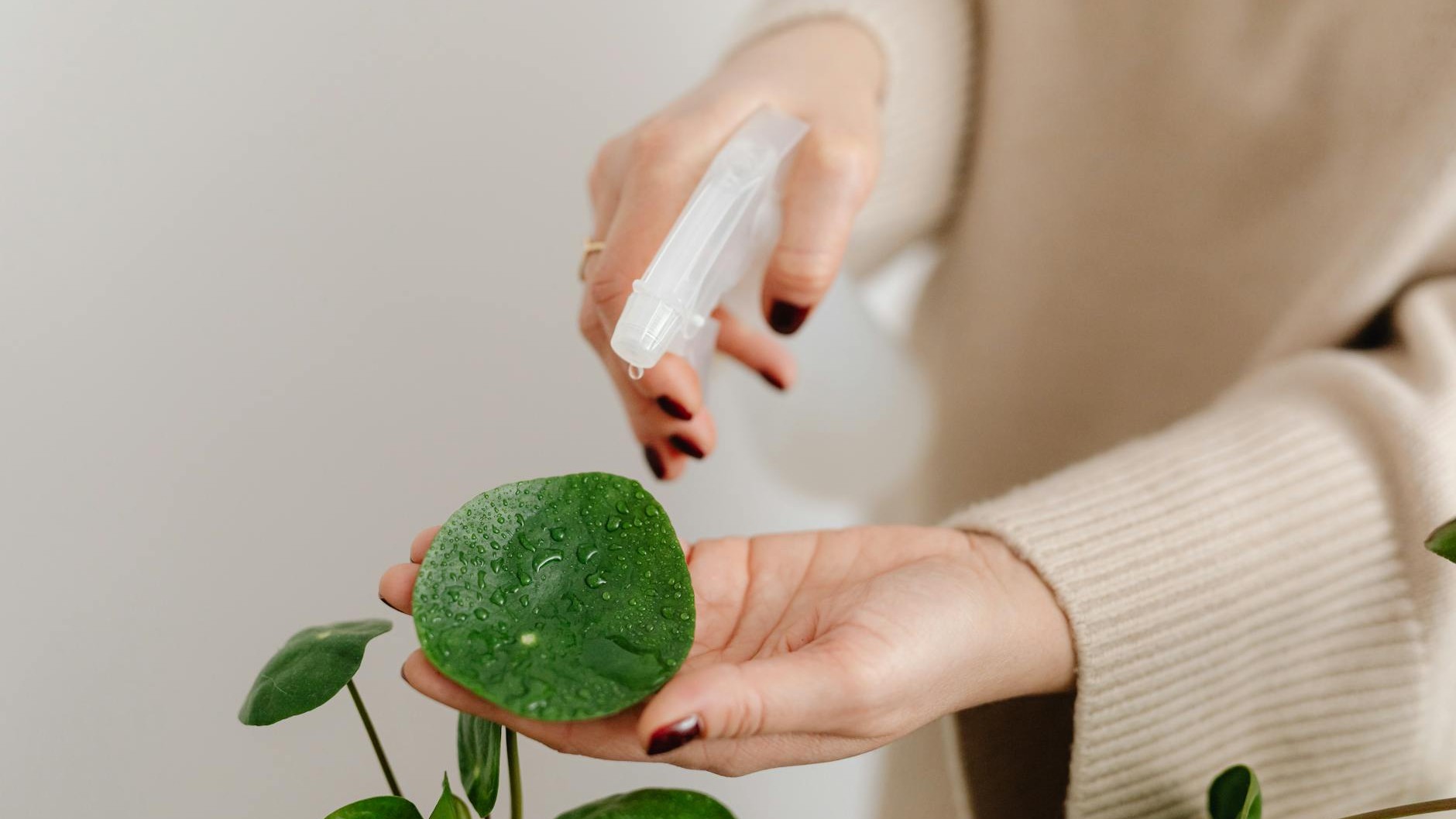
Leaf shine spray is everywhere in plant shops, garden centers, and TikTok plant tours. The bottles promise lustrous, glossy foliage that looks like it just stepped out of a botanical garden. And honestly? The effect is immediate and real. A freshly spritzed Monstera deliciosa does look spectacular. The problem is what happens in the weeks after the photo is taken.
Key takeaways
- Commercial leaf shine coatings block stomata (leaf pores), reducing your plant’s ability to photosynthesize and regulate water
- Large-leafed tropicals like Monsteras are especially vulnerable—the coating traps heat and can cause stress damage within weeks
- A damp microfiber cloth and diluted milk solution restore natural shine without chemicals, and the results actually last longer
What the spray actually does to your plant
Most commercial leaf shine products work by depositing a thin film of oil, wax, or silicone over the leaf surface. The glossy result comes from light reflecting off that coating rather than from the leaf itself. On a visual level, perfectly fine. On a biological level, less so.
Plant leaves breathe through thousands of microscopic pores called stomata, concentrated almost entirely on their undersides. These pores regulate gas exchange, carbon dioxide in, oxygen out, and manage water vapor loss, which is how a plant cools itself and drives water up from its roots. Spray-on coatings, especially oil-based formulas, can migrate to the underside over time or accumulate around the edges of the leaf where airflow is reduced. When stomata get even partially clogged, the plant’s ability to photosynthesize drops. Research on ornamental foliage plants has consistently shown that heavy foliar coatings correlate with reduced transpiration rates, which is not a minor detail, transpiration pulls water and dissolved nutrients upward through the whole plant.
The coating also acts as a dust magnet. Within two to three weeks, a treated leaf often collects more particulate matter than an untreated one, which creates a compounding problem: the dust further blocks light absorption, and you feel compelled to spray again to restore the shine. The cycle is built right into the product’s design.
The specific risk for Monsteras (and other large-leafed tropicals)
Monsteras are native to the rainforest understory of Central America, where leaves are naturally washed by heavy rainfall every few days. That constant rinsing is part of their biology. In your living room, that rain never comes, so dust, mineral deposits from tap water, and now chemical coatings accumulate without interruption.
Large tropical leaves like those of a Monstera, Ficus elastica, or Bird of Paradise are especially vulnerable to coating buildup because they have more surface area and their stomata are larger and more spaced out. A study published by the American Society for Horticultural Science found that repeated application of oil-based shine products to Ficus benjamina leaves measurably reduced chlorophyll activity within four weeks. Monsteras have not been studied as specifically, but their leaf structure is comparable.
There’s also a temperature issue no label mentions. When a coated leaf sits in a sunny spot, the film traps heat against the surface in the same way a greenhouse glass does. Leaf temperatures can spike several degrees above ambient air temperature, which stresses the cells and, in intense light conditions, can cause browning at the edges, the same browning most people blame on low humidity or inconsistent watering.
What actually works instead
A damp microfiber cloth. That’s the answer, and it costs about three dollars for a pack of six. Wiping leaves individually with a slightly damp cloth removes dust, restores the leaf’s natural reflectivity, and leaves the stomata completely unobstructed. For a large Monstera with ten to fifteen leaves, the whole process takes under ten minutes and produces results that last longer than spray because there’s no sticky residue to attract more dust.
If you want a slight sheen without chemicals, a solution of one part whole milk to ten parts water, applied with a cloth and buffed dry, has been used by professional growers for decades. The proteins and fats in milk create a very light, breathable shine that doesn’t build up. Diluted neem oil, one teaspoon per liter of water with a drop of dish soap as an emulsifier — works similarly and has the added benefit of deterring spider mites, which are a genuine and persistent threat to Monsteras.
Rainwater or distilled water misting, done correctly, is also underrated. The reason tap water leaves white spots isn’t the water itself but the calcium and magnesium minerals it carries. Switching to filtered or collected rainwater for misting removes the mineral residue problem entirely, which is often what drives people toward shine sprays in the first place, trying to mask the chalky deposits left by previous mistings.
Reading a label more carefully
Most leaf shine products carry instructions like “avoid contact with soil” or “do not apply to new growth,” which are quiet admissions that the formula is not entirely benign. New growth is flagged because young leaves have softer, more porous surfaces and their stomata are still developing, the coating penetrates more easily and the potential for damage is higher. The soil warning exists because the oils and silicones in the formula can disrupt the microbial ecosystem in your potting mix if they drip down during application.
Some newer plant care brands have introduced water-based formulas that claim to be stomata-safe, and the chemistry is genuinely different from older solvent-based products. But the testing behind those claims is largely self-reported by manufacturers. No independent certification standard currently governs what “breathable” or “natural” means on a leaf shine label in the United States, which puts the burden of skepticism squarely on the buyer.
The real irony is that a healthy, well-watered Monstera with clean leaves produces its own natural gloss from within, a result of the waxy cuticle that evolution built specifically to protect tropical foliage. That self-generated shine is deeper and more even than anything a spray bottle can replicate. The coating products are, in a sense, selling you a substitute for something the plant was already doing on its own before the dust arrived.