
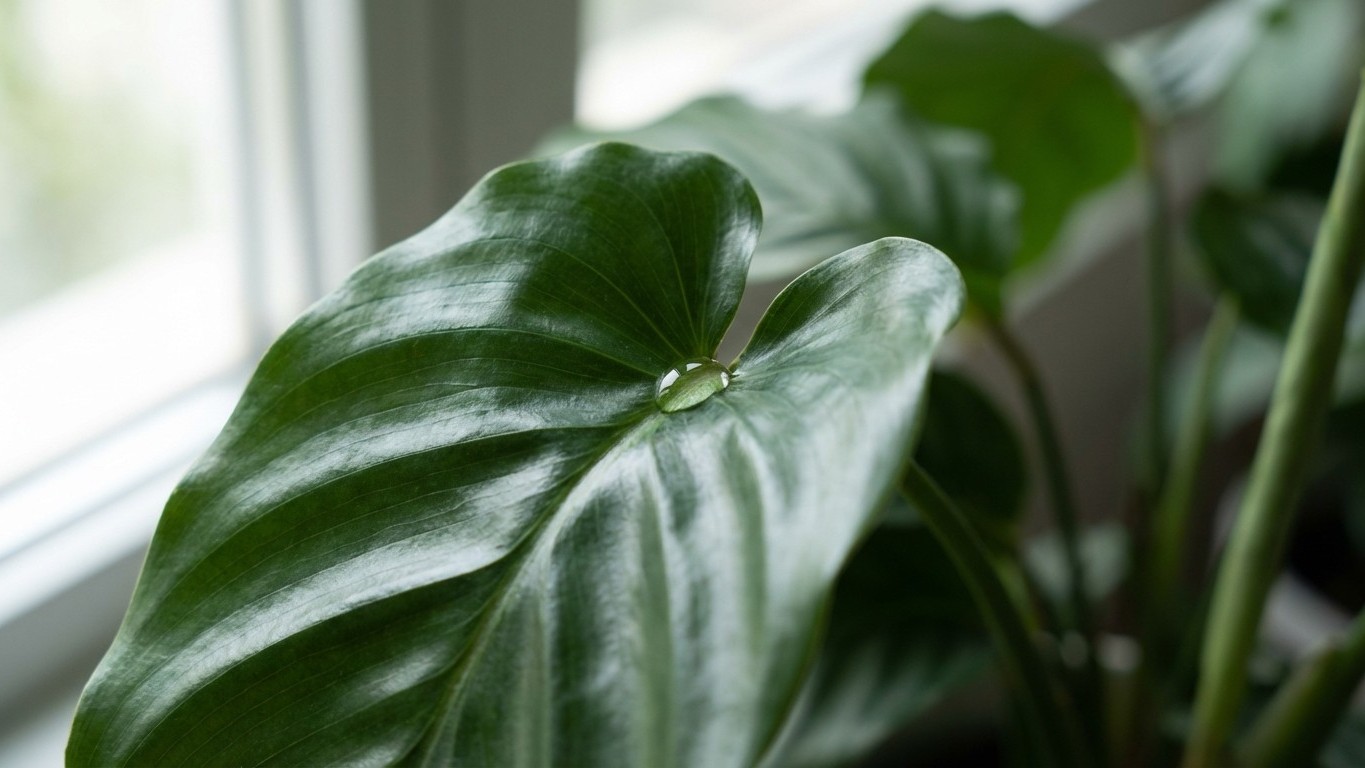
A Calathea with pleated, folded, or cupped leaves isn’t just showing stress, it’s creating a small reservoir. Those folds trap water right at the base of the leaf, where it sits against the stem or petiole, sometimes for days. That standing water doesn’t evaporate quickly because the leaf itself acts as a canopy. And in that warm, still, humid pocket, fungal spores and bacterial colonies find exactly what they need to get started.
Most growers notice the pleating and immediately think of watering, too much or too little. That diagnosis isn’t wrong, but it’s incomplete. The leaf shape is a symptom; the water trap is a separate problem that runs in parallel, and it can cause real damage even after you’ve corrected your watering schedule.
Key takeaways
- Pleated Calathea leaves act like tiny water-catching spoons, trapping moisture that doesn’t evaporate
- Standing water in those leaf folds feeds dangerous fungi and bacteria that most growers mistake for watering issues
- Misting is making it worse—and the solution is simpler and more effective than you’d expect
Why Calathea Leaves Pleat in the First Place
Calatheas, and their close relatives now reclassified under Goeppertia — are native to the forest floors of tropical Central and South America. Their leaves evolved to move in response to light, a process called nyctinasty, which is why they fold upward at night and open during the day. That movement relies on specialized cells called pulvini at the base of each leaf. When those cells don’t receive the right hydration signals, the leaves can get stuck mid-movement, appearing permanently pleated or corrugated.
Low humidity is the most common trigger. Calatheas prefer humidity levels above 50%, and in most American homes during winter, forced-air heating drops indoor humidity to 20–30%. The pulvini essentially dehydrate faster than the plant can compensate, and the leaves freeze in a partially folded position. Inconsistent watering compounds this, if the root zone cycles between too dry and too wet, the hydraulic pressure that drives leaf movement becomes erratic.
Temperature stress does the same thing. A Calathea sitting within two feet of a heating vent or a drafty window will develop folded leaves that look textbook-healthy in terms of color but structurally wrong. The plant is fine; the microclimate around it isn’t.
The Water Pocket Problem Nobody Talks About
Here’s where it gets specific. A pleated leaf on a Calathea creates a physical groove, sometimes a tight one, along the midrib or at the point where the leaf meets the petiole. When you mist the plant, or even when humidity condenses on the leaf surface, water collects in that groove. A single misting session can deposit a small but meaningful amount of standing water in those folds, water that doesn’t drain because the leaf curvature holds it like a spoon.
Botrytis cinerea, the gray mold fungus, thrives in exactly these conditions: still air, organic material, and sustained moisture. It doesn’t need soil contact to get established; a wet leaf surface held at 65–75°F for 24–48 hours is sufficient. Early-stage Botrytis on Calathea often appears as soft, water-soaked patches that darken to brown, which most growers misread as a watering problem and respond to by adjusting soil moisture, solving the wrong problem entirely.
Bacterial leaf spot operates similarly. Pseudomonas and Xanthomonas species, both common in houseplant environments, spread through water films on leaf surfaces. A folded Calathea leaf that stays wet for an extended period provides a highway for bacterial movement from one part of the leaf to another. The lesions tend to appear on the underside first, which explains why growers often catch the damage late.
Fungus gnats are a secondary concern, but worth naming. If the pleated leaves are trapping water near the stem, that moisture can wick downward and keep the top inch of soil consistently damp, which is exactly the zone where fungus gnat larvae feed on root hairs. The leaf shape and the soil moisture problem become linked.
What to Actually Do About It
Stop misting. Full stop. Misting Calatheas is one of the most persistent myths in houseplant culture, it feels intuitive, but the droplets it creates do more harm than good on a plant with pleated or cupped leaves. A humidifier placed nearby, or a pebble tray with water below the pot level, raises ambient humidity without depositing water directly on the leaf surface.
When you water, keep it directed at the soil, not the foliage. A long-spouted watering can lets you reach the base of the plant without splashing the leaves. After watering, if any water has landed on a pleated section, blot it gently with a dry cloth or a folded paper towel. It takes ten seconds and removes the standing water before it has time to cause problems.
Check the pleated grooves visually every few days. If you see any soft discoloration or a faint musty smell near the folds, remove that leaf entirely at the petiole with clean scissors. Don’t try to save a leaf with active fungal activity : Botrytis spreads aggressively once established, and a single infected leaf can seed neighboring ones within a week under humid conditions.
Improving air circulation around the plant makes the whole system more forgiving. A small fan running on its lowest setting a few feet away from the plant keeps air moving without creating a draft. Moving air dries leaf surfaces faster and disrupts the still, humid microclimates that pathogens depend on.
The underlying leaf pleating won’t resolve overnight even after you fix the humidity and watering. New leaves emerging will grow correctly once conditions improve, but existing pleated leaves tend to stay pleated, the pulvini don’t reset. Those older leaves aren’t a problem if they’re dry; they’re only a liability when they stay wet. Worth keeping in mind: Calathea varieties with narrower, more lance-shaped leaves, like Goeppertia ornata, trap significantly less water in their folds than the broad, deeply ridged varieties like Goeppertia orbifolia, which can hold a surprising amount of moisture along each ridge after a single humidity spike.