
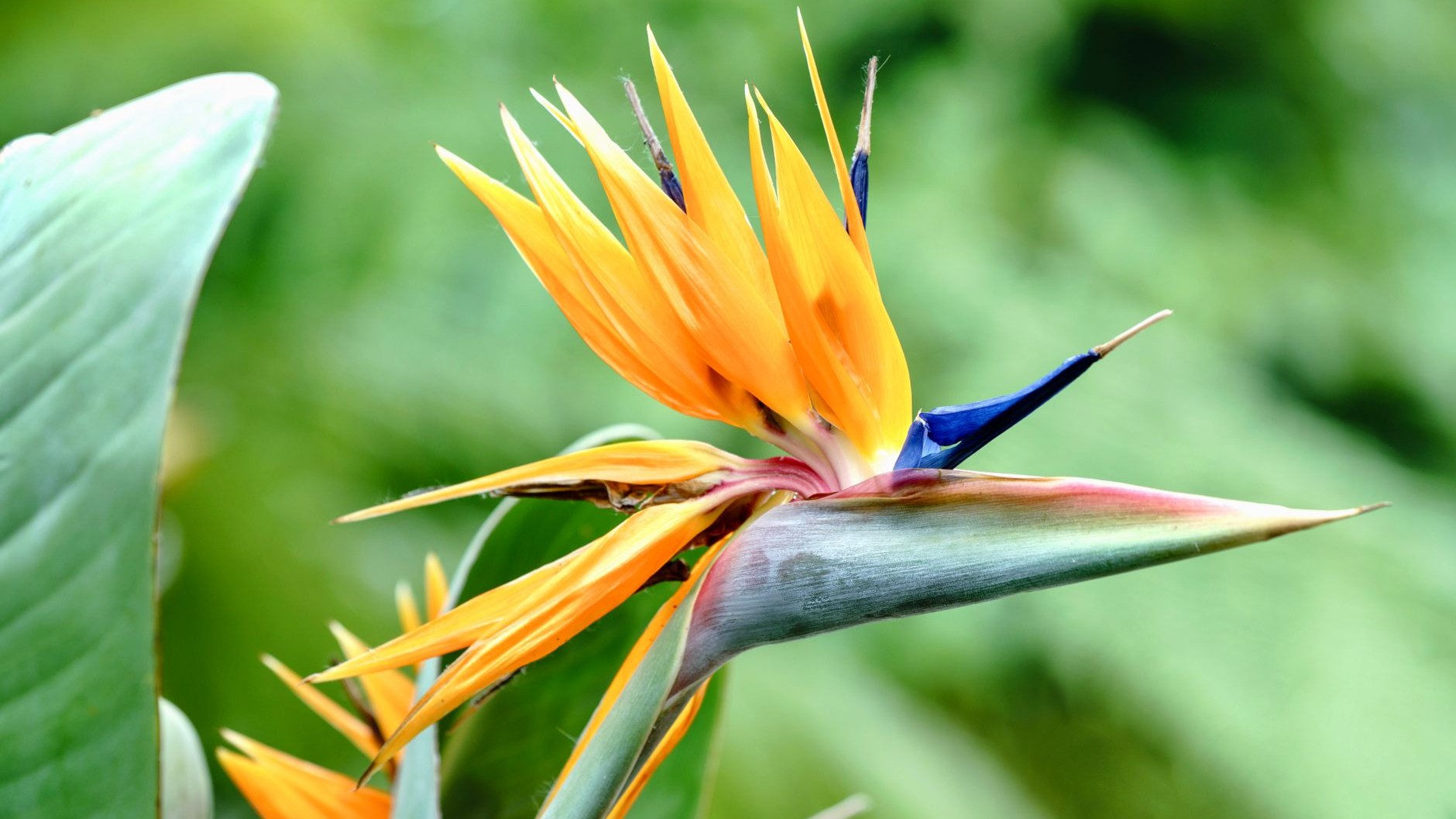
The leaves turned white within 48 hours. Not yellow, not brown, white, bleached, as if someone had left the plant under a lamp at maximum intensity for a week straight. That’s exactly what happened, in a way. Moving a bird of paradise (Strelitzia reginae or Strelitzia nicolai) from an indoor window to direct outdoor sun is one of those mistakes you only make once. The damage is called sunscald, and once it hits, there’s no reversing it.
Key takeaways
- What happens inside a leaf when it’s exposed to 5x more light than it’s ever experienced?
- Why those white, papery patches will never turn green again—no matter what you do
- The exact 3-week timeline that keeps your plant safe when moving it outdoors
Why your bird of paradise can’t handle sudden full sun
Plants acclimate to light the same way human skin does. A person who spends winter indoors doesn’t sprint to the beach in June without sunscreen, their skin hasn’t built up the pigment and protective mechanisms to handle that intensity. Leaves work on the same principle. Indoors, even in a bright south-facing window, your bird of paradise is receiving a fraction of the UV radiation and light intensity that exists in direct outdoor sunlight. The difference isn’t subtle: outdoor full sun can reach 10,000 to 12,000 foot-candles on a clear summer day, while a sunny indoor window typically delivers 2,000 to 5,000 at best.
When you move a plant from one environment to the other overnight, its leaf cells simply can’t process that sudden photon overload. Chlorophyll breaks down faster than the plant can rebuild it. The white or pale yellow patches you see aren’t a disease or pest, they’re destroyed chloroplasts, the tiny structures inside cells that give leaves their green color and carry out photosynthesis. Once those structures are gone, that section of leaf is functionally dead. It won’t green back up. The plant may survive, but those specific cells won’t recover.
Bird of paradise plants are particularly vulnerable to this because they’re often sold and grown as indoor tropical statement pieces, kept in relatively low light for months or years. Their leaves have adapted, physically, at the cellular level, to low-light conditions. The thicker and more mature the leaves, the more locked-in that adaptation is.
What actually happens to a sunscalded leaf
The whitening or bleaching tends to appear on the sections of the leaf most exposed to direct rays, often the center or upper surface. In severe cases, like the two-day outdoor scenario described above, entire leaves can turn pale almost uniformly. The texture changes too: scalded tissue often feels papery or slightly crisp compared to healthy leaf tissue.
Some growers confuse sunscald with overwatering or root rot because the plant can look generally “off” after the incident. The distinction is straightforward, sunscald shows up on the leaves in pale, bleached patches that correspond to light exposure, while root rot typically presents as yellowing that starts at the base of leaves and spreads, often with mushy stems at soil level. Two very different problems with a similar visual chaos.
The harder truth: a bird of paradise that’s been badly scalded will often drop those affected leaves entirely over the following weeks. That’s not a death sentence for the plant, but it can set back growth significantly, especially if it loses several large leaves at once. These plants are notoriously slow growers to begin with, one new leaf every four to six weeks under good conditions. Losing a season’s worth of foliage in a weekend stings.
The right way to move a bird of paradise outdoors
The process is called hardening off, and it takes two to three weeks minimum. Start by placing the plant in a shaded outdoor spot, under a porch roof, beneath a large tree, or against a north-facing wall. Leave it there for five to seven days. This alone represents a significant light increase from indoors, and the plant needs time to adjust at this stage before any direct sun enters the picture.
After that initial shade period, introduce brief windows of morning sun. Morning sun (before 10 a.m.) is softer and less intense than afternoon sun, making it the safest entry point. An hour of morning direct light, combined with bright shade for the rest of the day, is enough to start building leaf tolerance. Extend that window by 30 minutes every few days, gradually shifting toward longer sun exposure over a total of two to three weeks.
The goal is to reach whatever your target summer placement is, partial sun, dappled light, or a few hours of direct exposure — without shocking the plant at any single transition point. Bird of paradise can absolutely thrive outdoors in summer and will reward you with faster growth and potentially even blooms if conditions are right. But patience at the transition stage is non-negotiable.
One practical detail that often gets skipped: watering needs change dramatically when the plant moves outside. Wind, higher temperatures, and direct sun will dry out the soil far faster than indoors. Check moisture levels daily during the first two weeks rather than relying on your indoor watering schedule. A plant already stressed from light adjustment doesn’t need the additional pressure of drought stress layered on top.
What to do with the damaged plant now
If your bird of paradise already went through the sunscald experience, move it back to a shaded spot immediately. Don’t cut the damaged leaves right away, the plant can still extract some resources from them while they’re attached, even if they look terrible. Wait until the leaves are fully brown and papery before pruning them at the base with clean scissors or shears.
Give the plant a few weeks to stabilize before attempting any gradual light introduction again. Resume a normal watering and fertilizing schedule (a balanced liquid fertilizer every two to four weeks through summer works well), and resist the urge to repot simultaneously, stacking stressors slows recovery considerably. The plant will push new growth eventually. It just needs the conditions to do so without additional disruption.
One last thing worth knowing: Strelitzia nicolai, the giant white bird of paradise that’s become a fixture in minimalist interiors, tends to be even more sensitive to abrupt light transitions than its smaller relative Strelitzia reginae. Nicolai specimens grown as indoor trees often have leaves that have never experienced anything close to outdoor light intensity. For those plants especially, a three-week hardening period isn’t cautious, it’s the baseline.