
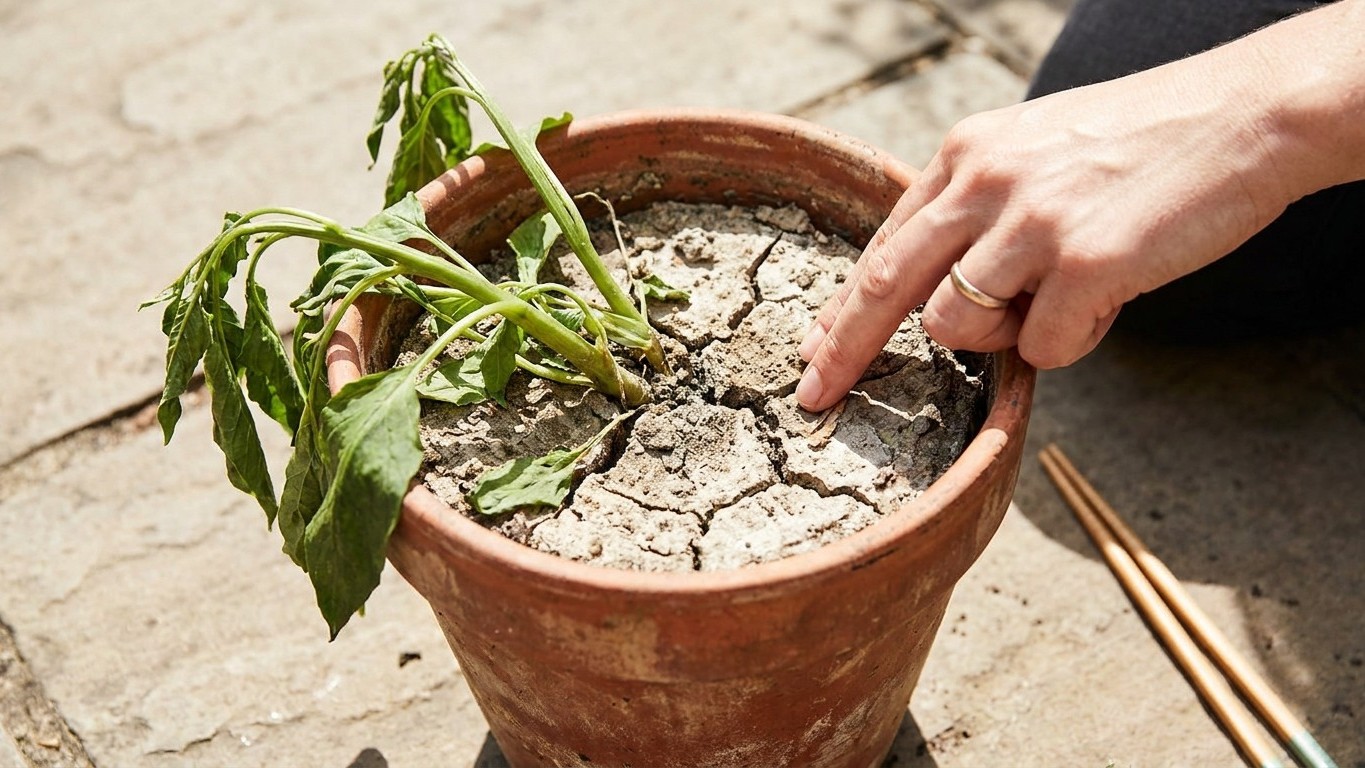
Every afternoon, same ritual: watering can, a full pour, water draining out the bottom of the pot, proof, supposedly, that the job was done. The plants wilted anyway. The soil looked dry two hours later. And yet the water was clearly going somewhere. One scratch of the topsoil changed everything: the surface had hardened into a near-impermeable crust, and below it, bone-dry clods. The water was never reaching the roots. It was escaping.
This is one of the most common, and least discussed, reasons why container plants die during summer heat. When it’s been a while between waterings, soil can become “hydrophobic,” meaning the particles literally repel water instead of allowing it to soak in. The result is cruel in its irony: a plant can seem sad and under-watered even though you watered it yesterday.
Key takeaways
- Water can run right through your pot without ever touching the roots—here’s why
- That crusty soil surface isn’t just ugly; it’s sabotaging everything you do
- One unexpected technique fixes hydrophobic soil faster than any amount of regular watering
The Illusion of a Watered Plant
Here’s the deception. You water, you see liquid pooling briefly on the surface, then it disappears, and you assume it went into the soil. Gardeners may see water draining out the bottom of a pot and assume the soil is saturated. But the water might be running between the side of the pot and the hydrophobic root ball instead, barely wetting the outer surface and leaving the center of the root ball dead dry. The roots, sitting in the very middle of that pot, never get a drop. The plant wilts. You water again. Nothing changes.
Classic warning signs: water pooling on the surface or running down the sides of the pot almost immediately; large sections of soil remaining bone dry even after watering; and soil pulling away from the edges of the pot, creating a visible gap. That gap between the pot wall and the soil mass is actually the main highway water uses to escape, fast, clean, useless.
Another tell: the top layer of soil looks hard and crusty, even if it feels lighter below. That crust acts as a physical barrier, deflecting water sideways before it ever has a chance to sink. Scraping it with a finger is all it takes to see the problem, and to understand why three months of daily watering can still leave a plant chronically parched.
Why Potting Soil Turns Against You
The culprit is usually hiding right in the bag you bought at the garden center. Potting soils often contain peat moss, valued because it decomposes slowly, is lightweight, and retains water. Paradoxically, when peat moss dries out, it is very difficult to re-wet. Think of an old sponge left in the sun for a week, technically it still exists, but it sheds water like wax paper.
Another common cause is compacted soil. This can happen to Houseplants when the compostable parts of the potting mix have completely broken down and there’s less oxygen in the soil. Potting mix has a lifespan. After one full season, especially in summer heat, it starts to lose structure. Fertilizer salts building up over time and compaction from repeated watering and root growth both accelerate the process. The mix that was fluffy and dark in May becomes a dense, pale block by August. Bags of potting soil can even dry out in storage, meaning the problem can start before you even plant anything.
The heat compounds everything. One of the biggest challenges with potted plants is managing water retention. Potted plants tend to dry out faster than those in the ground, especially in warmer climates or during hot weather. A terra cotta pot on a south-facing patio in July isn’t just a container, it’s essentially a kiln.
How to Actually Fix It
Standard top-watering is not the answer. Simply watering hydrophobic soil as usual is unlikely to rehydrate it, since it resists re-wetting. The most effective immediate solution is submersion. Submerge the whole pot in a bucket of water, it’s drastic but fast. Initially, there will be so much air in the root ball that the pot will float. Holding it under water, you’ll see air bubbles escaping as they’re displaced by water. Remove the pot once the bubbling stops. Those bubbles are the sound of the soil finally drinking.
For pots too large to lift, there’s a gentler approach. Bottom watering works by placing the pot in a shallow container with enough water, allowing the soil to slowly absorb moisture from the bottom up. Depending on the size of the pot, this can take at least an hour to fully rehydrate the soil. Patience matters here. Rushing back to top-watering after ten minutes defeats the purpose entirely.
Using a chopstick to poke holes in the soil helps the water penetrate during the soak, a low-tech trick that genuinely works, because it creates channels through the hydrophobic crust. After the soak, a natural wetting agent like a solution made from agar or seaweed can help break surface tension on future waterings and slow down the return of the problem.
Prevention Before the Crust Forms
The best fix is avoiding the situation altogether. Mulch or fine shredded bark helps retain moisture on the soil surface and prevents rapid evaporation. Adding a light layer around the top of potted plants insulates the soil, reducing water loss on hot days, particularly helpful for outdoor containers exposed to direct sunlight. Even a thin layer of pebbles or wood chips buys the soil significant time before it bakes solid.
Choosing the right mix from the start also matters. Organic materials such as compost and coconut coir improve water retention by increasing the soil’s ability to absorb and hold moisture. Coconut coir, in particular, resists the hydrophobic cycle that peat-based mixes are prone to, it rewets easily even after drying out. When plants need repotting, adding fresh potting mix helps boost moisture and adds nutrients to the soil. Reusing the same exhausted mix from season to season is one of the quietest ways to condemn a plant.
One last thing worth knowing: just as a full glass of water weighs more than an empty glass, a well-watered pot will be heavier than a dried-out one. Lifting your pots before and after watering, and learning what “fully hydrated” actually feels like, turns out to be a more reliable check than any visual inspection of the surface. The soil can look dark and damp on top while staying completely dry four inches down. Weight doesn’t lie.
Sources : ecoservantsproject.org | plantbeacon.com