
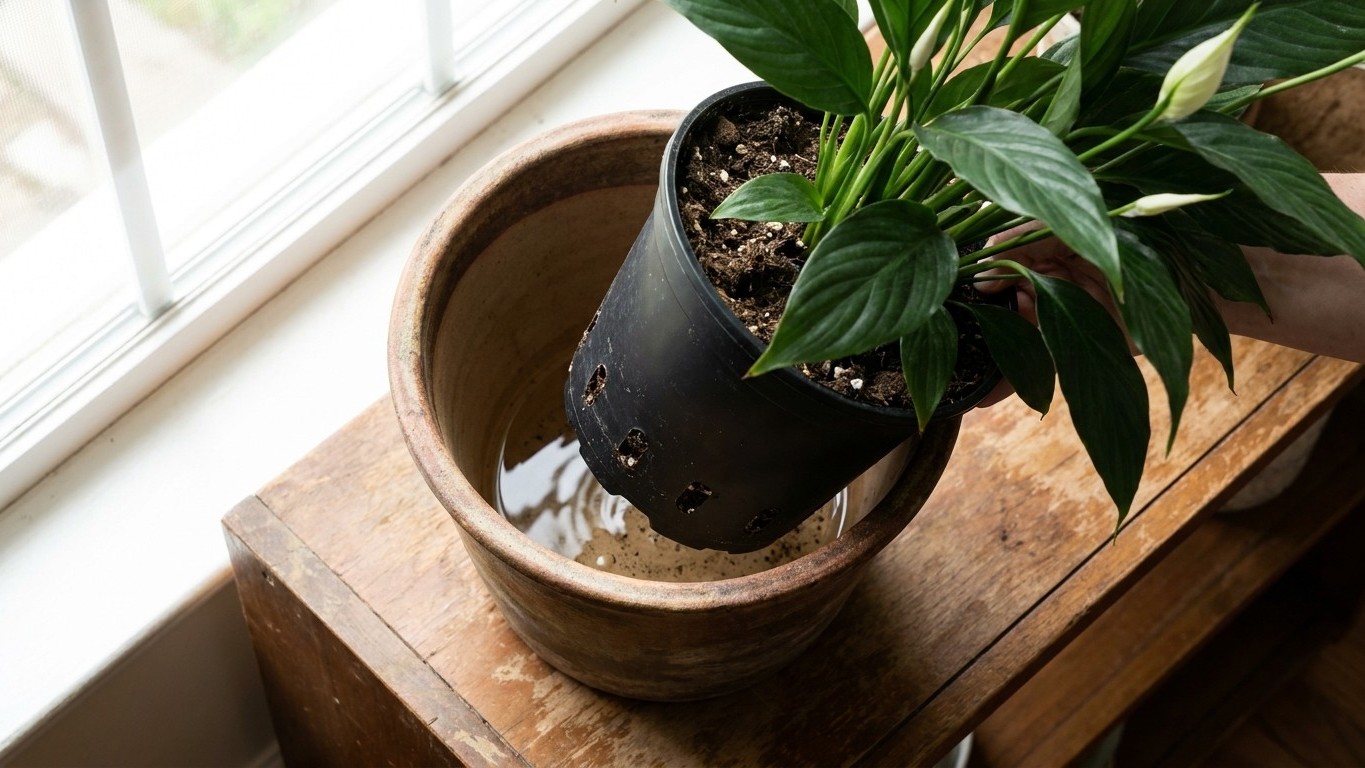
The soil on top looked bone dry. Classic signal, right? Water the plant. That’s what most of us learned, and for the majority of Houseplants, it works just fine. But one afternoon, a florist visiting a client’s home lifted a potted peace lily out of its ceramic decorative cover, and what she found underneath explained months of mysterious decline. The drainage hole at the bottom of the nursery pot was sitting in about an inch of standing water. The roots had been drowning in slow motion while the topsoil screamed “thirsty.”
Key takeaways
- The topsoil dries first, but roots below stay waterlogged for weeks—creating a false signal to water more
- Decorative cache-pots designed to look beautiful are actually designed to hold water, not drain it
- You can rescue a plant with root rot, but only if you catch it before 60% of the root system is gone
The decorative pot trap nobody warns you about
Decorative covers, also called cache-pots, are everywhere. They’re sold in every home goods store, they look beautiful, and they solve the problem of ugly plastic nursery pots sitting on wooden shelves. The trouble is they’re designed to hold water, not drain it. Most have no hole at the bottom whatsoever. When you water your plant and excess moisture runs through the soil, it collects in the base of that stylish outer pot, completely invisible, completely silent, completely dangerous.
The topsoil dries out first because it’s closest to the air. Sun hits it, airflow crosses it, and within a day or two it feels dry to the touch. But six inches down, near the root system, the soil can stay saturated for a week or more. The plant sends distress signals, yellowing leaves, drooping stems, that look almost identical to underwatering. So you water again. The problem compounds. This is the cycle that killed more houseplants in decorative covers than any pest or disease ever will.
Why roots rot even when the soil “seems fine”
Root rot is caused by a handful of water mold pathogens, most commonly Phytophthora and Pythium species, which thrive in anaerobic, waterlogged conditions. Healthy roots need oxygen as much as they need moisture. When the soil stays wet for extended periods, the air pockets between soil particles fill with water, oxygen depletes, and the roots begin to break down. A rotting root looks brown or black, feels mushy, and smells faintly sour, a stark contrast to healthy white or cream-colored roots that feel firm.
The maddening part is that the damage happens underground, out of sight, for weeks before the plant shows any visible symptoms. By the time leaves turn yellow or the stem starts collapsing, you may have already lost 40 to 60 percent of the root mass. Some plants, like pothos and snake plants, can recover from partial root rot if caught early. Others, particularly tropical species like orchids, calatheas, and maidenhair ferns, have far less tolerance and will decline rapidly once the root system is compromised.
One detail that surprises most people: even plants that prefer drier conditions can develop root rot in a decorative pot. Succulents and cacti are actually among the most vulnerable, because their roots are especially sensitive to prolonged moisture and their soil is designed to dry out completely between waterings, something that simply cannot happen when drainage is blocked.
Checking before watering: the habits that actually work
The finger test, poking the topsoil to gauge moisture, is a good starting point, but it only tells part of the story. A more reliable method is to push your finger two to three inches deep into the soil before watering. For most tropical houseplants, you want that depth to feel slightly dry to dry before adding water. For succulents and cacti, the entire soil column should feel dry. For moisture-loving plants like ferns or peace lilies, slightly damp at that depth is fine.
Lifting the pot is even more informative. A dry pot feels noticeably light, sometimes startlingly so. A saturated pot feels heavy and dense. With practice, this becomes second nature, and it takes about three seconds. Some experienced growers argue the lift test is more accurate than any soil probe on the market, and they’re probably right. There are also inexpensive moisture meters that measure humidity at root level, though the cheap ones often give inconsistent readings and can degrade quickly with regular use in soil.
If you use decorative covers, make a habit of removing the inner pot entirely after watering and letting it drain fully over a sink before placing it back. The ten-minute wait is annoying. Replacing the entire plant is more annoying. Alternatively, place a few centimeters of gravel at the bottom of the cache-pot to elevate the nursery pot above any collected water, this at least creates a buffer zone between drainage and the root zone.
Rescuing a plant with root rot
If you suspect root rot, act immediately. Remove the plant from its pot, shake off the soil gently, and inspect the roots. Cut away any brown, mushy, or foul-smelling sections with clean scissors or pruning shears. Sterilize your tools between cuts if the rot looks severe, to avoid spreading the pathogen. Let the roots air-dry for 30 to 60 minutes, then repot in fresh, dry potting mix with proper drainage.
Resist the urge to water immediately after repotting a rot-affected plant. The stressed root system needs time to stabilize, and adding moisture too soon can restart the problem. Wait two to three days, then water lightly. Recovery is possible, sometimes even with plants that look nearly dead above the soil, as long as at least some healthy root tissue remains, the plant has a fighting chance.
There’s a broader lesson here about houseplant care that often gets overlooked: the container matters as much as the plant. Soil type, pot material, drainage design, and the presence or absence of a saucer all interact to create the moisture environment your plant lives in. Terracotta pots, for instance, are porous and allow moisture to evaporate through the walls, which is why they’re often recommended for plants prone to overwatering. A plant thriving in a terracotta pot on a sunny windowsill might struggle in a glazed ceramic cover in the same spot, simply because the moisture math has changed entirely.