
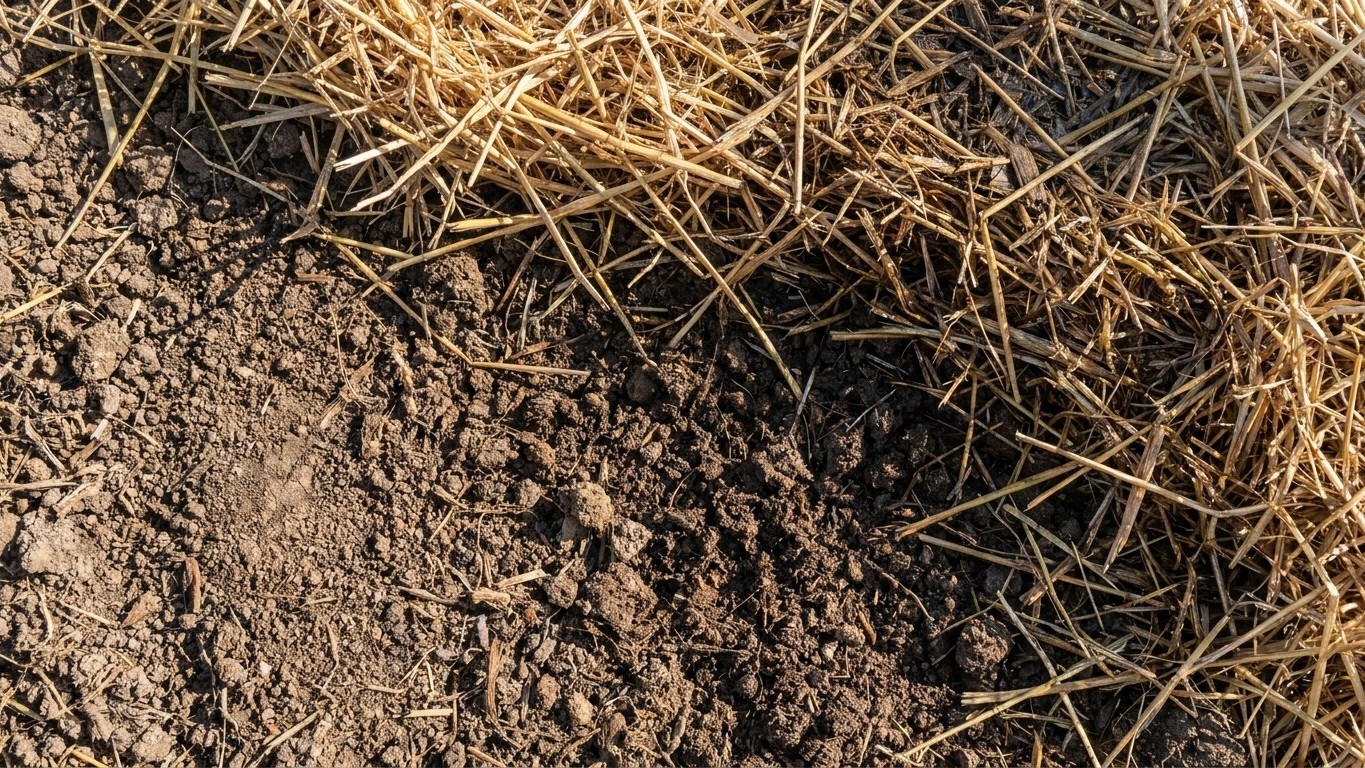
A three-inch layer of straw, dead leaves, or grass clippings spread across bare dirt in late spring. That’s the “this” your grandparents swore by every single year before the summer heat arrived, and gardeners are rediscovering exactly why it worked. The technique is mulching, and the forgotten reason behind it has nothing to do with looks. It’s pure physics: a barrier between soil and sun that changes everything happening underground.
Key takeaways
- A forgotten technique your grandparents relied on is backed by modern agricultural research and solves 2026’s biggest gardening challenge
- The science is simple physics: one material can reduce watering frequency by 50%, suppress weeds, and protect soil microbes
- What they used costs nothing—fallen leaves, straw, grass clippings—and the timing matters more than most gardeners realize
The Simple Science Old-Timers Understood Instinctively
Nobody needed a lab coat to notice that covered dirt stayed damp longer than exposed dirt. What they observed was evaporation control in action. Mulch helps the soil retain more water, evaporate less, and suppress weed growth, with straw mulch reducing evaporation by about 35% according to research. That’s not a marginal improvement. That’s the difference between watering a vegetable bed every other day and watering it once a week.
The heat-blocking effect matters just as much. Water evaporates quickly from exposed soil, especially during hot summer months, and mulch helps keep the soil cool and reduces evaporation by providing a protective barrier between the soil and the sun. Bare dirt in July can hit temperatures that stress root systems and kill off the beneficial microbes plants depend on. A mulched bed stays several degrees cooler, buffering the kind of extreme swings that stunt growth.
There’s also a mechanical trick at play, one that old-timers exploited without knowing the term for it. Mulch prevents crusting of the soil surface, and water moves more readily into soil covered with mulch instead of running off. Bare, sun-baked soil forms a hard crust that sheds rainwater instead of absorbing it. Cover it, and every drop counts.
What They Actually Used, and Why It Still Works
Long before bagged mulch showed up at garden centers, people used what was lying around the property. At its simplest, mulch is any material that covers the soil’s surface, and in nature it’s simply fallen leaves and plant debris, though in the garden it can also include compost, wood chips, rotted manure, cardboard, or even seaweed. Straw got tucked around strawberries and garlic. Newspaper got layered under tomatoes.
That newspaper trick, dismissed by some as a quaint relic, still holds up remarkably well. One Michigan gardener growing heirloom tomatoes got free newspaper from neighbors and put four layers thick around the plants, covered with straw so it didn’t blow away, and after the initial watering never had weeds and never watered again. That’s not folklore. That’s a documented outcome from a method that costs nothing but a few afternoons of labor.
The organic materials do double duty compared to gravel or plastic. Done correctly, mulching feeds our soil’s living microorganisms with nutrients, and the waste from these tiny microbes creates a healthier soil structure for plants, limiting compaction. Wood chips, straw, and leaf litter break down slowly all season, releasing nutrients right as roots need them most.
Why 2026 Is Bringing the Old Trick Back
Hotter summers and tighter water restrictions are pushing gardeners back toward a method their grandparents never questioned. As the summer sun scorched gardens across the country, resourceful gardeners turned to an age-old mulching technique to keep their soil moist and their plants thriving, a forgotten method once a staple in grandparents’ gardens that’s making a remarkable comeback. The appeal isn’t nostalgia. It’s necessity, dressed up as tradition.
Peer-reviewed agricultural research backs the resurgence with hard numbers rather than anecdotes. Mulching is a time-tested agro-technique that significantly enhances vegetable crop performance, especially under water-limited and organic production systems, and organic mulching has gained renewed attention due to its multifaceted benefits. Dryland farming studies point the same direction. Mulching in dryland agriculture gives advantages such as moisture retention, temperature regulation, weed suppression, soil health advancement, and erosion control, boosting water resource efficiency and crop yields.
None of this is a new discovery, technically. It’s an old technique catching up with new pressure. Drought conditions across much of the country have made every gallon of irrigation water more expensive, and mulch is one of the cheapest insurance policies a gardener can buy.
Getting the Timing and Depth Right
The window matters more than most people realize, and this is where a lot of modern gardeners get it wrong. Applying too early can backfire. If a layer of mulch is applied before the soils warm up in late winter or early spring, it can actually slow the warming of the soil, meaning plants won’t be growing as early or as fast and germination will be slowed down in seeds. The old-timers knew to wait.
For weed suppression before the summer growing season kicks in, timing shifts again. Ideally, you would apply mulch in the spring after the soil has warmed and before weeds have emerged, but you can apply mulch anytime of the year. That narrow window, after the frost risk passes but before weed seeds germinate, is exactly when this old practice delivers its biggest payoff.
Depth matters too, and it’s easy to overdo it. An ideal layer of mulch is 2-3 inches (5-7 cm) deep. Piling it higher doesn’t add protection, it just invites rot where the mulch touches plant stems, something every application guide flags as the one mistake to avoid near the base of any plant.
What’s striking is how little the underlying material has changed in a century. Straw, leaves, grass clippings, wood chips: the same handful of materials your great-grandparents used are still what agricultural researchers measure and recommend today. The bagged, dyed mulch aisle at the garden center is optional. A rake, a pile of fallen leaves from last autumn, and a few free hours are not.
Sources : merinohomes.com.au | thedirtbag.com