
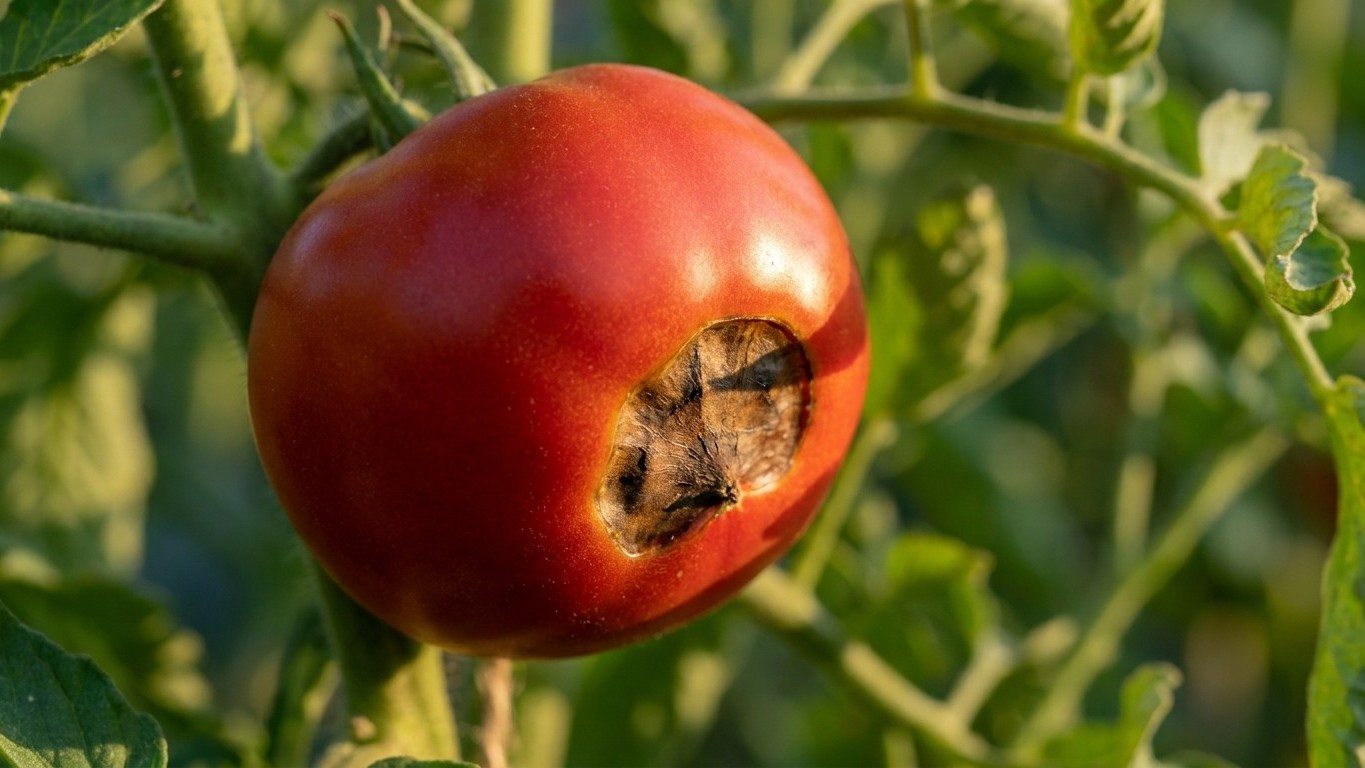
Grab a handful of crushed eggshells, sprinkle some garden lime, and wait for blossom end rot to disappear. It won’t. The dark, leathery patch eating into the bottom of your tomatoes has almost nothing to do with how much calcium sits in your soil and Everything to do with how you’re running that hose.
Blossom end rot is a calcium deficiency, but that deficiency is normally caused by uneven water availability to the plant, meaning even if your soil has plenty of calcium, the plant can’t take it up if there isn’t enough moisture in the soil. Mississippi State University Extension put it bluntly: eggshells don’t fix the problem because the problem was never really about calcium supply in the first place.
Key takeaways
- Calcium doesn’t redistribute in tomato plants—fruit needs a fresh daily supply through water, and one missed watering day can trigger decay
- The dry-wet-dry cycle created by irregular hand-watering actively prevents calcium uptake, even in nutrient-rich soil
- Drip irrigation on a timer, mulch, and consistent 1-2 inches weekly beats eggshells every time
Why Water, Not Soil, Controls the Calcium Supply
Calcium doesn’t move through a plant the way nitrogen or potassium does. Calcium is taken up from the soil through the plants’ roots and is transported by the xylem, along with water moving up and into the growing points of the plant, which requires an adequate supply of water in the soil. Cut that water flow, even briefly, and the calcium simply stops traveling.
Here’s the part most gardeners miss: once calcium lands in a leaf, it’s stuck there. Calcium is not redistributed from the leaves to the fruit. So a tomato’s daily calcium ration has to arrive fresh, through the roots, dissolved in water, every single day fruit is forming. Miss a day, and that fruit’s cells at the blossom end (the point farthest from the stem, where water pressure is weakest) start breaking down for lack of structural calcium. The result is the sunken, dark patch every tomato grower dreads.
The University of Connecticut’s Home Garden Education Office frames it as a cycle problem rather than a shortage problem: a cycle of dryness followed by overwatering is only promoting calcium deficiency in the plant. It’s not that your soil ran out of calcium overnight. It’s that the water elevator carrying it stalled, then lurched back into motion too fast.
The Hose Habits That Actually Cause the Damage
Picture the typical backyard routine: quick five-minute spray with the hose after work, skip a day when it rains, forget entirely during a heat wave, then flood the bed to compensate on Saturday. That rhythm, dry-wet-dry-wet, is precisely what interrupts calcium delivery even in soil that already has plenty of it.
Container tomatoes suffer worst from this pattern. Container-grown tomatoes are highly susceptible due to rapid soil moisture swings in pots. A five-gallon pot can go from saturated to bone-dry in a single hot afternoon, long before a hand-watering schedule catches up. Michigan State University Extension notes the timing makes it worse: rapid early growth of the plants can cause the rot because the calcium is needed by the tomatoes when they are actively growing and the plants may not be able to take up sufficient calcium quickly enough through the roots.
Overhead hosing has its own problem, separate from timing. Wetting the whole plant instead of the root zone wastes water to evaporation and encourages shallow roots that dry out fast between waterings, making the swings even more extreme. UConn’s extension office also flags a related culprit hiding in Fertilizer bags: overfertilization of ammonium, potassium, and magnesium can allow for competition in root uptake of calcium because they are all positive cations. Dump on a high-nitrogen or Epsom-salt boost right when fruit is setting, and you’re actively crowding out the calcium your tomatoes need most.
What Actually Fixes It
Forget guessing with eggshells. If you genuinely suspect low soil calcium, some soils do not have enough calcium and that will help cause blossom end rot, but it’s best not to guess whether your soil has enough calcium or not, so do a soil test. Most cooperative extension offices run this for a modest fee, and it settles the question in a way no amount of forum folklore can.
Beyond that, the fix is almost entirely about your hose behavior. Extension agronomists converge on the same numbers: water regularly to ensure that plants receive 1 to 2 inches of water a week. Deliver that amount consistently rather than in one dramatic soaking, and calcium transport stays steady through the xylem instead of stopping and starting. Setting up a drip irrigation system on a timer is a great way to ensure consistent watering, because it removes the human unpredictability, no more forgotten evenings, no more overcorrecting on weekends.
Mulch does double duty here. Water evenly and mulch the soil to retain moisture during dry periods, Wisconsin Horticulture Extension recommends, since a two-to-three-inch layer of straw or wood chips slows evaporation and buffers the soil against those punishing summer swings a bare bed can’t handle. Pair that with even the crudest DIY tool, a cheap rain gauge stuck in the ground tells you exactly how much water actually reached the soil this week, closing the gap between what you think you’re delivering and what your tomatoes are getting.
As for the eggshells already sitting in your compost bin, don’t toss them out entirely. Even if you did need the calcium in your soil, eggshells generally decompose too slowly to be effective, though the smaller the pieces are, the faster they’ll decompose. They’re a fine long-term soil conditioner added the season before planting, just not an emergency intervention for fruit that’s rotting on the vine right now. The tomatoes you’re growing this summer needed consistent water two weeks ago, not a handful of crushed shells today.
Sources : homegarden.cahnr.uconn.edu | bloomingexpert.com